The question in the title appeared under one of my mountains climbing videos. It sounds reasonable, even responsible. My reply was: “Then you become news.” But it deserves a proper answer, because it reveals how we think about risk, age, and mountains.
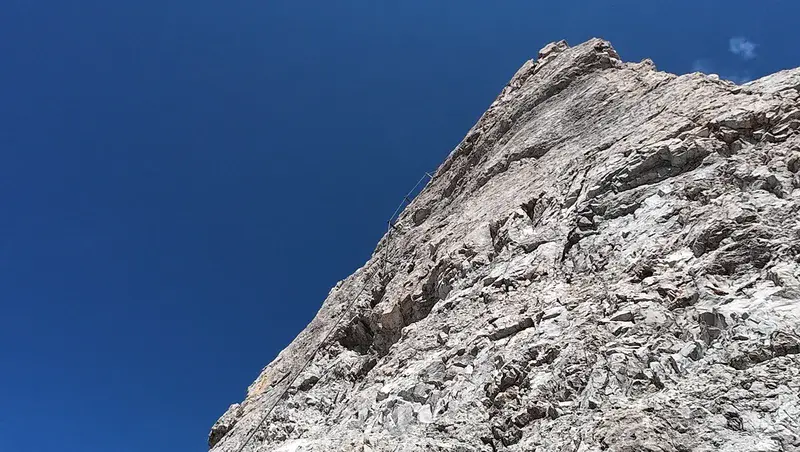
Mountains safer than bathtubs? A solo climber’s take
If I trip over or faint, I become a statistic. Nothing more and nothing less, accidents do not care about experience, preparation, good intentions, or online concern. They happen where probability and gravity intersect.
To keep perspective, numbers help:
- In the United States, roughly one person per day dies after slipping in a bathtub.
- In Japan, estimates speak of many thousands of deaths every year related to bathing, often caused by heat shock.
The exact number can be debated; the conclusion cannot. Bathrooms quietly kill far more people than most mountains.
Nobody responds by saying that bathing alone is irresponsible, and nobody asks whether the victim had a partner, wore protective equipment, or paid rescue insurance. These deaths are accepted because they happen in familiar places.
Put a person on a mountain ridge and the tone changes immediately.
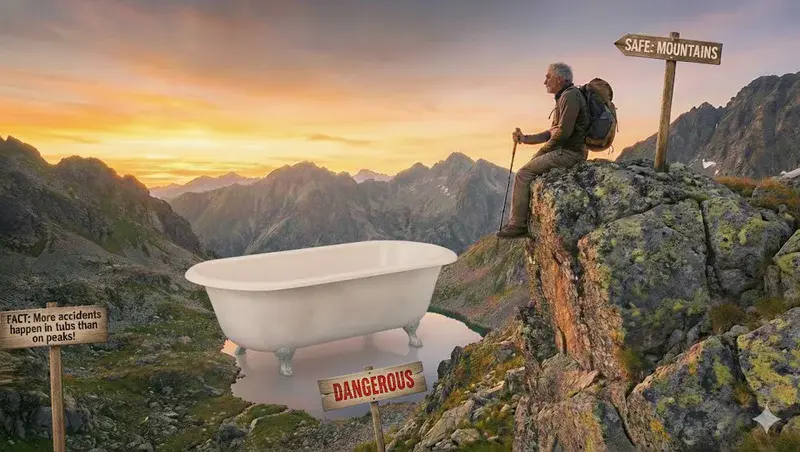
Mountains and the comfort of outrage
If something happens on a mountain, the script is already written. Headlines will mention danger. Comment sections will overflow with advice given too late. They will call Reinhold Messner, because they always do.
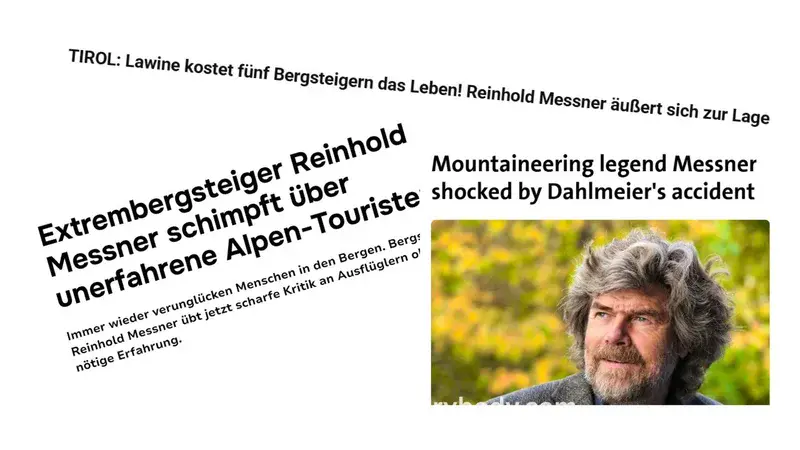
Being a no-nonsense person, Messner will deliver the expected verdict. Perhaps something along the lines of: This gentleman should have stayed at home. At his age, perhaps in a care facility, or better yet looking after his grandchildren.
I am 67, so the role fits perfectly.
Messner will not be wrong. He will also not be saying anything new. His function in these moments is not analysis, but reassurance. By declaring who should and should not be on a mountain, society restores order.
Age becomes the explanation, not chance, and not exposure, and certainly not the unavoidable fact that every activity outside a chair involves risk.
The mountain is declared dangerous, the person is declared irresponsible, so the audience relaxes.
The Dolomites are not an amusement park
I go to the Dolomites a lot and realize that most people in those mountains are not climbers. They are visitors. They walk on marked paths, ride cable cars, stop near edges for photographs, and assume that danger is somehow managed by groups, infrastructure and signs.
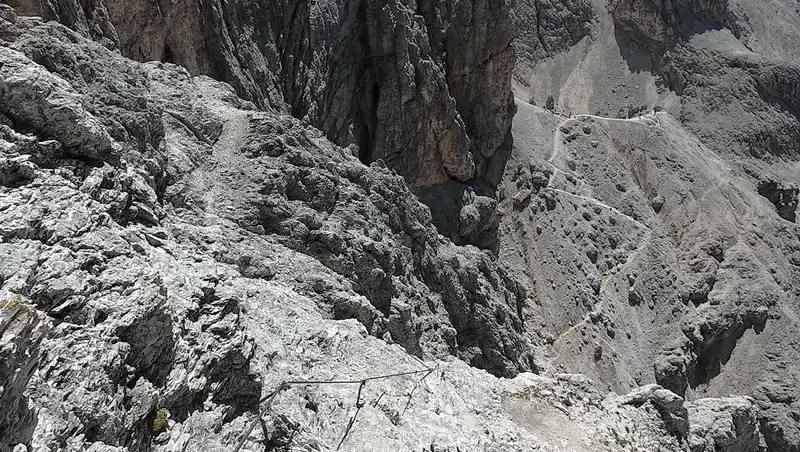
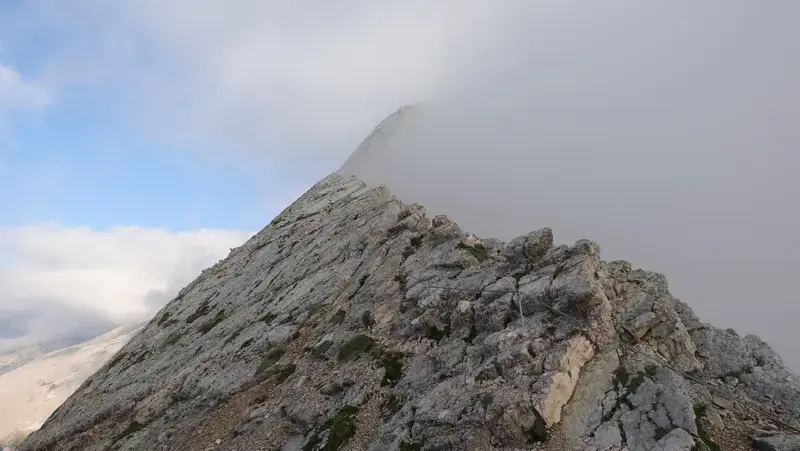
This is a misunderstanding. The Dolomites are not designed for safety. They merely allow access. Steel cables (as those in the photo below), ladders, and paths reduce difficulty, not consequences.
A fall does not become shorter because the trail is popular. You would not want to trip over at this place before attaching yourself to the cables.
Partners, insurance, and correct behavior
Yes, having a climbing partner increases safety. Someone can assist, call for rescue, or challenge a bad decision. I have never had one. This is not advice; it is a statement of fact. Solitude has a price, and it never pretends otherwise.
Austrian alpine clubs offer rescue insurance, including worldwide coverage. Given the cost of helicopter rescues, it is sensible. I have never paid for it. Cannot afford it, I sleep in tent or in the car. Again: fact, not recommendation.
And yes, there are best practices. Helmets, ropes, redundancy, conservative decisions, turning around early. All of them reduce risk. But none of them remove it, zero risk exists only in brochures.
Following rules does not convert uncertainty into safety, it merely shifts probabilities.
What people really fear
The discomfort is not danger itself. It is visible danger. Society tolerates risk when it hides in routine: bathrooms, cars, stairs, sofas. These feel normal, therefore safe, even when statistics say otherwise.
Mountains are honest. They show exposure openly, no porcelain, seatbelts, or illusion of control. That honesty unsettles people.
So they ask: What if you trip over or faint?
The honest answer is simple: then I fall. Just as someone else might slip in a shower, choke at dinner, or collapse on a sidewalk.
The question of age
More and more often I hear the same question: How old are you? I heard it on the summit of Antelao. I heard it again on Monte Civetta. Oh yes, on Kesselkogel too, twice.
The question is rarely neutral. It is not curiosity; it is a test. If the number is high enough, the listener can silently file the activity under no longer appropriate. Age becomes a permission slip, or its withdrawal.
What matters is not how old I am, but whether I am still capable of judgment, movement, and acceptance of consequences. Age alone explains nothing, it predicts nothing. It only comforts the person asking.
Aging does not cancel living
At a certain age, society subtly recommends retreat. Move less, stay flat, avoid edges, replace doing with waiting.
Waiting is not safe either. It merely looks respectable. Statistically, it also kills people; quietly, without headlines, and without views.
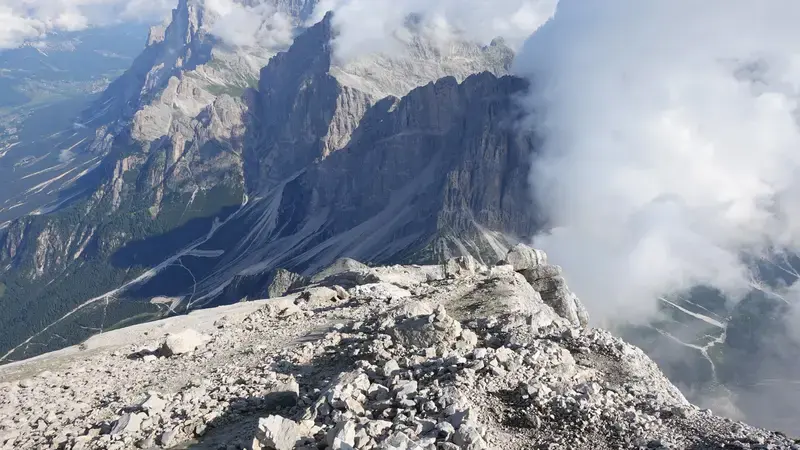
I do not go into the mountains because they are safe. I go because I accept exposure as part of being alive. Age included.
Closing
I climbed my first larger mountain solo more than forty years ago. Since then, I have not been in a situation where I tripped or fainted. But once, on a snow passage, I narrowly escaped disaster. That history proves nothing. It is not a guarantee, and it never was. It is simply a record of outcomes so far.
At 67, climbing keeps me sharp. Risks exist everywhere; bathtubs prove it daily. I will keep going up, more aware, not more reckless. If I fall and make the news, it will not change the statistics; it may only remind people that mountains are often safer than the places where we feel most protected.
If my presence on a ridge makes someone uncomfortable, that discomfort belongs to them, not to the mountain.
When/if something happens, commentators will speak, Messner will comment, and lessons will be delivered with confidence and hindsight. None of that alters the basic equation.
Mountains do not promise survival, they offer clarity. For me, that is reason enough.
Thank you for reading. There is a comment box below so let me know if you want to share your thoughts.
Leave a Reply