The Bivacco Malga Fornasa Alta is a former seasonal dairy hut that has been converted into a bivouac for mountaineers and hikers. It is incredibly well-equipped, always open, and free to use, but there is an offerte box on the wall.
The most convenient way to get to Bivacco Fornasa Alta is from the road that goes from Fiemme Valley to Passo Manghen. The access is relatively easy, and you need up to 100 minutes without any special equipment.
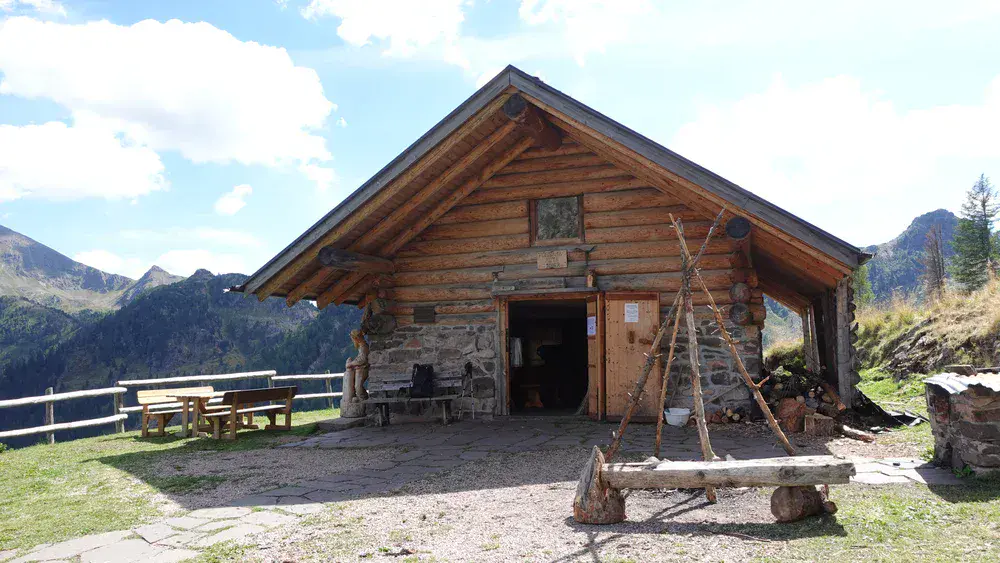
Quick facts
- Bivacco Malga Fornasa Alta elevation: 1892 m (6207 ft).
- Coordinates: 46.1774244, 11.4091817.
- Route difficulty: walk-up.
- Elevation difference from the parking: 462 m (1516 ft).
- Parking coordinates: 46.1936783, 11.4202519.
- Time needed from the parking to the bivouac: up to 100 minutes.
- Beds: yes, no mattresses.
- Water: yes.
- Nearest place for supplies: Castello di Fiemme.
- Useful maps: Tabacco number 14.
Access roads and map
When you drive from Molina di Fiemme along one of the smaller side valleys (Val Cadino) in the direction of Passo Manghen, at some point below the pass you can park by the road. There is a sign at this place, and you are very close to a stream and Malga Fornasa Bassa.
So this is already the Lagorai mountain range of Trentino, Italy, and part of Fiemme Valley. From this point, you can walk up along a road that used to run through a forest that was destroyed by the Vaia storm and by bark beetles.
The map below shows all the details.
- Marker 1: Parking at the main road that goes up to Passo Manghen.
- Marker 2: Bivacco Fornasa Alta.
- Marker 3: Bivacco Valletta Alta if you want to make this a round tour.
Please zoom in to see many details regarding the route. Zoom out to see the access roads to the area.
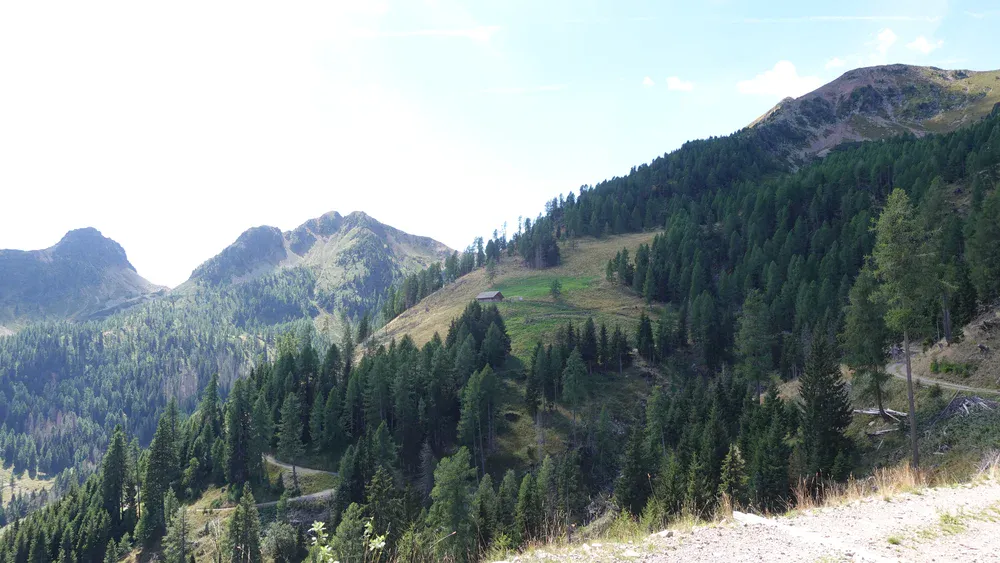
The photo below shows the position of Bivacco Fornasa Alta; this is a view from a stop very close to Passo Manghen.
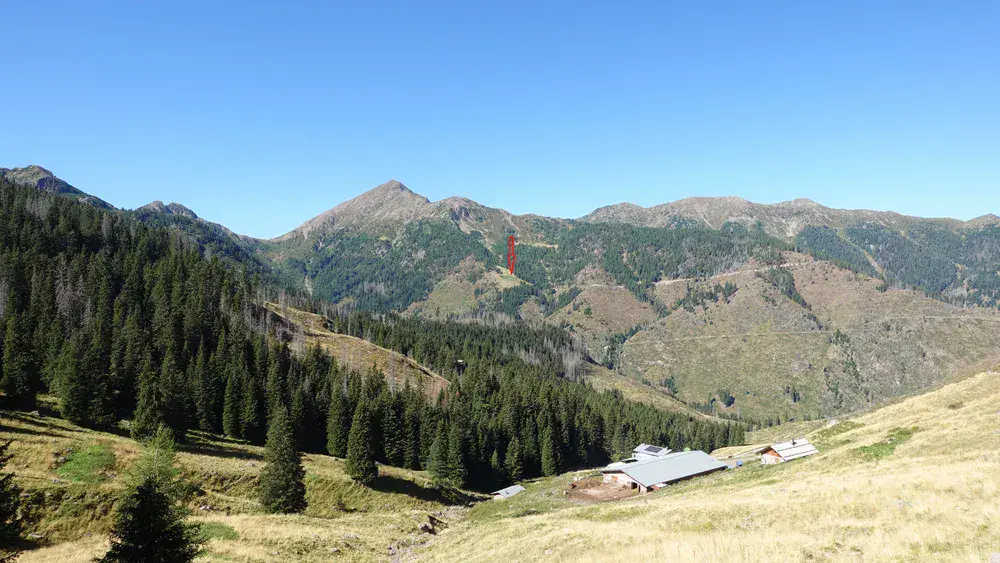
If you continue to Passo Manghen, you have a refugio there where you can have a good meal. This road is the only one that crosses the Trans-Lagorai Trail.
Route description
From the parking (marker 1), you follow the gravel road, and this is route 314 on the map. Orientation is easy and the elevation difference is not big, so after about 90–100 minutes, you will be at the shelter. There is no need to carry water with you, as it is available there in front of the bivouac.
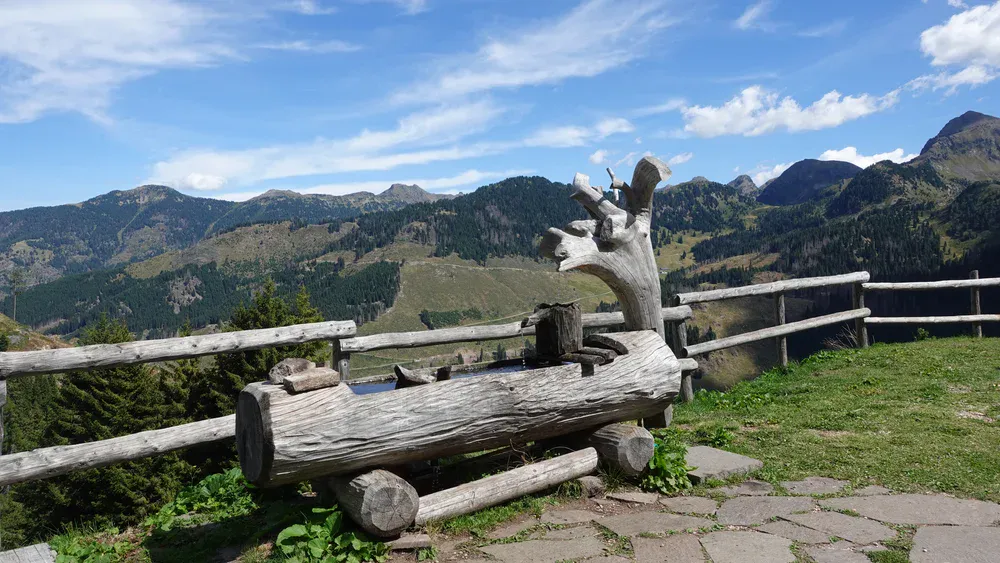
The photo below shows the bivouac as it was when I arrived; the Lagorai chain is in the distance behind it.

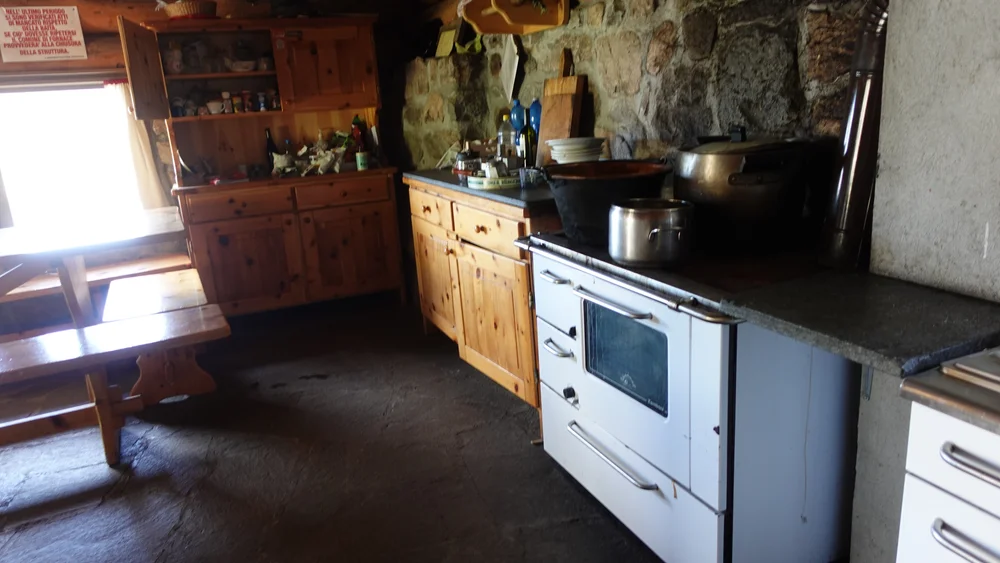
The building is large, and the ground level is a large dining area and kitchen. Below you can see some details; no less than three stoves are available.
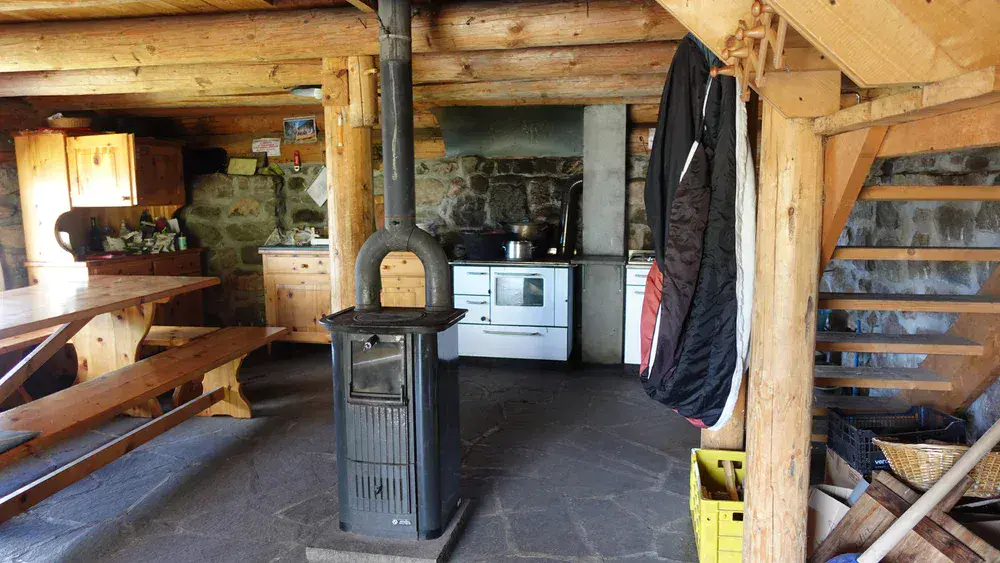
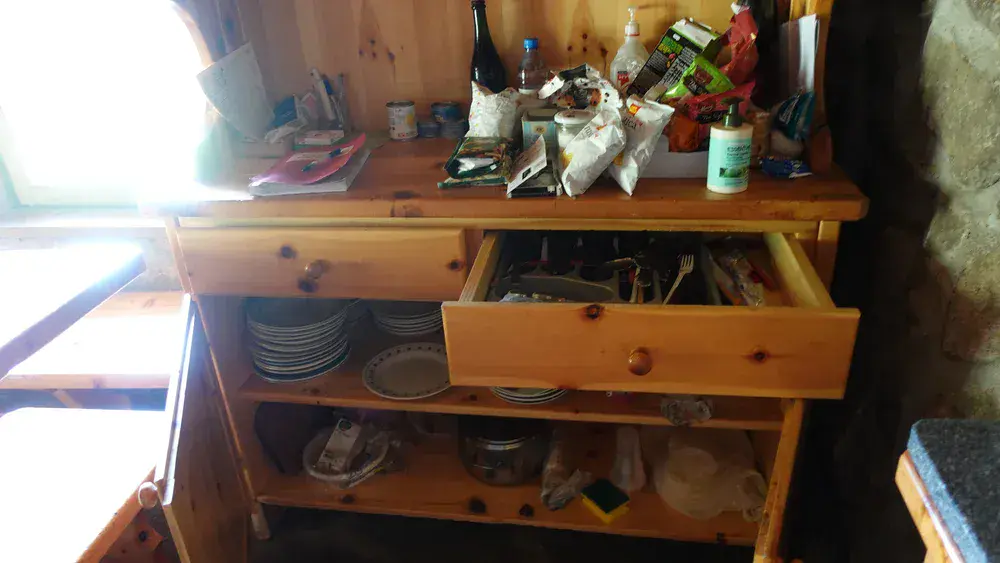
The kitchen is fully equipped, with lots of things for cooking and plenty of supplies, as you may realize from these photos:
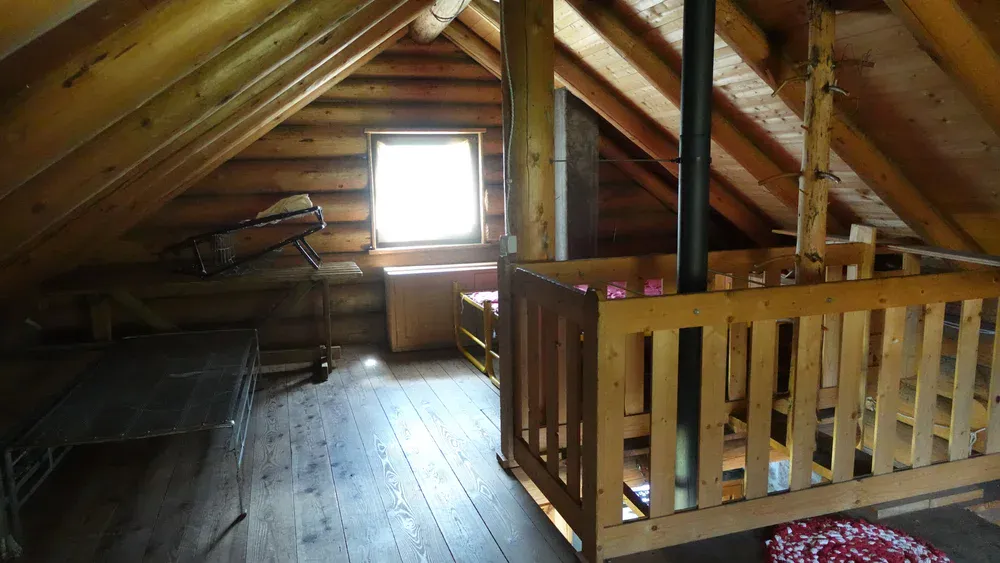
A nicely designed staircase leads to the attic, which is the same size as the ground level. Here you have at least 10 beds, but there are no mattresses or blankets. The floor is made of pleasant wood, and many more people can sleep directly on it.

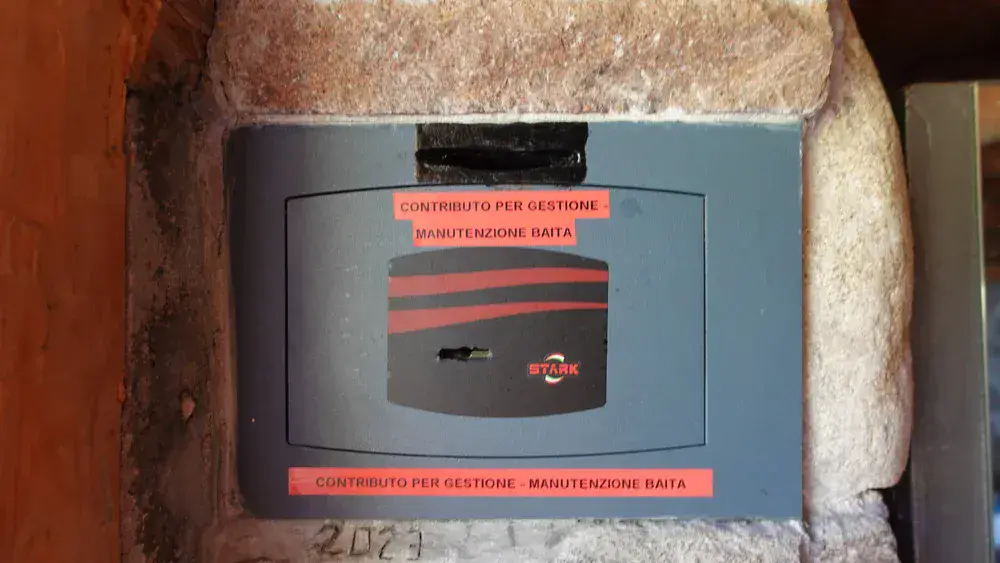
There is an offerte box on the wall, so it is fair to leave some money there. The people who take care of this place do a great job, and any help is certainly welcome.
My tour
I made this a round tour, and I did it anti-clockwise, as described in my text about Bivacco Valletta Alta. So I first walked to that bivouac (marker 3 on the map above) and then through a beautiful forest to Bivacco Fornasa Alta.
The route is steep when you start from marker 3, but it is always pleasant. When you see the photo, you will realize why:

You can inspect the map to see more details. After the forest, the Fornasa Alta shelter appears in the distance, as the photo shows:
Note that I am writing this text in the mountains and am not able to put together a video, but it will be added later, so bookmark the post and come back.
Gear, water & food
No matter how you do this tour, you do not need any special equipment; standard hiking boots or shoes are sufficient. I used trekking poles and a day pack.
As usual, I carried a rain poncho, rain pants, and a rain jacket. If you do not have a jacket and are unsure what to choose, consider the Mammut Crater Pro HS.
Water is everywhere, so if you have a water filter, you can refill from the streams, but there is no need, as you have water at the bivouac.
As mentioned, there is a hut at Passo Manghen, so you can have a meal there or bring food with you from the valley. For cooking, you have practically everything you need in both bivouacs.
Final thoughts
Bivacco Malga Fornasa Alta is a very practical and comfortable shelter, and the access from the Passo Manghen road is straightforward. The place is well equipped, there is water available, and you can sleep there without reservation, the place is always open, so it is a great option if you want to spend a night in this part of Lagorai.
For a more interesting tour, I recommend combining it with Bivacco Valletta Alta and making a round trip, as I did. Both bivouacs are comfortable and equipped with stoves, and the forest section between them is particularly nice.
If you are hiking in the Lagorai area and need a simple place to stay, Bivacco Malga Fornasa Alta is definitely worth keeping in mind.
Thank you for reading. Let me know if you have questions or comments; there is a comment section below.
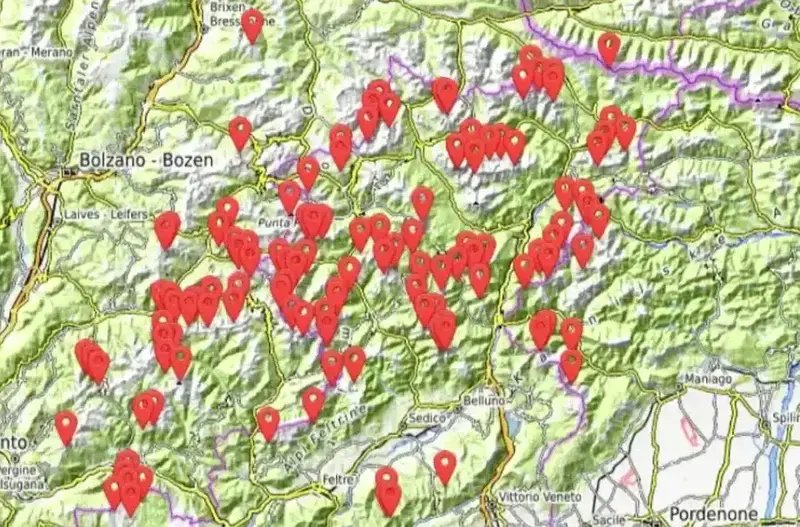
This bivouac, together with more than 140 others, is included in my interactive map available here on the site, see it below. Note that I also have a book titled Dolomites Solo, so have a look if you plan to do some mountaineering tours in the area.
Leave a Reply