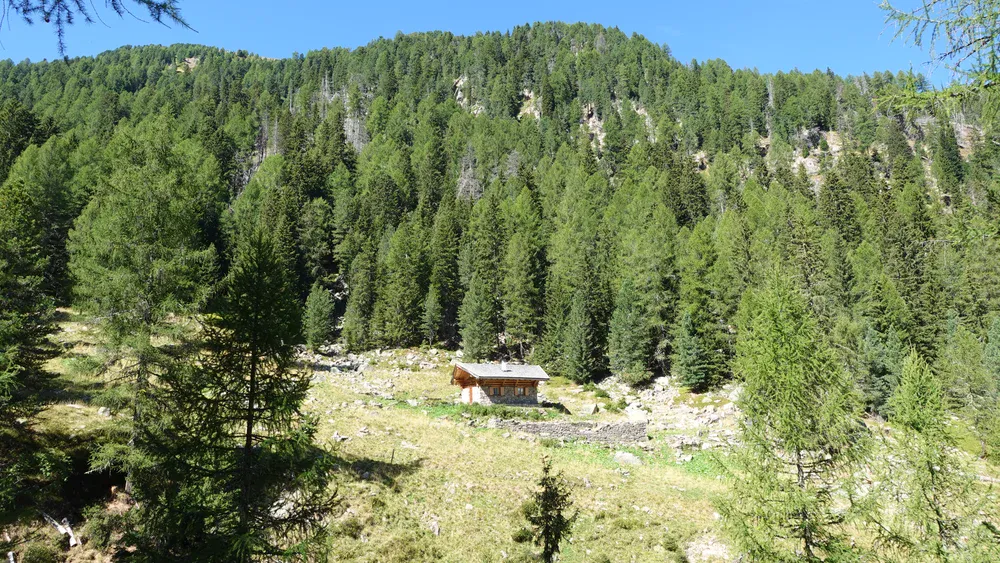
The Bivacco Valletta Alta is one of the most beautiful bivouacs in this part of the Italian Alps, with easy access from the main road that goes from Val Fiemme to Passo Manghen.
If you plan to visit the Bivacco Valletta Alta, you can do this on a direct walk up from the road in 80 minutes. No special equipment is needed. There is water at the bivouac, wood-burning and gas stoves, and beds without mattresses. The shelter is always open and free to use.
Quick facts
- Bivacco Valletta Alta elevation: 1794 m (5886 ft).
- Coordinates: 46.1862517, 11.3952417.
- Route difficulty: walk-up.
- Elevation difference from the parking: 344 m (1129 ft).
- Parking coordinates: 46.1936011, 11.4203042.
- Time needed from the parking to the bivouac: up to 80 minutes.
- Beds: yes, no mattresses.
- Water: yes.
- Nearest place for supplies: Castello di Fiemme.
- Useful maps: Tabacco number 14.
Access roads and map
The easiest access is from Val di Fiemme, and you start at the roundabout in Molina di Fiemme, so this village should be your initial destination.
I have created the interactive and zoomable map below, which shows the following:
- Marker 1: Parking at the main road that goes up to Passo Manghen.
- Marker 2: Bivacco Valletta Alta.
- Marker 3: Bivacco Fornasa Alta, if you want to make this a round tour.
Please zoom in to see many details regarding the route. Zoom out to see the access roads to the area.
The Bivacco Valletta Alta is on the south side of Fiemme Valley, and this is already part of the Lagorai area, located on the slopes of Monte Fregasoga, in Trentino province. This is an ex-malga that has now been converted into an incredibly beautiful shelter for hikers.
The access road is good, but if you continue up to Passo Manghen, be ready for sharp turns and a very narrow road directly below the pass.
Route description
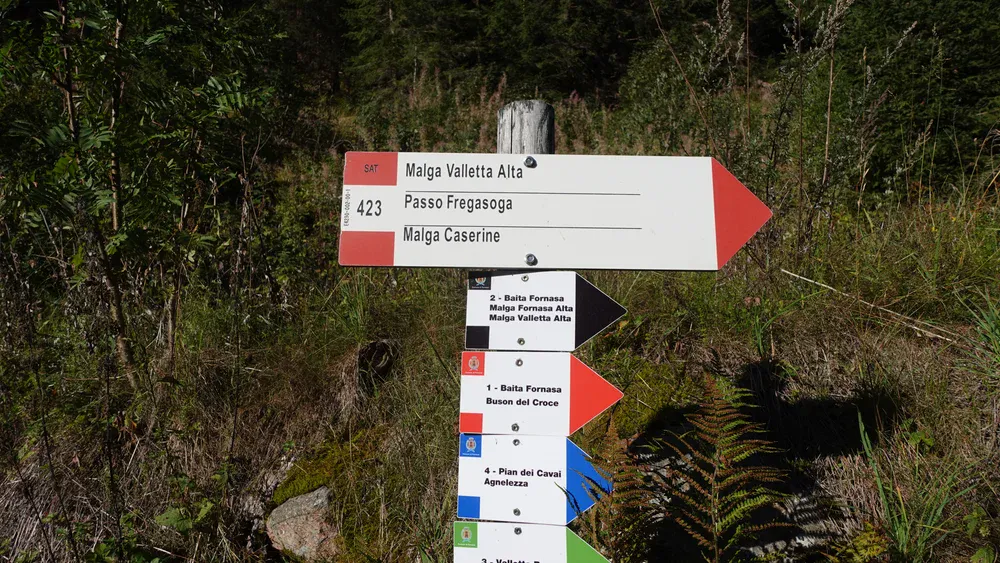
You start from a small parking area indicated on the map above. There is a sign already at the road, but this is not for the Bivacco Valletta Alta, so walk for some 50 meters or so along the road, and you will see the sign shown below.
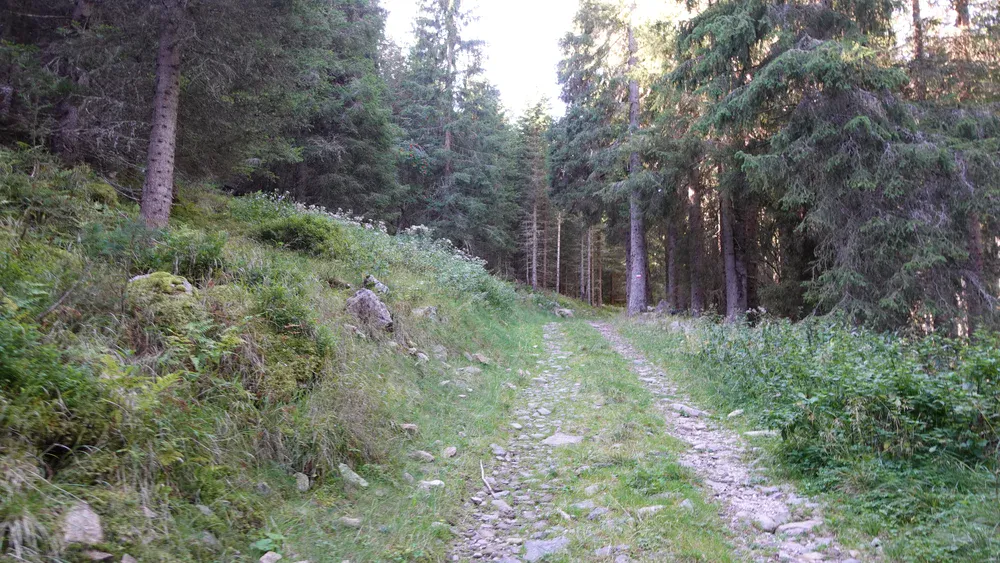
From this point, keep walking along the steep forest road; this is your path for another hour or so.
There is a water flow on your right side, and it will be there for most of this road walk.
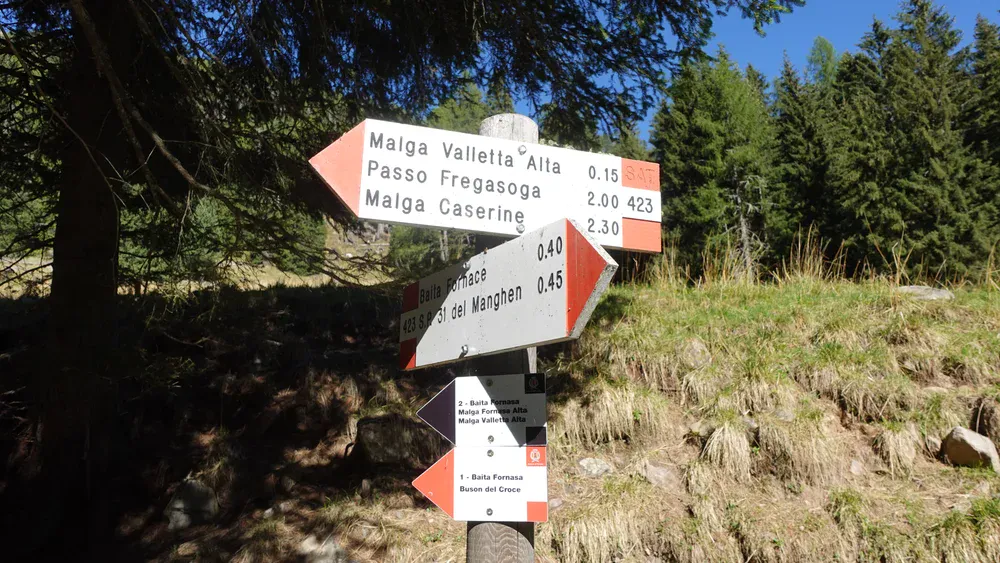
At one point, you arrive at the sign shown below. This is where you leave the forest road and continue walking along a tiny path through a pleasant forest.
There are a few small water streams to cross, even in late summer. The photo below shows the beauty of this area:
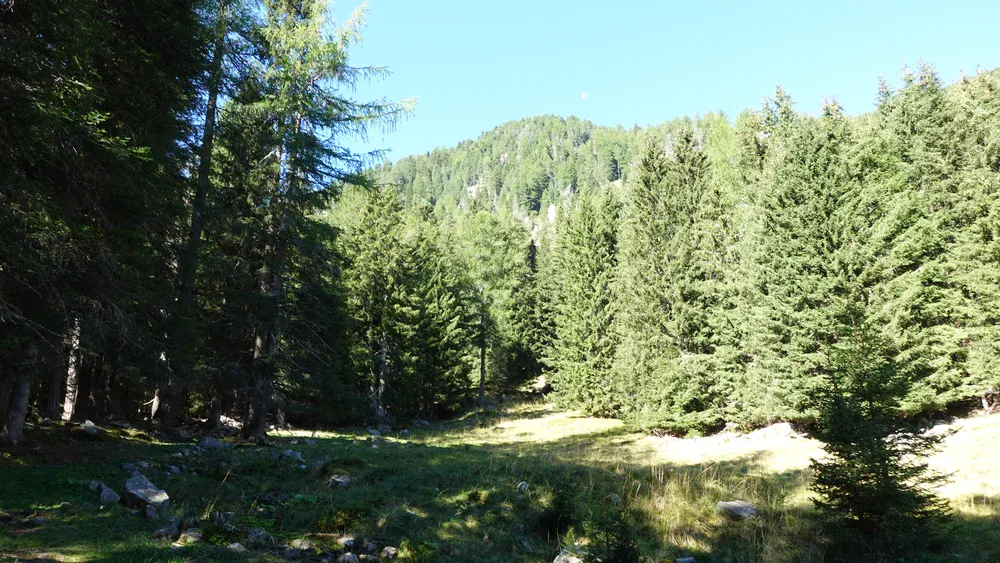
After a short walk, you will see the bivouac above you. This is a quiet place, and the bivouac sits on a large clearing surrounded by forest. There is water directly in front of the bivouac.

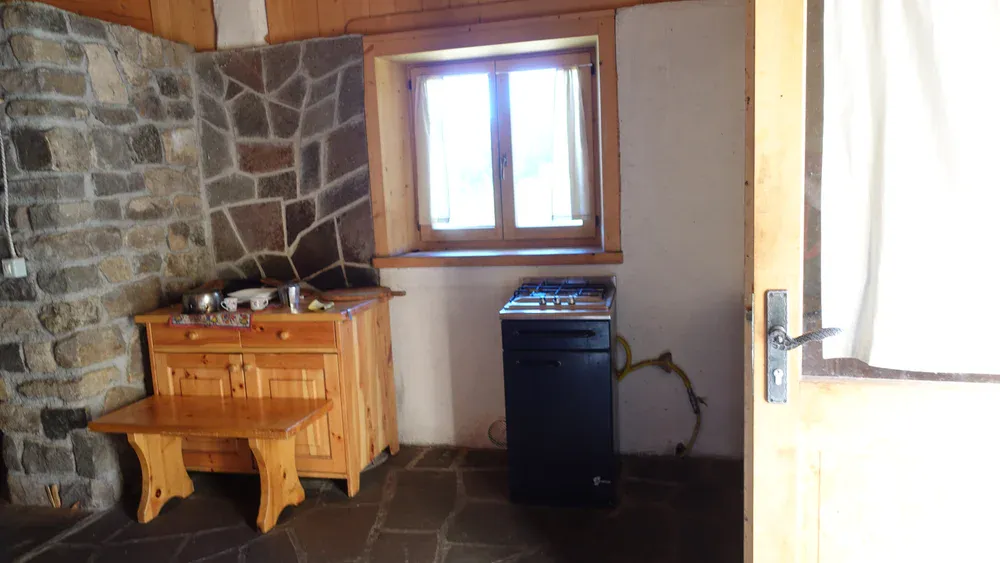
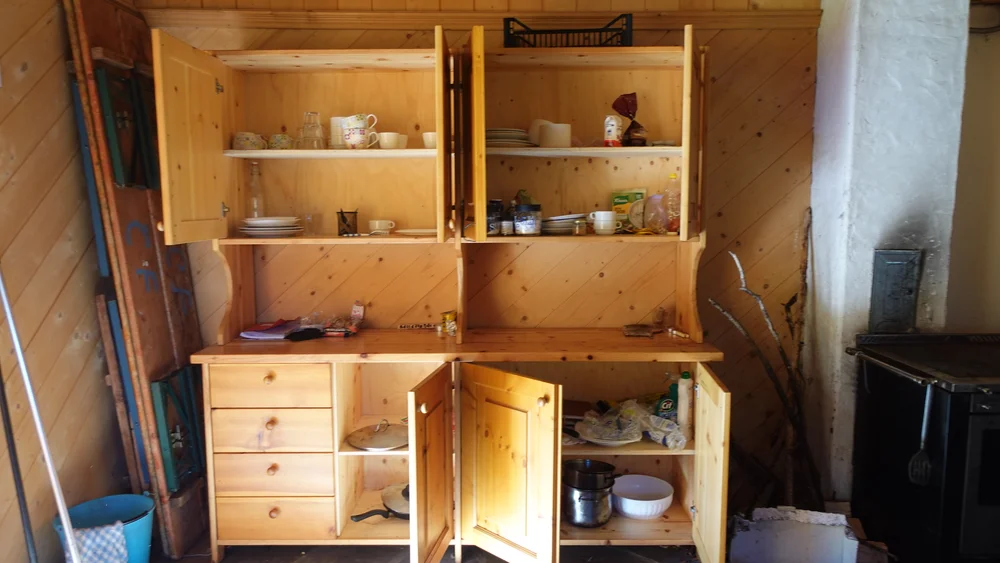
Inside, you have everything you need for cooking, a wood-burning stove, and a gas stove. A very beautiful staircase leads to a gallery that extends over half of the lower living area.
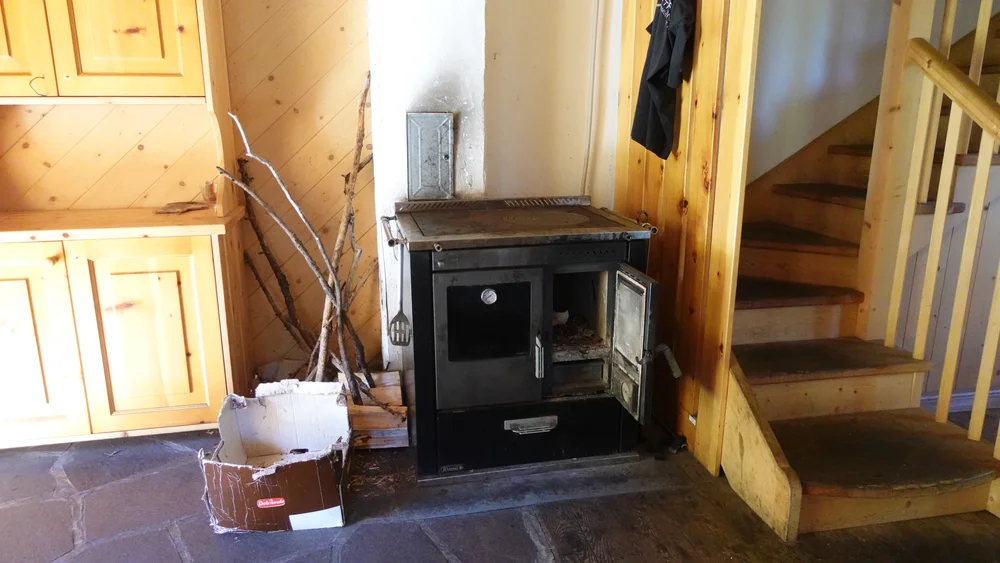
There are benches and a large dining table, all made of pleasant wood, and electricity is available from the solar panel.
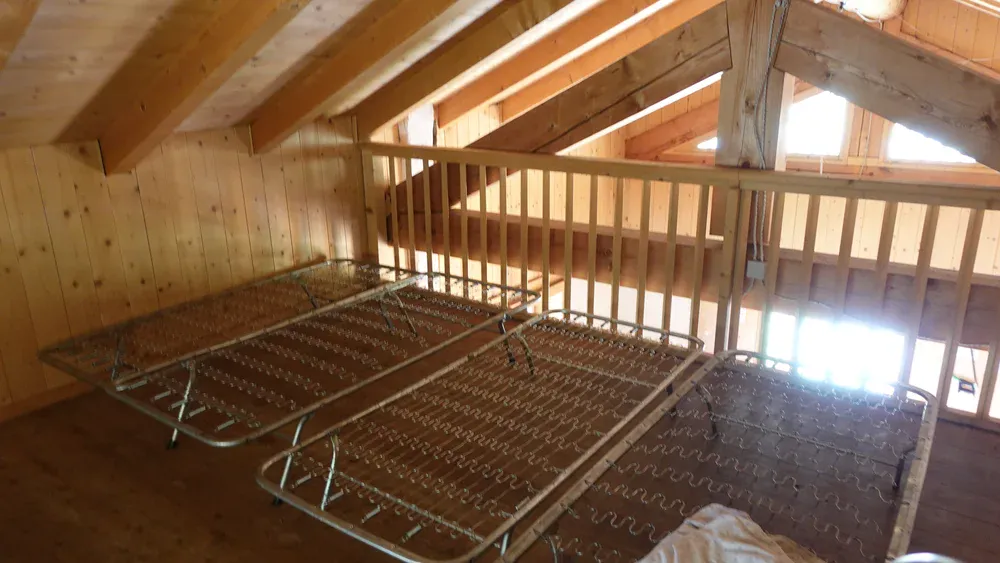
Note that the beds are without mattresses, so you have to bring your sleeping pad and sleeping bag.
My tour
When I was in Molina di Fiemme, I asked a woman for directions, and she described the road as “brutto” (ugly). In reality, it is not so; the road is normal all the way up to the beginning of the route. I followed the route described above, and there was nobody around all day long.
After a long rest at the bivouac, I decided to make this a round tour and continued in the direction of Bivacco Malga Fornasa Alta. This will be described in another text.
The tour is presented in my video, please have a look:
Alternative approach
You can do the tour the way I did, or go clockwise, first to Bivacco Fornasa Alta and then to Valletta Alta. The map above will show you a tiny path through the forest.
I think it is better to do the round tour anti-clockwise because it is easier to find the route after Valletta Alta.
Gear, water & food
For this tour, you do not need any special equipment; standard hiking boots or shoes are sufficient. I used trekking poles and a day pack.
As usual, I carried a rain poncho, rain pants, and a rain jacket. If you do not have a jacket and are unsure what to choose, consider the Mammut Crater Pro HS.
Water is everywhere, so if you have a water filter, you can refill on the streams, but there is no need, as you have water at the bivouac.
There is a hut at Passo Manghen, so you can have a meal there, or bring food with you from the valley. You have everything you need for cooking in the bivacco, see the photo.
Conclusion
Bivacco Valletta Alta is a very nice destination if you are looking for an easy and quiet walk in the Lagorai area. The access is straightforward, the elevation difference is not big, and you get a beautiful place to rest at the end.
I also liked the fact that there is water at the bivouac and everything you need for a simple overnight stay.
If you want to make the tour longer, you can combine Valletta Alta with Bivacco Malga Fornasa Alta and make a round tour. I think this is a much more interesting option if you have enough time, and I will describe that part of the route in another post. For a short walk to a peaceful bivouac, however, Valletta Alta is a very good choice.
Thank you for reading. Let me know if you have questions or comments; there is a comment section below.
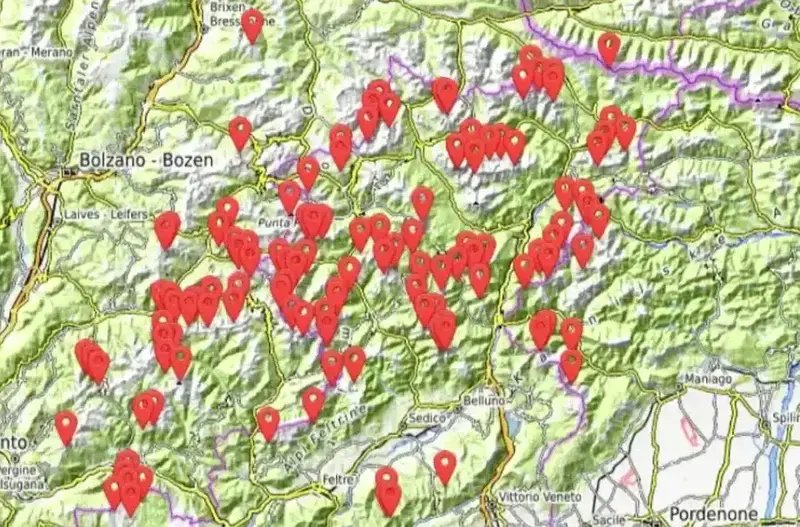
This bivouac, together with more than 140 others, is included in my interactive map available here on the site, see it below. Note that I also have a book titled Dolomites Solo, so have a look if you plan to do some mountaineering tours in the area.
FAQs
Is overnight stay possible at Bivacco Valletta Alta?
Yes the shelter stays open year round and free for anyone to use. Bring your own sleeping pad and sleeping bag because the beds have none. You will find a wood burning stove a gas stove and solar electricity inside plus water right in front of the building.
Pack enough food as the nearest supplies are down in Castello di Fiemme. Respect the place by leaving it clean since local volunteers maintain it.
What is the best season to visit Bivacco Valletta Alta?
Late spring through early autumn works best when the forest road and path stay free of snow. The elevation gain is only 344 meters so the walk remains straightforward even after rain.
In high summer the streams keep flowing and the clearing around the bivouac stays quiet. Winter visits demand snowshoes or skis and extra care because the road to Passo Manghen can close.
Can I combine Valletta Alta with other nearby shelters?
Yes a popular option links it with Bivacco Malga Fornasa Alta on a loop through the forest. Start anti clockwise from Valletta Alta for clearer path finding on the return. The whole circuit stays within the Lagorai group and adds variety without major difficulty.
Check the Tabacco map number 14 for the tiny connecting trail.
Do I need special skills or equipment for the approach?
No special skills are required. Standard hiking shoes or boots plus trekking poles if you like them are enough for the steep forest road and short path section. Carry a rain jacket and poncho because weather changes fast in this part of Trentino. Water is available along the way and at the shelter so a filter is optional.
Leave a Reply