If you check the summer weather forecast for the Dolomites, or almost anywhere else in the Alps, and see a long row of thunderstorm icons, don’t panic and certainly don’t cancel your trip.
“What’s the weather this year up there?” Believe it or not, this is a real question.
I see this question or some of its variants come up regularly in hiking and travel Facebook groups, so I thought it would be useful to have a simple explanation ready for anyone planning a visit to the mountains.
One of the biggest misunderstandings about Alpine weather is assuming that a thunderstorm forecast means a day of continuous rain. Here is another actual question:

In reality, during summer, it usually means warm and humid conditions that can trigger localized afternoon thunderstorms. Many days begin with clear blue skies and excellent hiking conditions before clouds start building later in the day.
If you wait for a forecast showing nothing but sunshine icons for an entire week, you may never end up going hiking in the Alps.
Here is how experienced hikers and mountaineers typically approach summer weather in the mountains.
The 2-day rule
Treat any mountain forecast beyond 48 hours with caution.
Weather in the Alps is influenced by complex terrain, elevation changes, and rapidly shifting atmospheric conditions. While forecasts can give a general indication of weather patterns, they become increasingly unreliable the further out you look.
For mountain activities, the most useful forecasts are usually those for the next one to two days.
The real weather check happens at dawn (but even this may not be enough)
The final decision about whether to hike should be made on the morning of your trip before you put your boots on.
Wake up early, look out the window, check the latest local weather bulletins and radar, and assess the conditions for yourself. A forecast issued several days ago cannot tell you as much as the sky above your accommodation at sunrise.
Many experienced hikers adjust their plans daily rather than locking themselves into a fixed itinerary weeks in advance.
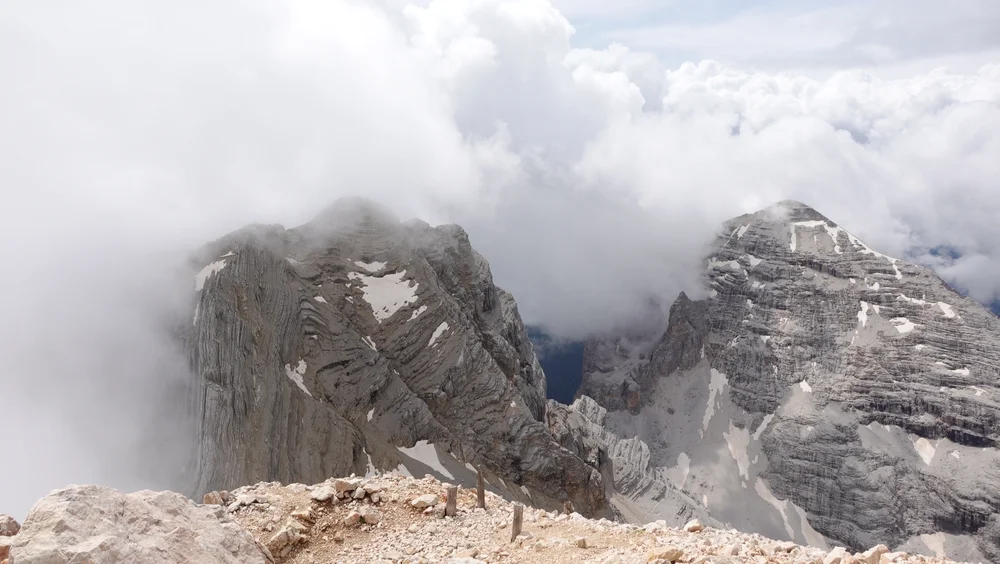
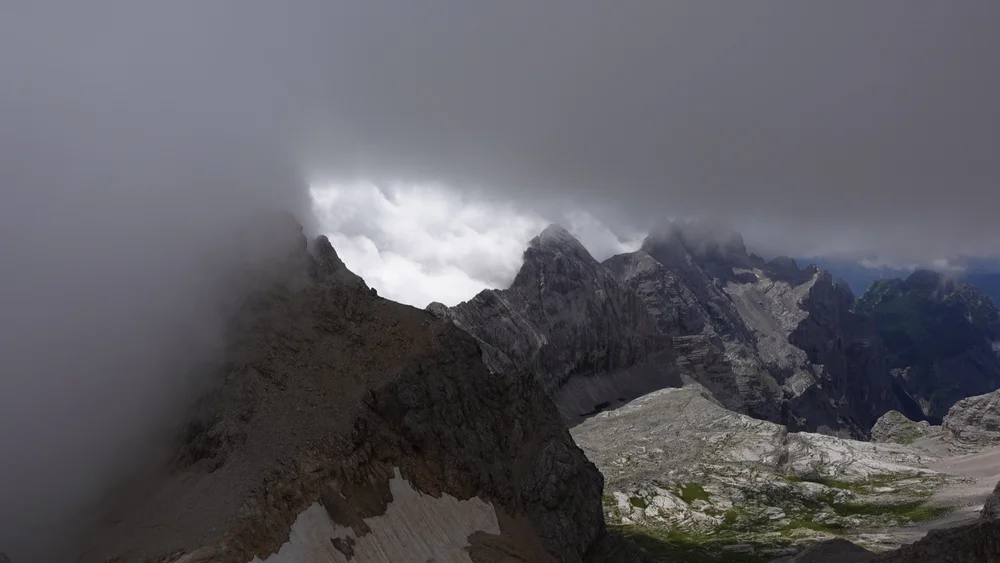
But even this may not be enough. See the photos from my tour to Monte Civetta; but the sky was without any cloud in early morning when I started.
Yet on the mountain, I was in the clouds all the time. However, I did not have any rain at all in spite of the dark clouds which you can see in the photo above. So not every situation with clouds means rain and thunderstorm. Some experience is needed to avoid serious trouble.

Be down by 1 PM
In the Alps, an early start is one of the most effective ways to manage summer thunderstorm risk.
And by “early,” I don’t mean leaving the hotel at 9 AM. There is even a dedicated term for it: an alpine start.
During peak summer, this often means being on the trail no later than 6 AM, allowing you to reach summits, cross exposed ridges, and begin your descent before thunderstorms typically start developing. By early afternoon, you should ideally be off exposed terrain and either back in the valley or relaxing in a rifugio.
Personally, I often start much earlier, sometimes as early as 3 AM, especially for longer routes or on days when storms are forecast.
Always have a plan B (and plan C)
Flexibility is one of the most valuable skills in the mountains.
When thunderstorms are possible, avoid committing to long, exposed ridge traverses or routes with limited escape options. Instead, choose hikes that offer alternative descents, sheltered sections, or nearby rifugi and bivouacs where you can wait safely if conditions deteriorate.
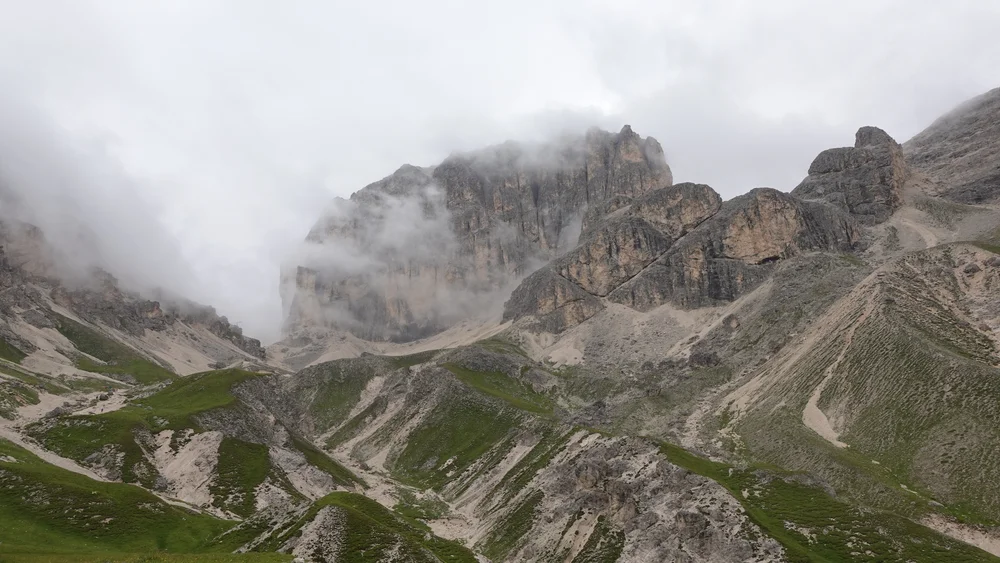
The best hikers are not those who stubbornly stick to their original plan, but those who adapt when circumstances change. On my first Kesselkogel tour I had to give up when I was there below the summit in the photo shown below. But I came again later, and climbed the mountain in a perfect weather.
Thunderstorms are part of the alpine experience
Mountain thunderstorms deserve respect. Lightning, strong winds, and sudden weather changes can create serious hazards, especially on exposed peaks, ridges, and via ferratas.
At the same time, a thunderstorm forecast should not automatically ruin your excitement about a trip. Some of my most memorable moments in the mountains have come from dramatic skies, changing light, and watching distant storms roll across the landscape from a safe location.
The key is not to fear mountain weather but to understand it, prepare for it, and make sensible decisions throughout the day.
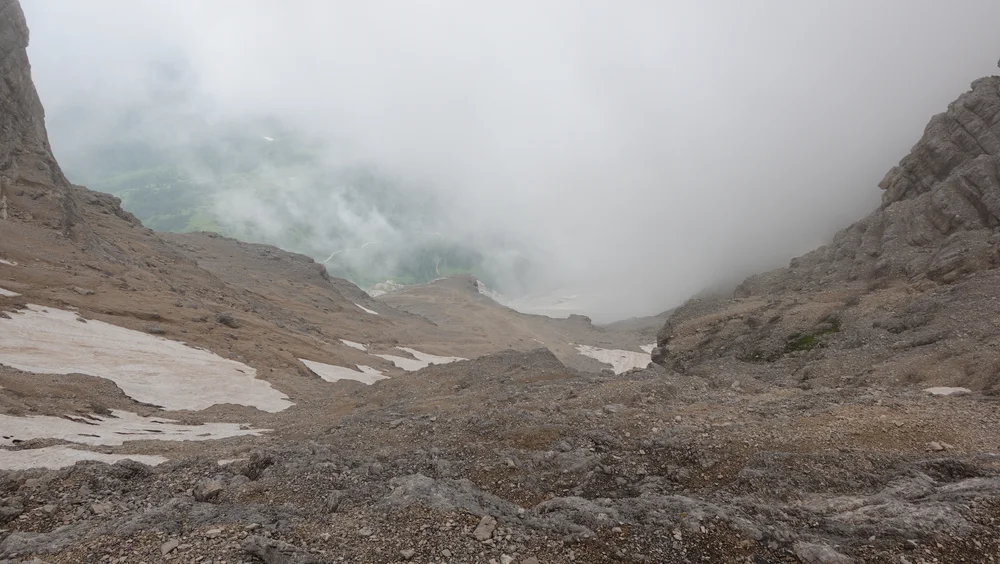
As already mentioned above, not every cloud means thunderstorm or rain. I have had full day climbs in clouds and without a drop of rain. Typical examples are my 13 hours long Monte Pelmo tour all the time in clouds, and Monte Civetta tour.
The bottom line
Respect the mountains, but don’t let a generic smartphone weather app convince you to stay home.
Summer thunderstorms are a normal part of life in the Dolomites and throughout the Alps. Plan intelligently, start early, monitor conditions in real time, and be willing to adjust your route if necessary.
A forecast showing thunderstorms doesn’t mean your holiday is ruined. More often than not, it simply means you are experiencing a typical summer day in the mountains.
Thank you for reading. Let me know about your experience related to this topic, there is a comment box below. Check also my text about the Dolomites phenomenon known as enrosadira.
Frequently Asked Questions
Should I cancel my Dolomites hiking trip if the forecast shows thunderstorms?
No. Summer thunderstorm forecasts in the Dolomites and the Alps often indicate typical convective activity rather than all day rain. Many days start clear and remain dry until mid afternoon. Experienced hikers treat these forecasts as a signal to adjust timing and routes instead of canceling.
Reliable sources such as the Italian meteorological service and local mountain guides confirm that stable high pressure patterns are rare in summer, yet thousands of successful hikes occur on days with afternoon storm icons.
What is the best strategy for hiking in the Alps during summer thunderstorm season?
Start very early with an alpine start, often before 6 AM and sometimes as early as 3 AM for bigger routes. Aim to reach summits and exposed sections by late morning and descend or reach shelter by early afternoon. Monitor live radar and local bulletins each morning. Choose routes with quick descent options or nearby rifugios.
This approach lets you complete the hike in good conditions while avoiding peak storm hours common across the Alpine region.
How accurate are long range weather forecasts for the Dolomites?
Forecasts beyond two days serve only as a general guide. Mountain terrain creates highly localized conditions that models struggle to predict accurately. Check the 24 to 48 hour forecast and confirm with morning observations.
Many hikers combine apps with direct views of the sky and reports from webcams or mountain rescue sites for better decisions.
What should I do if a thunderstorm develops while hiking in the Dolomites?
Get off exposed ridges and summits immediately. Seek lower ground, avoid lone trees and metal structures such as via ferrata cables. Wait it out in a sheltered spot or rifugio if needed. Carry a lightweight rain jacket, headlamp, and extra layers even on clear mornings.
Learning basic cloud patterns helps distinguish harmless cloud cover from real storm risk, as many full day hikes in the Dolomites stay dry despite heavy cloud.
Leave a Reply