After forty years of mountaineering, I sometimes feel that mountain huts have changed as much as the mountains themselves. Here are some thoughts on that topic.
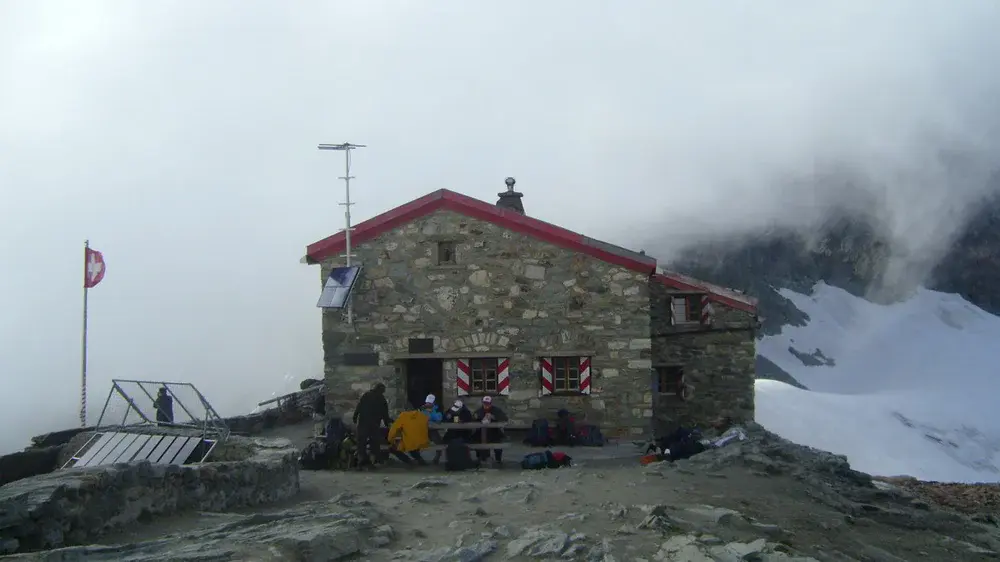
When I started climbing, a hut was exactly what its name suggested: a refuge. It offered shelter from the weather, a simple meal, and a place to sleep before continuing the journey the next morning. Nobody expected privacy or a hot shower. We were simply grateful to have a roof over our heads.
Also, nobody expected luxury. We slept in bunks where hundreds of climbers had slept before us. Dormitories in Cabane Tracuit shown above had 30-40 beds. The same I had in military barracks during my obligatory service.
For such huts, I always carried a clean pillowcase to slip over the shared pillow. It weighed almost nothing, and it made the night a little more comfortable.
There were no private bathrooms, no hot showers, and often no running water at all. Sometimes you would have the water coming from a glacier, with a hose in place outside, and this would completely freeze in the morning.
The menu was simple. Nobody complained, this was accepted as normal in such an environment. The hut was never the destination. It was part of the adventure.
Over the years, many huts have gradually become more like small hotels. Larger menus, hot showers, modern bathrooms, private rooms, and services that would have been unimaginable decades ago have become normal. I guess there is nothing inherently wrong with that. Many people appreciate the extra comfort, and for some visitors it makes the mountains more accessible.
But I sometimes wonder whether, in gaining comfort, we have lost a little of the original spirit.
This summer I have read several reports about water shortages in parts of the Alps. Some huts have had to limit or suspend hot showers because there simply isn’t enough water.
Many people see this as a major inconvenience, but my first thought was rather different.
My first reaction was to smile. Not because the lack of water is funny, it is a serious problem, but because I realised how much our expectations have changed. There was a time when the idea of expecting a hot shower at 3000 metres would itself have sounded amusing.
So it is not that I enjoy seeing people deprived of a shower, and certainly not because drought is something to celebrate. Water shortages in the Alps are a serious reminder of the environmental changes taking place, and they affect far more than mountain tourism.
What struck me instead was how much our expectations have changed.
A mountain hut exists because the mountain is stronger than we are. It is not a hotel that happens to be in the mountains. It is a refuge that exists only because the mountain allows it to exist.
The story of Rifugio Pian dei Fiacconi on Marmolada is a reminder of that. Sixteen years ago I climbed past a perfectly normal hut. Today it is a ruin after an avalanche. There is a lesson there that has nothing to do with nostalgia.
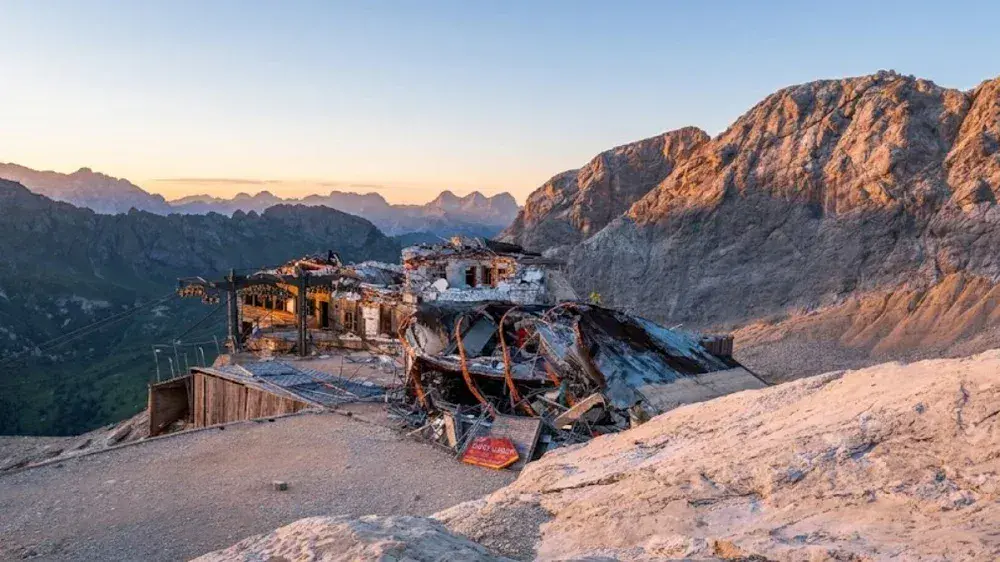
We build our refuges where the mountain allows us to. We sometimes forget that the mountain has the final word.
A hut depends on the weather, on snow, on springs, on helicopters for supplies, and on people willing to work in difficult conditions. It cannot always provide everything we would like. Perhaps that is worth remembering.
Maybe a mountain hut does not need to compete with a hotel in the valley. Maybe its greatest charm lies precisely in its simplicity. A warm simple meal, good company, a bunk for the night, and the privilege of waking up high in the mountains have always been enough for me.
Are there still such places around? Actually yes, have a look at Rifugio Torrani on Monte Civetta.
In summary, the mountains have never promised us comfort. They have always offered something far more valuable: perspective.
Comfort is pleasant, but it is not what brings us to the mountains. If we can still enjoy a simple meal, a shared dormitory, and a roof over our heads while the wind blows outside, we have not lost anything important.
Leave a Reply