Using open fire on the tours in the Alps is generally forbidden. But there are bivouacs in many parts of the Alps, in particular in the Italian Alps, and some are equipped for cooking.
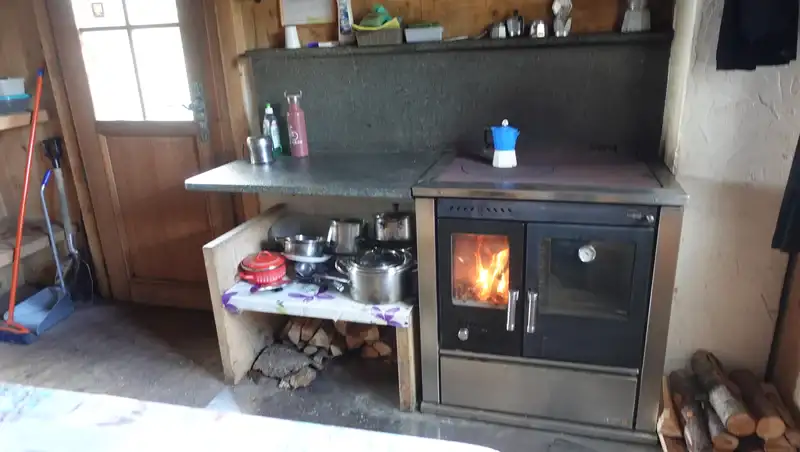
Cooking in bivouacs
Some bivouacs have wood-burning stoves, although firewood is not always available.
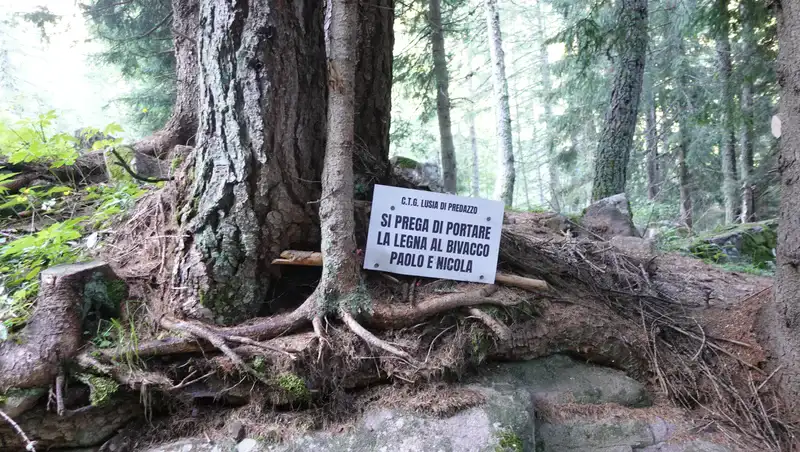
In some places, however, you will find wood prepared lower down the trail with a note asking hikers to carry some up to the bivouac. This is done to replace the wood that visitors use in the shelter. The photos below show a few examples.
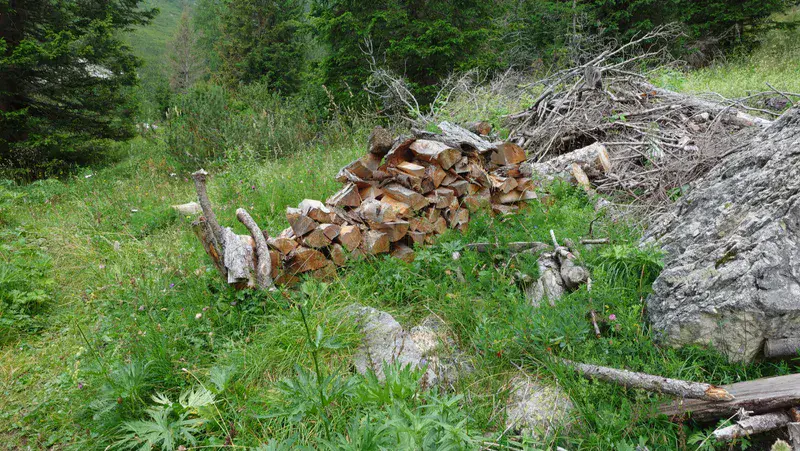
This also highlights an important point. If hikers are asked to carry firewood to a bivouac, it is because these shelters are intended to be used by mountaineers during their trips, not only in emergencies.
On some places you will see a table suggesting hikers to carry the wood, here is one from my tour to Bivacco Paolo e Nicola:
A wood-burning stove is there to provide warmth and allow people to prepare a simple meal or hot drink after a long day in the mountains. Naturally, everyone should use it responsibly and always leave the shelter in good condition for those who come after.
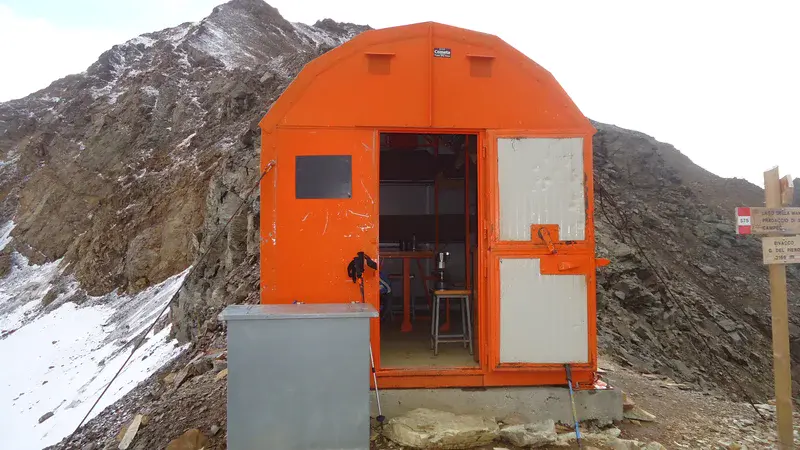
On rare occasions I have also seen bivouacs, including those operated by CAI, stocked with gas for cooking. I have come across this in other parts of the Italian Alps, although never in the Dolomites.
The photo below shows such an example, Bivacco del Piero, gas bottles are stored in that gray box outside, and pipes go through the wall:
Recently, any mention of bivouacs seems to trigger comments about overtourism. I fully understand the concerns about overcrowding in areas like the Dolomites, but the two issues should not be confused.
Bivouacs did not create overtourism, nor are they its cause. They have been part of alpine culture for generations and have served mountaineers long before social media, influencers, or today’s visitor numbers.
Responsible use of a bivouac is simply one aspect of traditional mountaineering.
Summit coffees
Personally, I carry my own stove and gas canisters. In fine weather, I enjoy making coffee on the summit before heading down.
Surprisingly, in all my years in the mountains I have never seen anyone else doing the same. So if you have ever spotted an old horse quietly brewing coffee on a summit, it was probably me.
One memorable occasion was on Sas Rigais. The summit was completely wrapped in cloud, yet I still sat down, made my coffee, and enjoyed the silence. It was peak season, and despite that, I had the entire summit to myself.
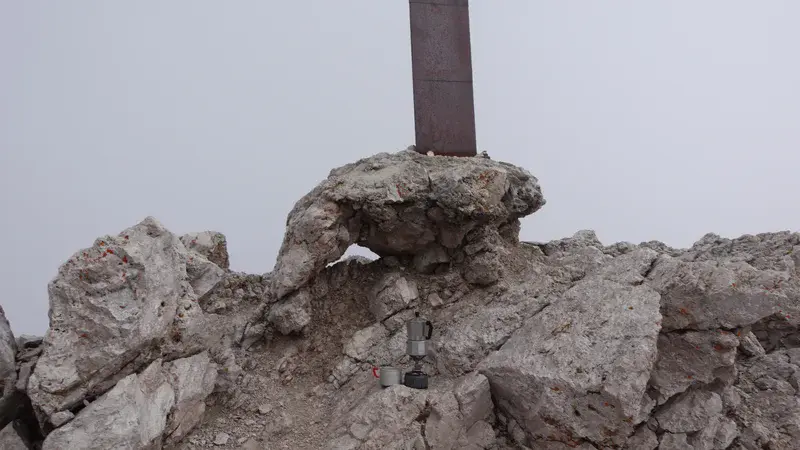
You can see me doing the same on Spik and Skrlatica in Slovenia, and also on Sassopiatto, Dolomites.
Final thoughts
I have been mountaineering for around 40 years and have been using bivouacs since long before the current debates about overtourism. Over those decades, I have seen countless climbers spend the night, cook a simple meal, and continue their journey the next morning.
That has always been a normal and accepted part of alpine life. Of course, in an emergency, a bivouac can be lifesaving, and anyone in need always takes priority. But reducing their purpose to emergency use only simply does not reflect how these shelters have traditionally been used and maintained.
Why would volunteers cut, stack, and ask hikers to carry firewood to a bivouac if nobody was expected to use the bivouac and the stove except in emergencies?
That is a practical fact rather than an opinion. At the same time, it is worth emphasizing that emergency use always takes precedence, which is a point most experienced mountaineers would agree with.
Did you know that there are more than 460 bivouacs in the Italian Alps? I have created an interactive map with all of them and it is available here on the site.
In the Dolomites alone, there are more than 140. Within this site you will find plenty of texts about what to expect in such shelters and how to behave.
Thank you for reading. Please use the comment box below and share your thoughts.
Leave a Reply