The Bivacco Baita Valentino Angelini is a very pleasant wood and stone bivouac on the northeast side of the San Sebastiano Group in the Dolomites, close to Passo Duran. It is always open and free to use.
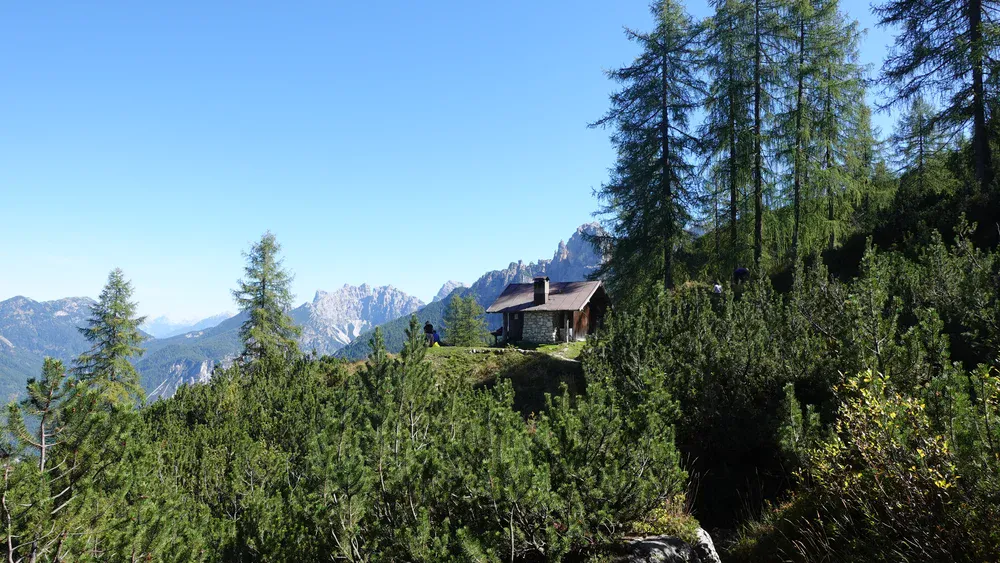
If you plan to visit Bivacco Angelini, plan around two and a half hours to get there. For sleeping, there are no mattresses or blankets in the shelter, so bring a sleeping bag and a sleeping pad.
Quick facts
- Bivacco Angelini elevation: 1705 m (5594 ft).
- Coordinates: 46.3205822, 12.1335428.
- Route type: walk-up.
- Elevation gain from the parking area: around 100 m (328 ft).
- Parking coordinates: 46.3251703, 12.0961283.
- Time needed to reach the bivouac from Passo Duran: 2 hours and 30 minutes.
- Route: 536.
- Beds: 6, no mattresses.
- Water: yes.
- Heating: firepit.
- Built in 1980.
- Nearest place to buy supplies: Dont, Zoldo Valley.
- Useful map: Marmolada – Pelmo – Civetta – Moiazza, Tabacco map number 15.
About the name and history
Baita Angelini was purpose-built as a mountain shelter, so this was never a malga or a casera. Its history is closely connected with the early exploration of the Zoldo Dolomites and the Angelini family.
The bivouac is dedicated to Valentino Angelini (1904–1976), a mountaineer and passionate naturalist who knew the mountains of Val di Zoldo exceptionally well.
He came from a family with strong mountaineering traditions and was the brother of Giovanni Angelini, a doctor, mountaineer and important historian of the Dolomites.
Together with their friend Silvio Sperti, the brothers explored and documented the mountains surrounding Val di Zoldo, opening several important climbing routes.
Valentino was particularly interested in alpine flora and the natural history of the mountains.
The dedication of the bivouac in 1980, four years after his death, was therefore a tribute to someone who had contributed considerably to the knowledge and exploration of this mountain region.
The Angelini brothers and the exploration of Val di Zoldo
There is a much bigger story behind the name Angelini. Giovanni and Valentino were part of a generation of climbers who helped document and explore the relatively little-known mountains of Val di Zoldo during the 1920s and 1930s.
Their friend Silvio Sperti was instrumental in introducing them to technical mountaineering.
They joined the CAI section of Cortina d’Ampezzo in 1923. At that time, climbing equipment was primitive:
- Ropes and hand-forged pitons.
- Ordinary leather shoes, with separate heavily nailed climbing footwear.
- Very limited information about routes in the Zoldo mountains.
- Giovanni subsequently became one of the most important chroniclers of the region’s mountaineering history.
He collaborated with Antonio Berti on the famous guidebook Le Dolomiti Orientali, published in 1928.
Later, he wrote several important works, including Civetta per le vie del passato (1977) and Pelmo e Dolomiti di Zoldo (1983), the latter with Pietro Sommavilla.
The Fondazione Giovanni Angelini in Belluno preserves his legacy and historical research.
Construction of the bivouac
The shelter was built on the initiative of CAI Val di Zoldo, with the patronage of the Fondazione Antonio Berti. It was inaugurated on 26 October 1980.
It is a small, traditional-looking structure made of stone and wood, rather than a modern prefabricated metal bivouac. The restoration in 2013 renewed the building while retaining its character.
The landscape: the old pastures of Vach
The setting also has a history worth mentioning. The basin of Vach was once used as grazing land. Today, part of the old pasture is occupied by a small lake, surrounded by forest and rocky mountain slopes.
The bivouac stands above this basin, on a natural rocky balcony. The old pastoral landscape, the waterfall and the surrounding mountains make this a particularly beautiful example of how traditional mountain life and mountaineering history overlap in the Dolomites.
Access roads and map
The interactive map below shows the following locations:
- Marker 1: Parking area at Passo Duran.
- Marker 2: Start of the route.
- Marker 3: Bivacco Angelini position.
Zoom in to see more details of the route. Zoom out to see the access roads to the area.
The Baita bivacco Angelini (Bivacco Baita Valentino Angelini ai Scarselóign) is owned by the Corpo Forestale dello Stato (State Forestry Corps – Territorial Office), while its management and maintenance are looked after in collaboration with the Club Alpino Italiano (CAI), specifically the Val di Zoldo section.
The bivouac is accessible by several trails, something I realized when I was there and found 8 people who had come from different directions.
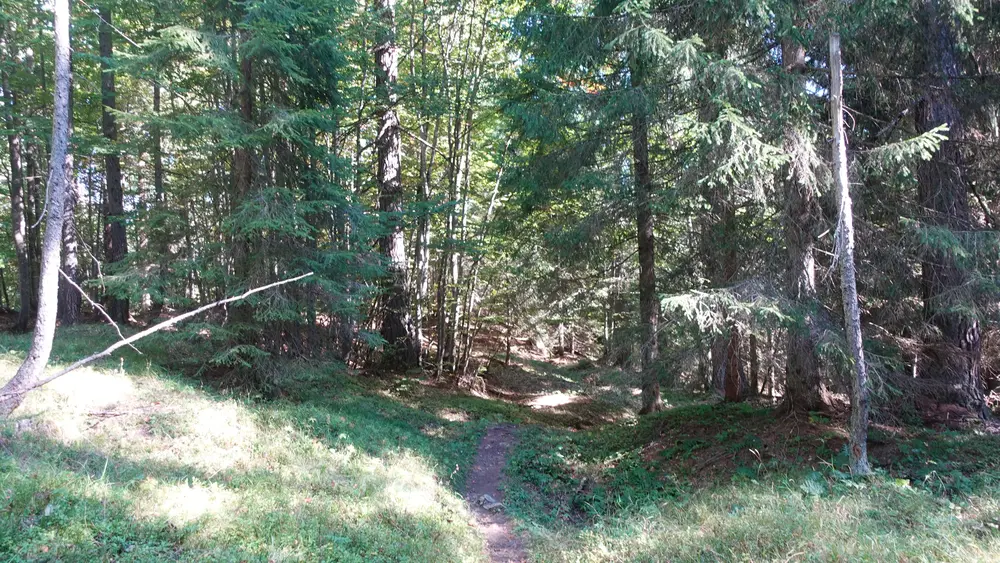
However, a very beautiful route starts from the Duran Pass and makes a loop around the San Sebastiano group. The route is almost completely in the forest, with only a few passages offering views.
Passo Duran is a pleasant place, as seen in the photo, and the access roads from Agordo and Zoldo are good, though narrow in some places. Even so, people with motorhomes drive here quite regularly.
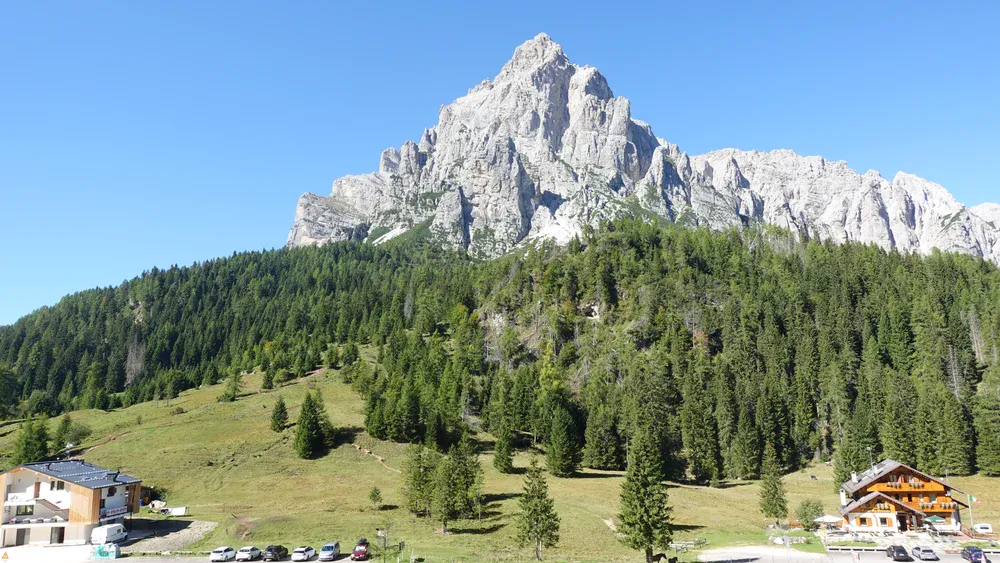
There is plenty of free parking space along the main road close to two huts: Rifugio Passo Duran (left) and Rifugio San Sebastiano (right). The table below shows that you need 2 hours and 10 minutes, but this is overly optimistic.
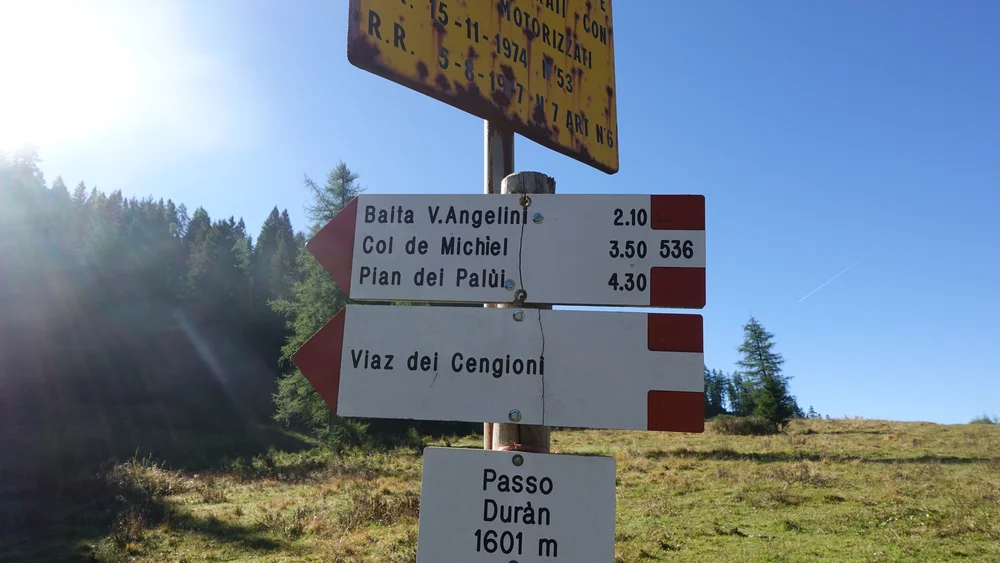
If you walk a bit along the road in the Zoldo direction, you will see Route 536 splitting to the right, so this is your path.
Route description
Here is how the route looks as you walk from Passo Duran. This is a walk through a pleasant forest with no big ups or downs, and elevation changes are minimal.
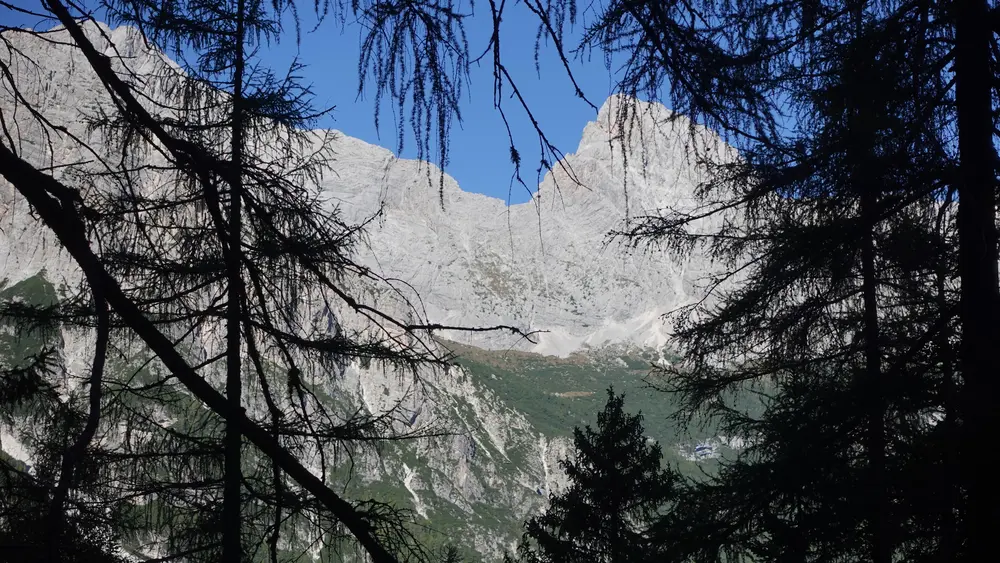
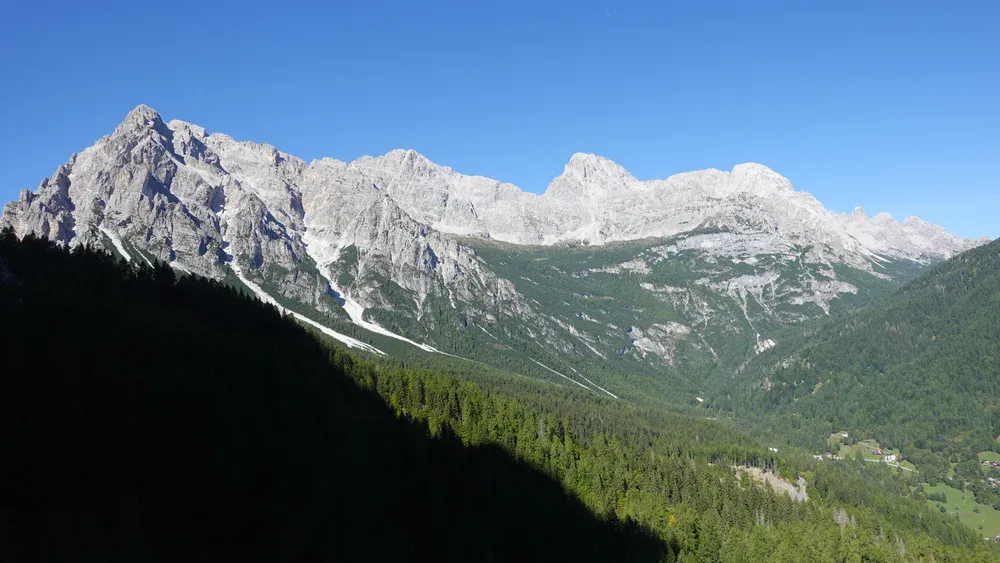
Occasionally, you will reach places with views, and the photo above shows the area where Bivacco Grisetti is located, which I visited the previous day. Below is a clearer view in the same direction, with Moiazza and Civetta on the right.
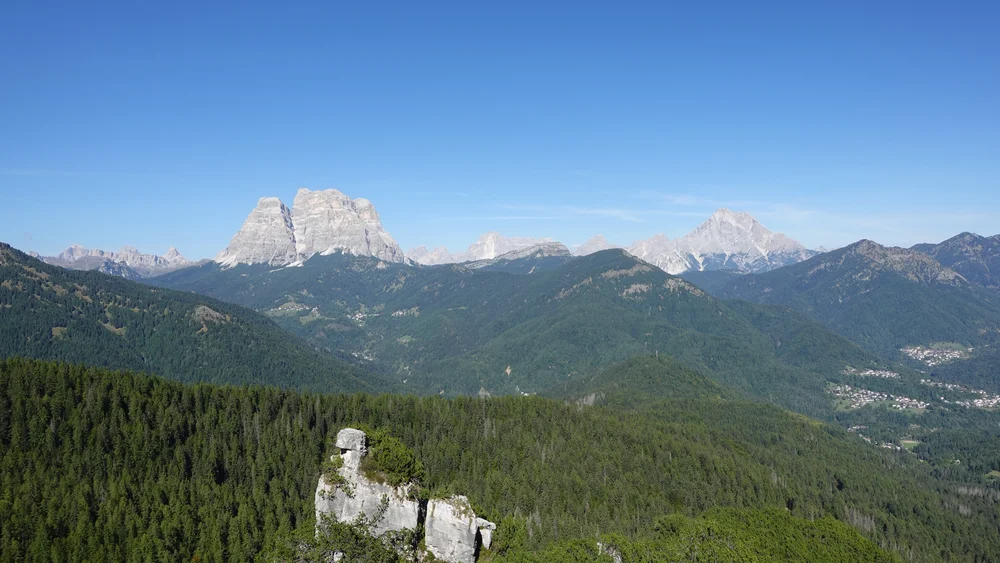
The view in the north direction is dominated by Monte Pelmo; see here how it looks above the Zoldo Valley:
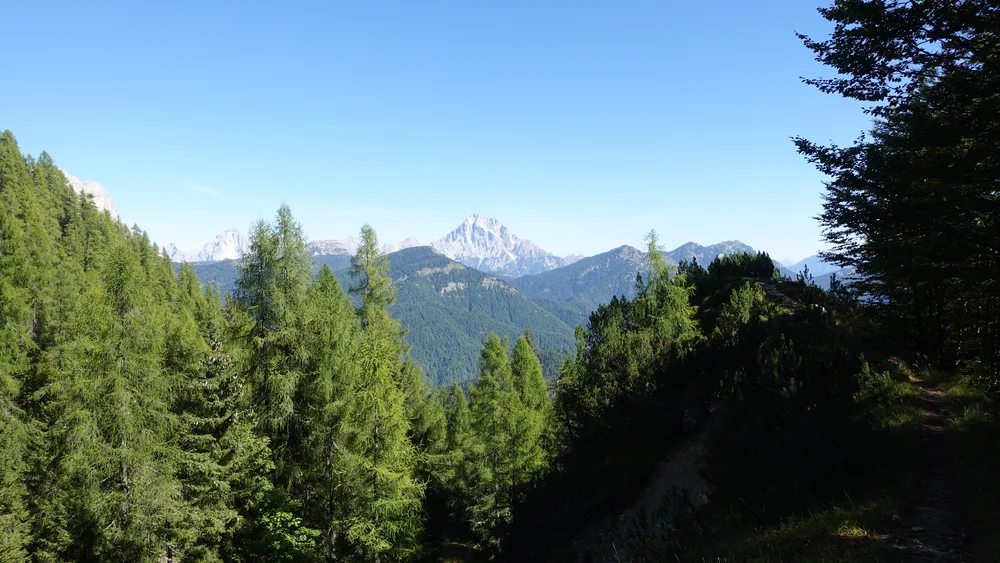
Antelao is also in sight whenever you have views. Here is one particular secluded viewpoint where you can rest and admire the scenery:
There is only one steep passage, and it is close to the bivouac. Below, you can see how it looks:
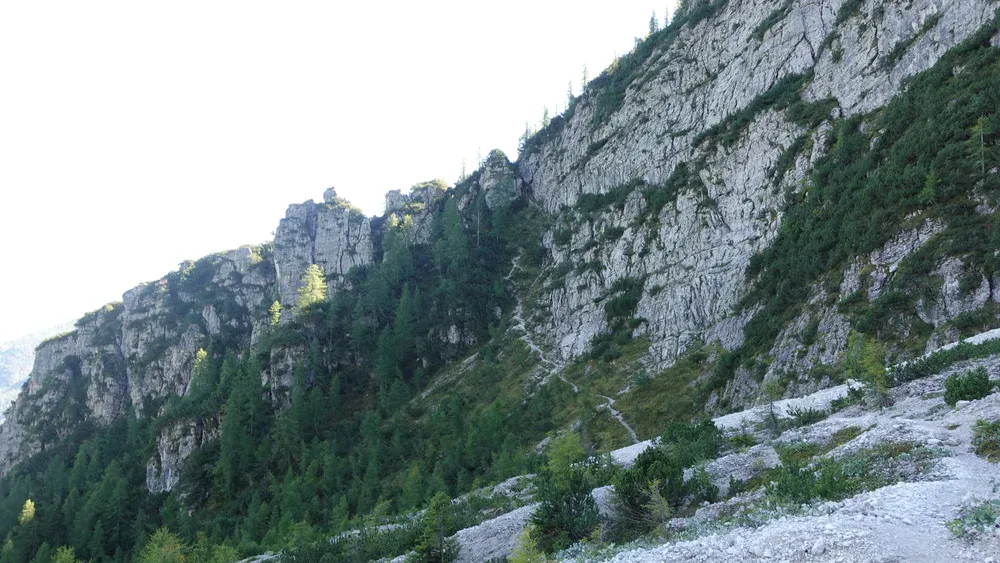
Once you are over it, the bivouac is very soon in sight. It resembles a cozy mountain cabin perched high above the forest. It stands on a ledge that lifts it above the trees, offering a striking view of the Zoldo area. The photo below shows how it looks when seen from the trail:
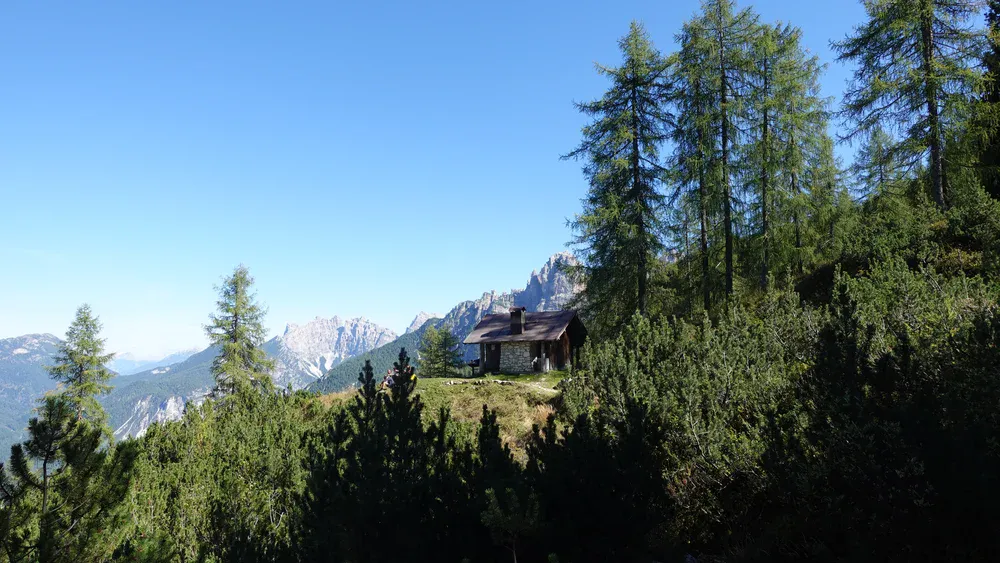
The whole scene has the soft, balanced beauty of a painting, with the simple building blending so naturally into its surroundings that nothing feels forced or artificial. It almost looks too perfect to be real.
Here is how it looks from the opposite east side:
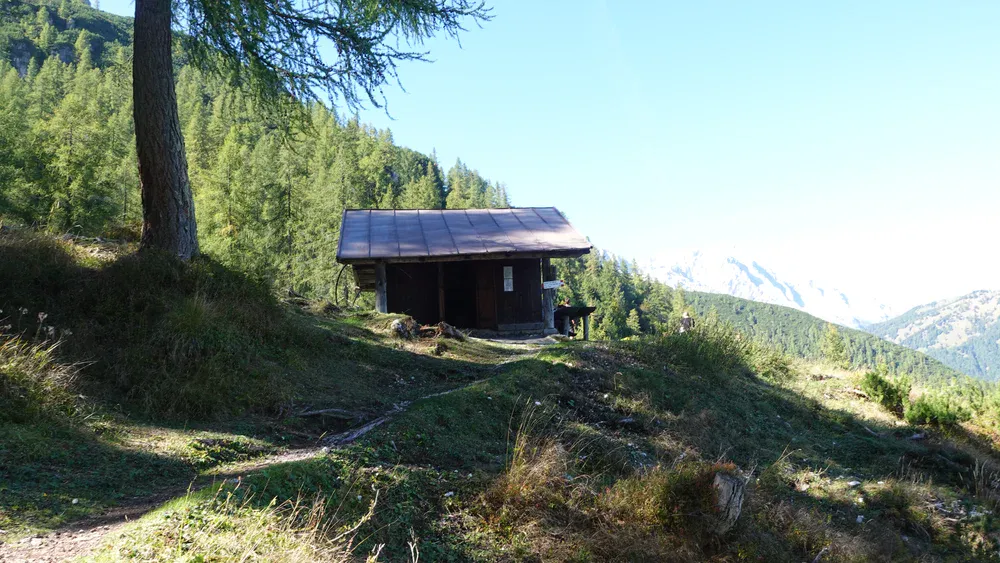
When you are in front of it, you have a breathtaking view in the north direction with the most important Dolomite mountains Pelmo, Antelao, and Sorapis dominating the horizon:
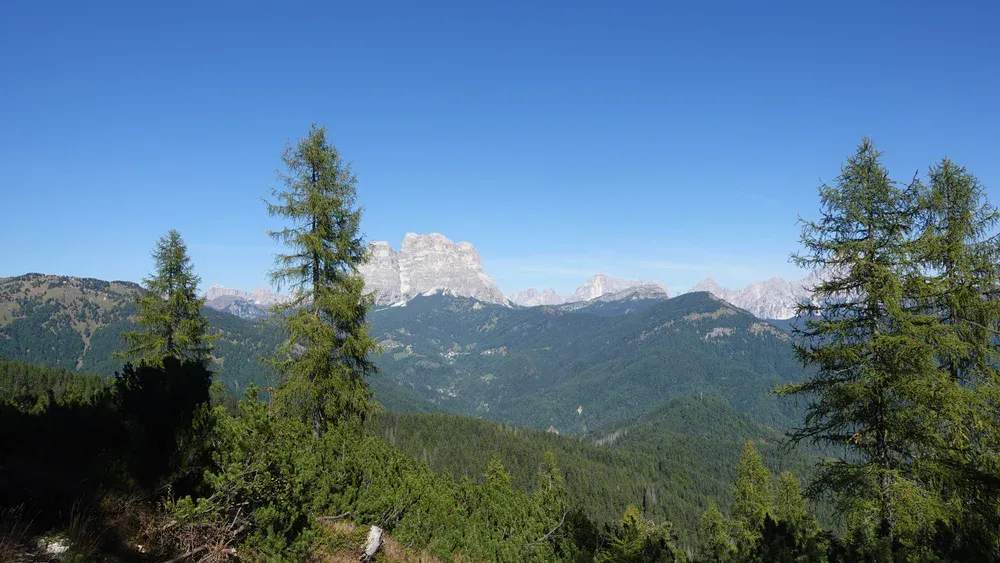
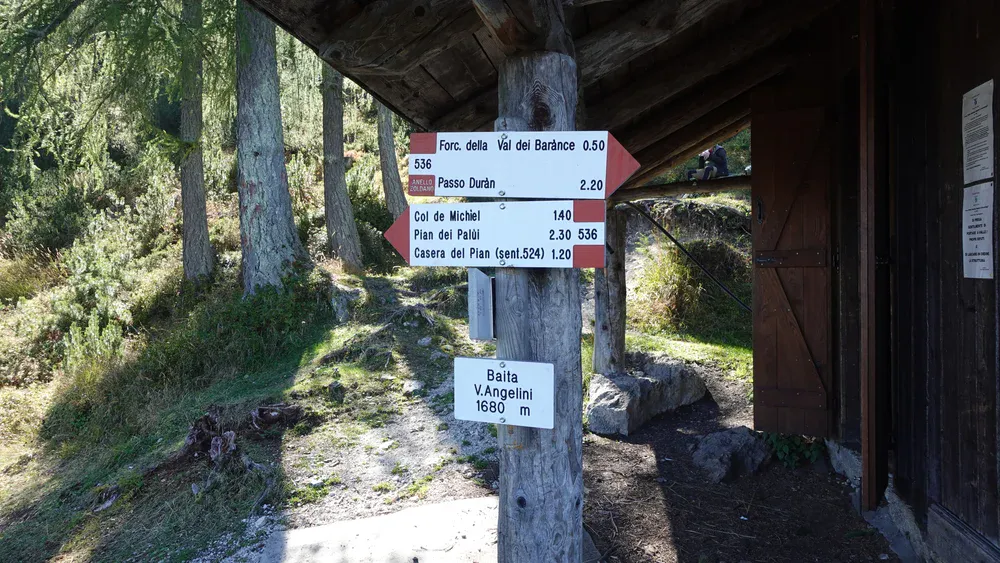
The photo below shows some information at the bivouac. Clearly, the elevation is different from what you can see if you zoom into the map where it is over 1700 meters.
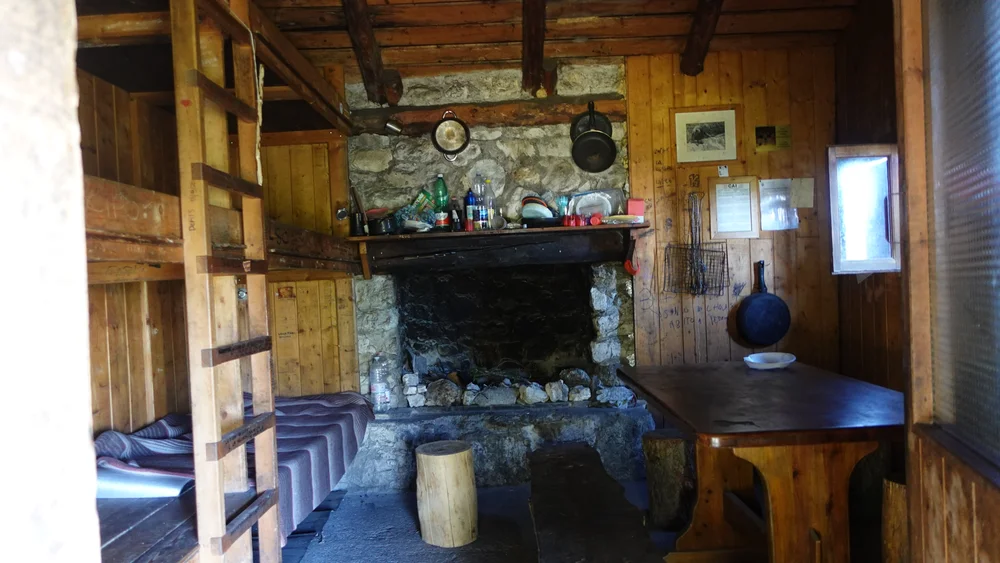
Inside, you have a fireplace and two three-level bunk beds without mattresses, so there is space for six people. You may see one or two blankets, but you should not rely on them. Some wood and wood-cutting equipment were available outside. The shelter has been there for many years, yet it is pleasant, with no bad smells inside.
My tour to Bivacco Angelini
As you can tell from the photos, I had perfect weather. I was walking in silence as there were no other people around. Only when I was over the steep passage shown in one of the photos could I hear some activity at the bivouac.
This was a group of four young Italians, almost teenagers; they were having a barbecue in front of the bivouac, and drinks were cooling in the water outside. As a result, the entire area was full of smoke, which was not very pleasant. There were two other couples, and we all kept some distance and enjoyed the views.
When the two couples left, I stayed a bit longer and then went back the same way. The boys were busy with their meal, but they clearly did not plan to stay overnight.
It took me around two hours and 25 minutes to get there, which is a bit more than what the signs suggest.
On my way back, the forest was empty again, with no other people going to the bivouac. No doubt this is a quiet place in the evening, so the impression I had was just a bit of bad luck.
I documented the tour in my video. Take a look:
Gear, water & food
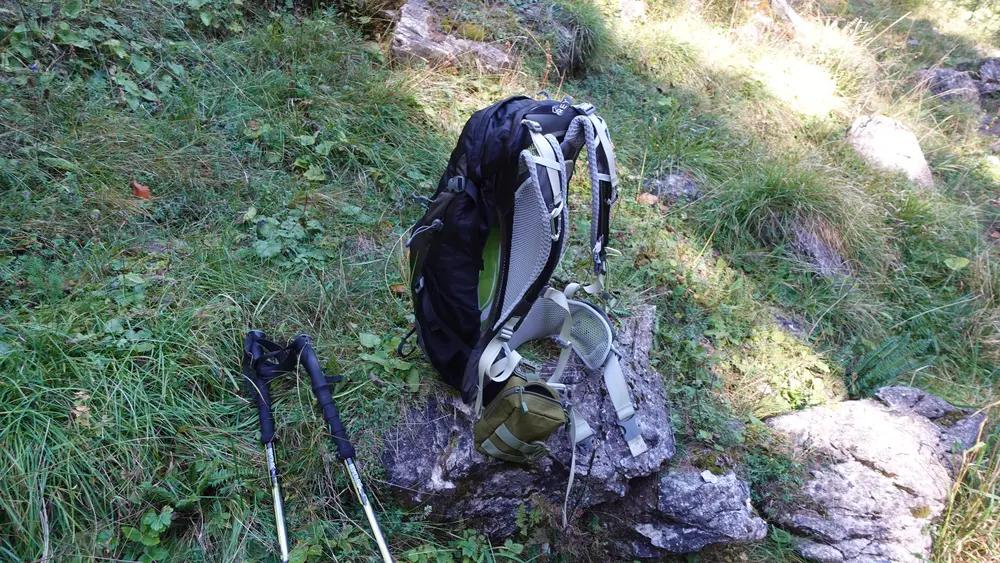
This is a walk-up route, so you do not need any special equipment. Standard hiking boots or hiking shoes are sufficient. I used trekking poles and a daypack, as seen in the photo.
If you plan to spend the night there, it is best to bring your own sleeping bag.
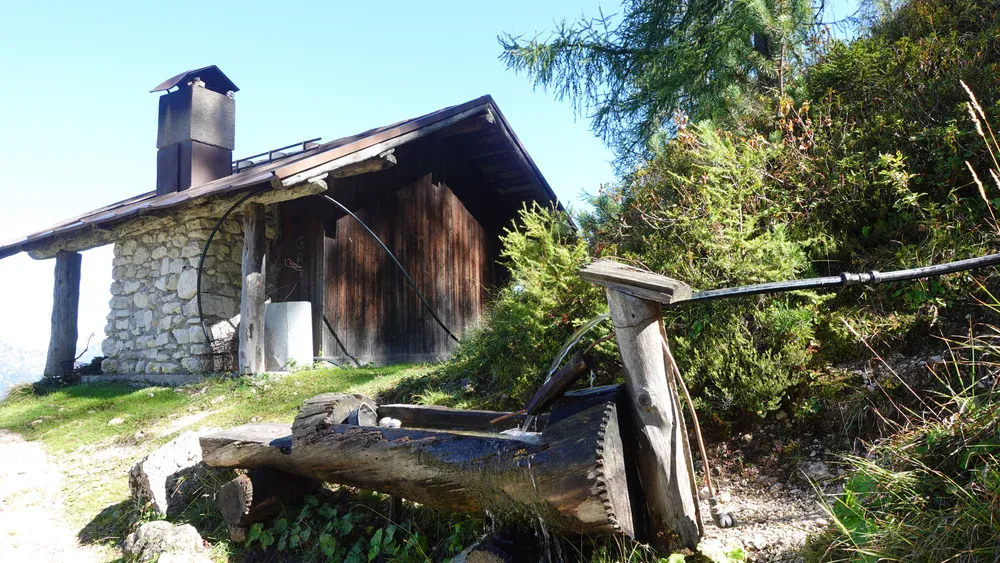
Water is available at the bivouac, as seen in the photo. I do not think you need a water filter, though if you have one, you can use it here. I refilled my bottle there, and the water looked excellent.
As for food, you can find shops in the Zoldo Valley, which is closer than Agordo to the west. The two huts on the main road offer meals; they look more like restaurants than huts, though they are indeed on the Alta Via 1 route that passes here.
Conclusion
Bivacco Baita Valentino Angelini is a great destination if you are looking for an easy, scenic walk in the Dolomites without the crowds you find on the more famous trails.
The route from Passo Duran is straightforward, well-marked, and takes you through a peaceful forest with impressive views of Monte Pelmo, Antelao, and Civetta along the way.
Whether you go there just for a day trip or plan to stay overnight, the bivouac is in a wonderful, sunny spot that is well worth the effort. Just remember to bring your own sleeping bag and enough food if you intend to sleep there, as the shelter only provides basic wooden bunks and a firepit.
Thank you for reading. Let me know if you have questions or comments; there is a comment section below.
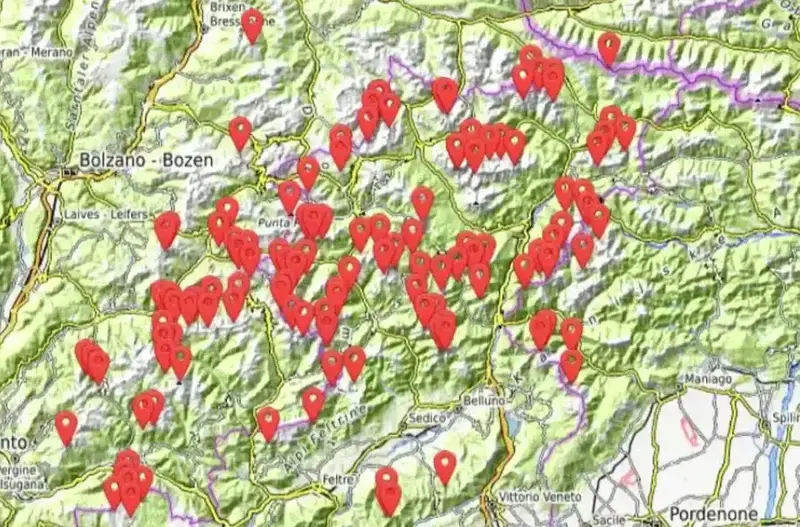
This bivouac, together with more than 180 others, is included in my interactive map available here on the site, see it below. Note that I also have a book titled Dolomites Solo, so have a look if you plan to do some mountaineering tours in the area.
Leave a Reply