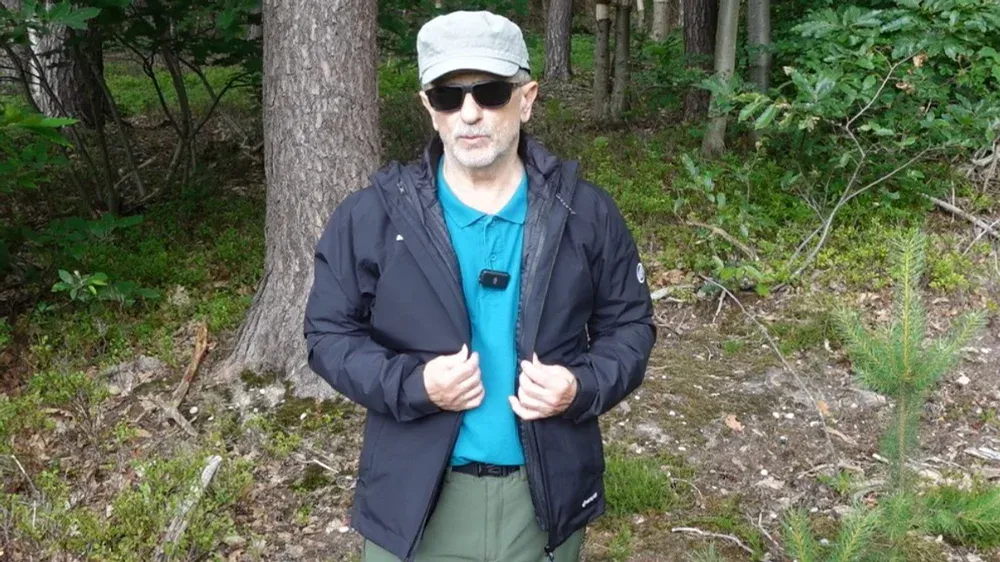
The Mammut Treeline 3 in 1 HS Hooded Jacket for Men is an incredibly versatile jacket for year-round use, with a removable down-insulated inner jacket, suitable for all seasons and weather conditions.
30-second verdict
✅ Two jackets in one: Versatile hardshell jacket, with down-insulated and removable inner jacket.
✅ Sustainable materials: 100 % PFC-free ePE Gore-Tex, bluesign approved.
✅ Superpowers: 30 cm pit zips for excellent ventilation • Hooded • 28 000 mm waterproof.
❌ Negatives: A bit noisy fabric • Runs slim (size up if you have lats).
★ 8.3/10 – My jacket for all seasons.
Ready to grab the Mammut Treeline 3 in 1 HS Hooded Jacket for Men?
I earn a small commission at no cost to you (thank you!)
10 Key facts
- 3-in-1 Jacket.
- Duck down insulated inner jacket.
- Highly waterproof.
- Highly windproof.
- Pit zips.
- Breathable.
- Very good hood.
- GORE-TEX with ePE membrane.
- PFC-free DWR.
- Bluesign approved + recycled materials.
What is in the name
The official name of this Mammut Treeline 3 in 1 HS Hooded Jacket for Men is highly descriptive, but here is what this all means.
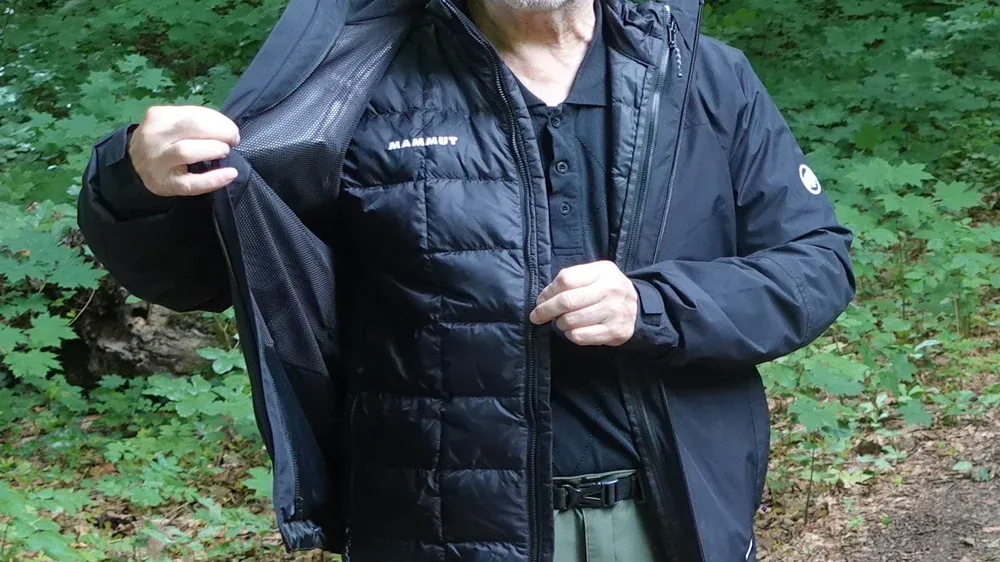
A 3-in-1 design implies that you have two separate jackets that can be used together or each of them separately.
The photo below shows the inner jacket unzipped on the left, and on the right you see how it is zipped to the shell jacket.
The shell jacket
So you have an outer jacket which is a hard-shell GORE-TEX jacket, and this is behind the letters HS in the name. This is a very comfortable shell for everyday use.
What I like in this jacket is the fact that there is an inner free hanging mesh instead of a bonded inner layer. This makes it pleasant to use, and I am also sure that such jackets are warmer than those with the mentioned bonded layer like the Crater Pro jacket from the same brand.
Note that they sell this shell jacket also separately, you can see it on their German shop and UK shop.
The inner insulated jacket
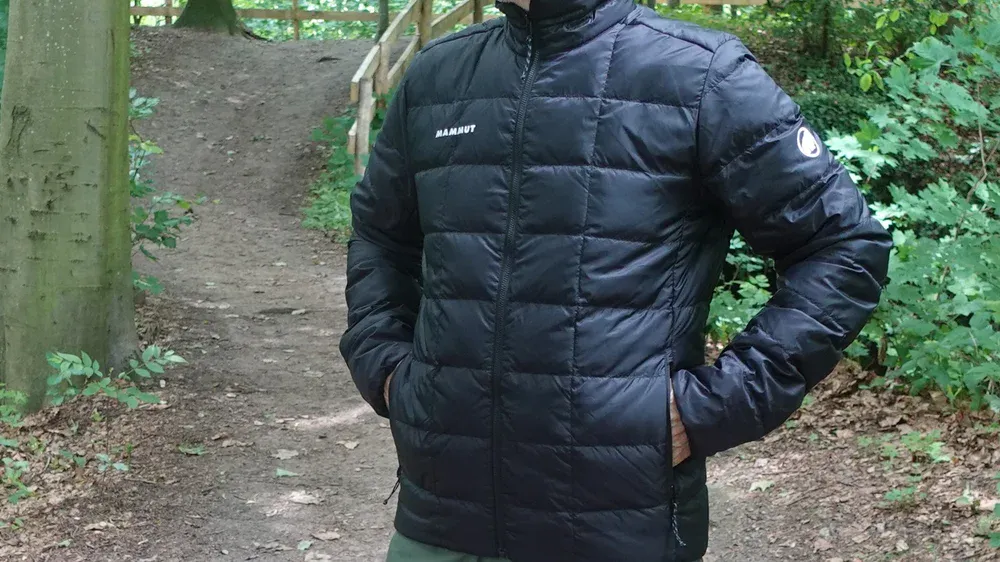
This is the second jacket in the set. From the picture you will agree that it looks great. The fabric is smooth and pleasant, so it is really easy to put the shell jacket on. As you probably know, this is not so with those fleece inner jackets.
The inner jacket is lightweight and because of its down insulation it is exceptionally packable. More about the materials below.
Essential technical features
These include the following, given in no particular order:
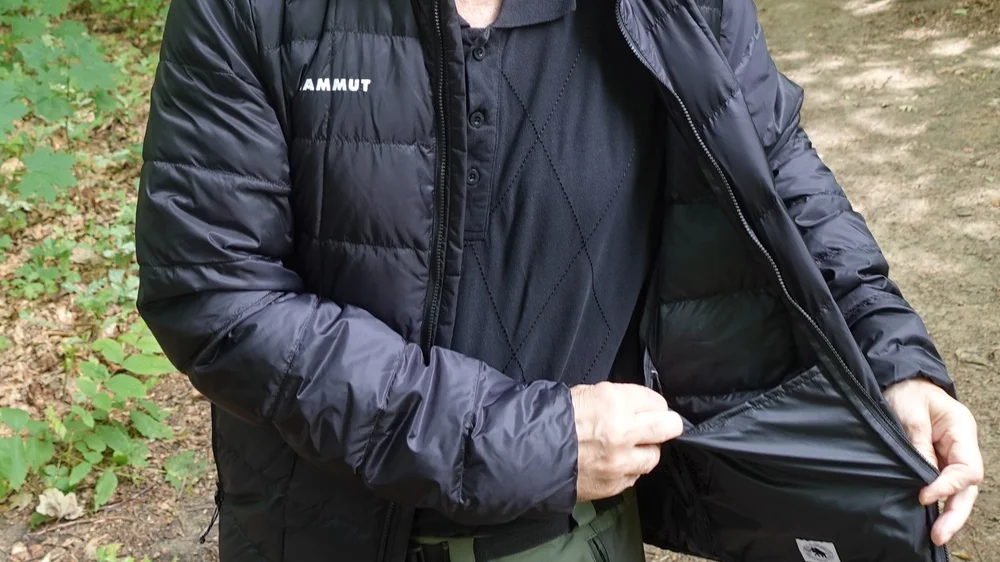
1. Two zippered pockets are on the down jacket, you can see them in the picture above. On the inner side of the down jacket, there are also two large pockets, one shown below. Here you can drop your gloves or beanie.
2. There are two zippered hand pockets on the shell jacket:
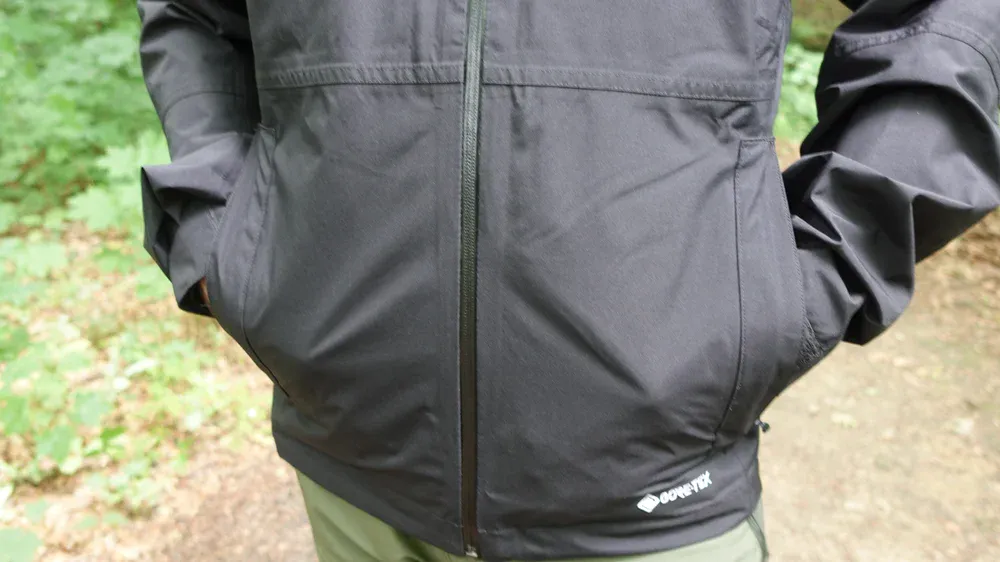
3. Underarm zippers are in place for optimum ventilation. They are around 30 cm long each and work really well.
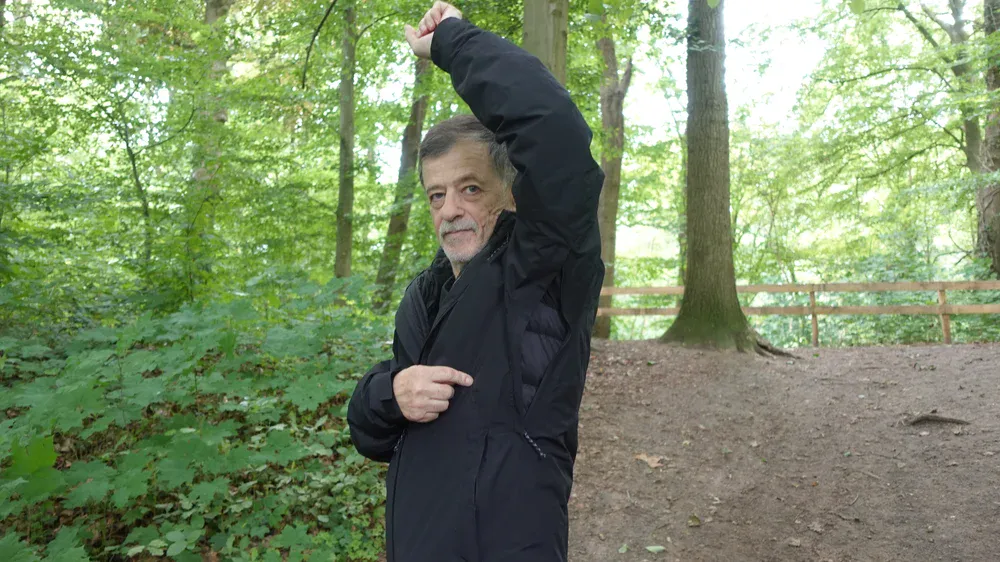
4. The hood is with one-point adjustability behind the neck. It offers excellent protection when the jacket is zippered.

Other features include:
- Pre-shaped sleeves with hook and loop Velcro fasteners on cuffs.
- Water-repellent front zipper. There is also a flap on the inner side.
- The jacket is made in two different color combinations.
- Adjustable hem.
- Zip-in system for the inner jacket.
- Elasticated cuffs and hem on the inner jacket.
Who is this Mammut Treeline 3 in 1 HS Hooded Jacket for
Regarding the best use, this is an all-purpose, comfortable everyday shell jacket. It will work well everywhere.
I would not describe it as a technical climbing and mountaineering jacket, but you can still use it there as well. This is what I plan to do with it.
Regarding the sizing, they describe it as standard fit, but I am sure this is not so. This is a slim fit.
Regarding gender, they have it for men and women, the same design but with gender-specific differences.
My preliminary testing
So far, I have been using this jacket for extended walks and bicycle rides, with and without the inner insulated jacket. Later, I shall use it in real mountaineering tours, so some additional paragraphs will surely be added here, together with more YouTube video updates.
I like the jacket, and I know I shall use it a lot in my daily life as well as in the mountains. Starting from the hood, it is optimal size, and you can use it over a cap with a brim.
The fabric is pleasant, the inner liner in both shell jacket and insulated jacket is smooth and silky. Taffeta in the sleeves of both jackets feels nicer against bare skin (if you are wearing a t-shirt) than the technical backer of a 3L alpine shell.
In the past, I have had several 3-in-1 jackets, and all of them had fleece as the inner jacket, so I can easily compare. Fleece as an insulated jacket indeed feels warmer, just to know.
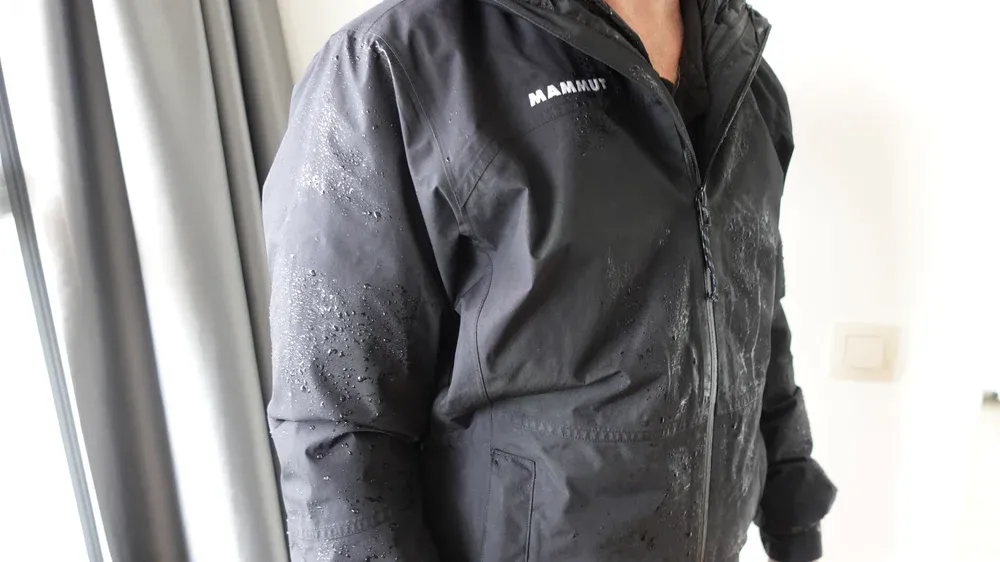
Regarding waterproofing, I did not do my usual shower test (you can see me doing this in my another review). The reason is that I realize that all such jackets come with lots of water-repellents on the shell fabric, so it does not even get wet when I take a shower in the jacket.
Real test will be much later when this repellent is worn out. I used it in the rain of course, and nothing passes through, it remains dry as you realize from the photo.
Breathability from my experience (more below) is very moderate, so I use pit zips extensively and I am really fine with this.
You might want to know that initially, such jackets may feel more breathable because of repellents that keep the face fabric dry in rain. When repellents are washed out, the fabric gets wet in rain, and breathability may be reduced.
Regarding the weight, I would describe it as very light. Namely, the total weight is 29.5 ounces (836 g), and the shell jacket alone is only 15.6 ounces (443 g). This makes it considerably lighter than their Mammut Crater Pro jacket.
What I like in the Mammut Treeline 3 in 1 HS Hooded Jacket
• I would put versatility on the first place. There are two jackets here, and you can use them in a variety of situations, and in all seasons and weather conditions. Nothing can beat a 3-in-1 jacket, I have had them quite a few in the past.
• Venting options is a true bonus. There are situations when the natural breathability of this GORE-TEX jacket may not be enough.
• The hood is big but not too big, I like it as it is, when you close it all around the neck, you are fully protected.
What I dislike
Here are a few objections:
A bit noisy fabric
The fabric feels a bit stiff and it is noisy and crinkly when moving.
Narrow pits & slim fit
When insulated jacket is used, pits feel tight. I handle this by unzipping pit zips.
This is not a standard fit, if you have thick lats, or rounded delts, better check in a local shop before buying online. You may decide to go for a larger size but sleeves will be too long.
My chest is 94 cm circumference and the jacket is S size, so it should fit just like my other S size jackets, but it is narrower. I have them several and can easily compare.
Price
No doubt the price is steep and this jacket may not be for people on a budget. Compare the prices in the links below for the best deal.
Ready to grab the Mammut Treeline 3 in 1 HS Hooded Jacket for Men?
Materials & construction
You will see the shell jacket described as a 2-layer type. So just to know, in outerwear design, a “layer” only counts toward the official number if it is permanently glued (bonded) into a single piece of fabric before the jacket is even sewn together.
This is exactly what you have here. The Mammut Treeline shell uses a classic 2-layer (2L) construction.
But you will notice three distinct materials, the outer shell fabric, the waterproof membrane bonded to it, and a loose-hanging mesh and taffeta liner.
The industry classifies this as a 2L jacket because the liner (see the photo) hangs freely rather than being laminated directly to the membrane.
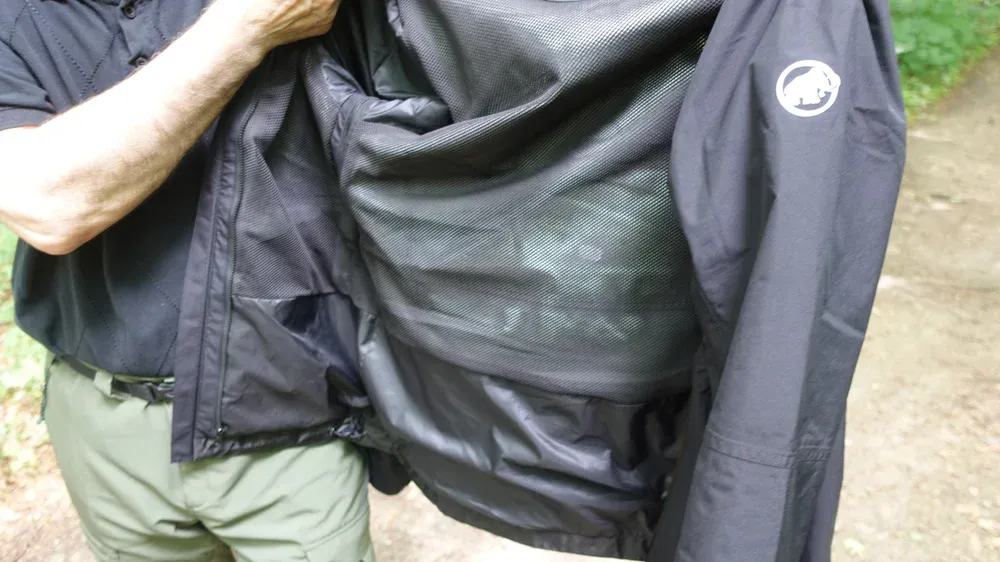
This gives the Treeline a much softer, and more comfortable feel than a rigid 3-layer alpine shells like the Crater Pro, though it does add a bit of weight and bulk to your pack.
All that you see here is a 100% polyester and recycled material, and one part is a 100% recycled polyamide.
The main shell fabric
You have a 75D x 75D fabric used for the shell. Here is what this means:
- Denier (D) measures yarn thickness; higher = tougher/more durable, but potentially heavier/stiffer.
- 75D describes a moderately robust mid-weight polyester face fabric (threads are 75 denier thick in warp and weft).
- I would say that this is a very good choice for a all-round jacket, abrasion-resistant against rocks and packs, but not bulky.
Waterproofness
Rating of this jacket is 28000 mm, and this means fully waterproof. Here is the meaning:
- 10000 mm: Basic rain protection (light showers).
- 20000 mm: Stormproof for most users.
- 28000+ mm: Pro-level, like Gore-Tex Pro shells used in expeditions. It won’t wet out easily, but maintain the DWR (durable water repellent) coating to prevent surface absorption.
Breathability
The value here is RET <20 m² Pa/W.
RET means Resistance to Evaporative Heat Transfer. <20 means moderately breathable, sweat escapes during aerobic activities, reducing that clammy feel.
This corresponds roughly to 5000 – 10000 g/m²/24h MVTR (here, MVTR stands for Moisture Vapor Transmission Rate).
You can compare this to Mammut’s top-tier alpine shell, the Crater Pro, which boasts a much more breathable RET < 13 due to its premium 3-layer Gore-Tex Pro construction.
The Treeline’s lower rating is the trade-off for its 2-layer design. The loose mesh and taffeta liner might slow down vapor transmission on a steep trail, but it makes the jacket softer and quieter, and more comfortable for casual hiking and daily wear than its rigid, crinkly alpine sibling.
You have pit zips that, from my own experience, they work excellent.
Insulation
The inner of the insulated jacket is a combination of 80% grey duck down 700 and 20% gray duck feather, 90 grams in total.
You probably know that the maximum down fill power in such jackets is 900, so what you have here is more than moderate.
Mammut Treeline 3-in-1 jacket ecological footprint
They provide the following information:
- PFC-free DWR.
- GORE-TEX Pro with ePE membrane. This type in their jackets is PFAS-free since 2022.
- bluesign PRODUCT (screens out harmful chemicals).
So no PFAS anywhere in the jacket, neither in the membrane nor the DWR. Water beading comes from PFC-free DWR (surface treatment).
PFC stands for Per- and Poly-Fluorinated Chemicals (also known as PFAS or “forever chemicals”), a group of synthetic compounds used in outdoor gear for water, oil, and stain repellency.
PFCs create a low-surface-tension barrier, making fabrics hydrophobic (water-shedding) and oleophobic (oil-resistant). This enhances performance in rain, snow, or dirt without adding weight.
These chemicals are persistent; they don’t break down naturally, bioaccumulate in the environment (soil, water, wildlife), and can enter the human food chain.
Studies link them to health risks like reproductive issues, immune suppression, and potential cancer links, though direct exposure from wearing gear is low (risk comes more from manufacturing runoff or gear disposal).
By 2025, regulations (e.g., EU REACH bans, U.S. state-level restrictions) are pushing full elimination from consumer goods, including textiles.
Brands like Mammut switched to non-fluorinated DWRs (e.g., wax-, silicone-, or plant-based like hydrocarbon or siloxane formulas). These perform nearly as well but may need more frequent reproofing (every 10–20 washes).
In short: PFC-free means safer for the planet and you; the jacket repels water effectively without contributing to pollution.
Specifications at a glance
- Type: hard-shell 2-layer jacket.
- Cut/Fit: slim (branded as regular).
- Total weight: 29.5 oz (836 g).
- Shell jacket weight: 15.6 oz (443 g).
- Waterproofness: 28000 mm.
- Breathability: RET<20 m² Pa/W.
- Denier (main material): 75 x 75 D.
- Fill power: Mammut down 700 cub in.
- Fill weight (down): 90 g.
- 80% Grey duck down, 20% grey duck feather.
- Hood: yes.
- Fit: slim fit (branded as standard).
Final thoughts & rating
In the end, the Mammut Treeline 3-in-1 HS Hooded Jacket stands out as a highly dependable, ultra-versatile solution for year-round weather protection.
By pairing a bombproof 28000 mm Gore-Tex outer shell with a lightweight, packable 700-fill duck down inner jacket, Mammut has created a true quiver-killer for daily life and casual trail use alike.
It is incredibly comfortable thanks to the free-hanging mesh liner, which feels great against bare skin and keeps you noticeably warmer than rigid 3-layer alpine alternatives. Furthermore, its completely PFAS-free construction means you can take it into the wilderness knowing its ecological footprint is heavily minimized.
However, keep its minor quirks in mind. The fabric has a signature Gore-Tex crinkle, the out-of-the-box breathability is only moderate (though easily rescued by those excellent 30 cm pit zips). The fit runs decidedly slim especially around the armpits when layered. If you have broad shoulders or built lats, sizing up is highly recommended.
If your budget allows for the premium price tag, you are getting an exceptionally well-made, eco-conscious, two-jacket system that will seamlessly transition from a rainy morning bike commute to a freezing winter hike.
(Note: While this review focuses on the men’s model, Mammut also offers an equally capable version for women, with the same features.)
Based on all described in the text above, here you can see how I rate this jacket:
Mammut Treeline 3 in 1 HS Hooded Jacket for Men

Pros
- Two separate jackets in one.
- Versatile.
- Waterproof.
- Ventilated.
- Great hood.
Cons
- Narrow pits.
- A bit noisy.
- Expensive.
Ready to grab the Mammut Treeline 3 in 1 HS Hooded Jacket for Men?
Let me know if you have questions or comments, there is a comment box below. Have a nice day.
FAQ
Is a 3 in 1 jacket warmer than a standard waterproof shell?
In general, yes. A 3 in 1 jacket combines a waterproof outer shell with a separate insulated layer, so you can adapt it to changing temperatures.
During winter, both jackets work together for maximum warmth, while in milder weather you can use only one layer. This flexibility makes a 3 in 1 jacket more versatile than a standalone shell.
How long does Gore Tex waterproofing last?
The Gore Tex membrane itself can remain waterproof for many years. However, the outer fabric treatment that makes water bead on the surface gradually wears off with use and washing.
Periodic cleaning and reproofing help maintain performance and prevent the face fabric from becoming saturated during prolonged rain.
Is 700 fill duck down warm enough for winter hiking?
For most hikers, 700 fill duck down offers plenty of insulation for cold weather use. Combined with a waterproof shell, it provides a good balance of warmth, packability, and weight.
In extremely cold environments or high altitude expeditions, jackets with higher fill power and more insulation may be a better choice.
Are PFAS free waterproof jackets less effective?
Modern PFAS free waterproof jackets perform remarkably well and are now used by many major outdoor brands.
Their water repellency may require more frequent maintenance compared with older fluorinated treatments, but they offer excellent protection while reducing the environmental impact associated with so called forever chemicals.
Leave a Reply