The Dolomites are famous for their dramatic peaks, iconic rifugios, and crowded summer trails. But hidden high among these mountains is another world entirely: the world of bivouacs. This text is about them.
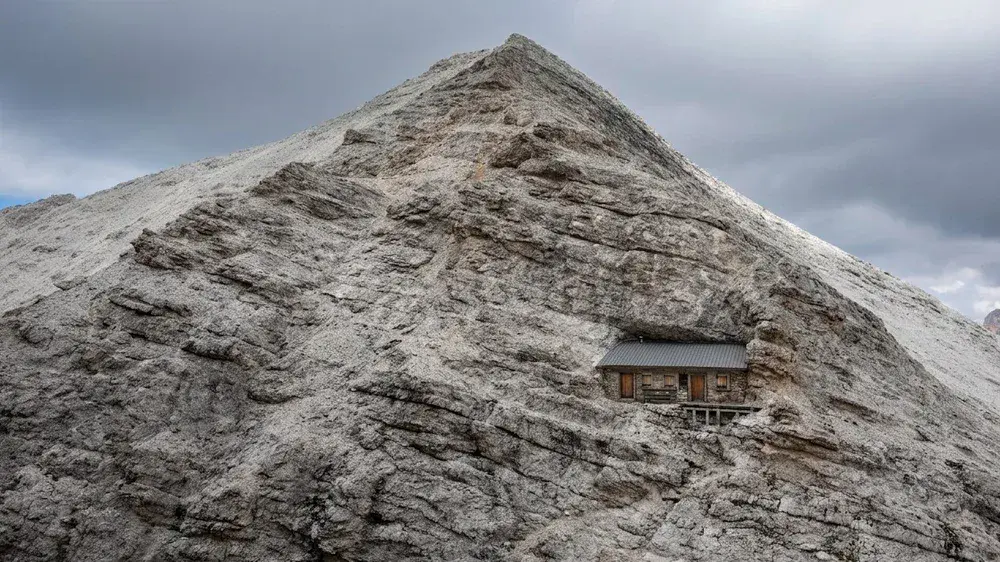
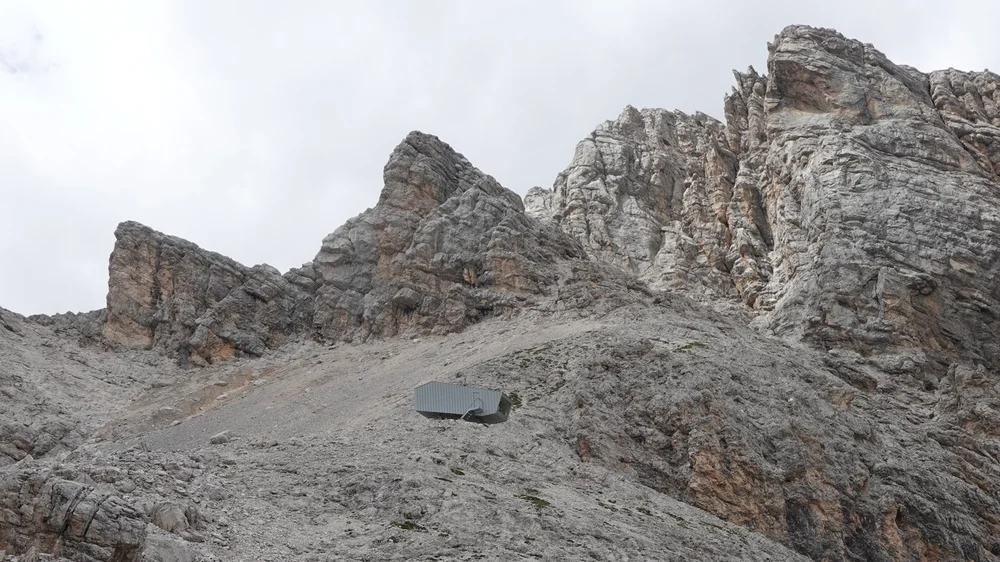
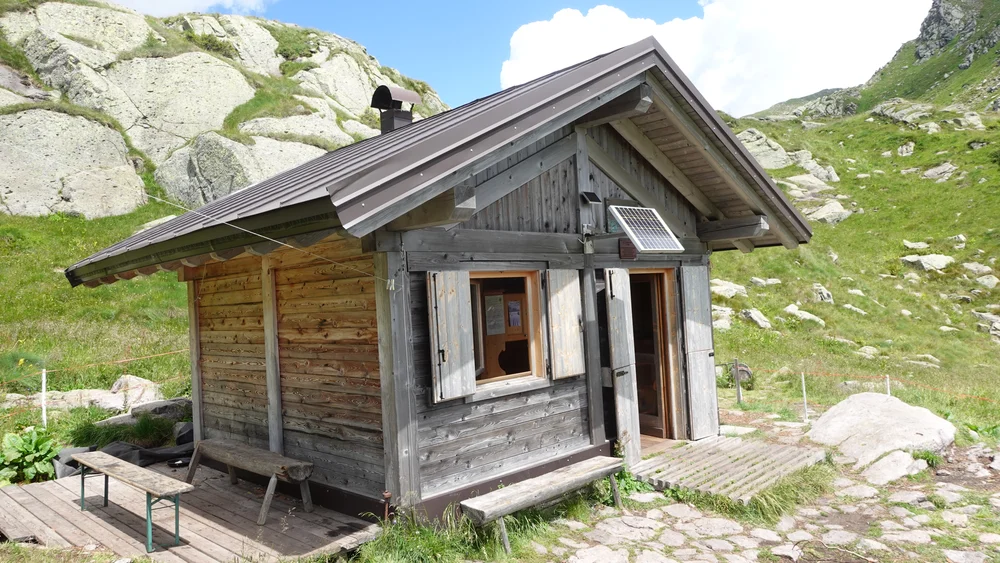
Small shelters painted red, yellow, or metallic silver sit on remote ridges, beneath towering walls, and beside forgotten passes. Some are simple steel boxes with bunk beds. Others feel almost like tiny cabins suspended between earth and sky.
Most hikers pass within kilometers of them without ever knowing they exist.
For those who do know about them, bivouacs offer a completely different experience of the Dolomites, quieter, wilder, and far more intimate.
Instead of hiking from hotel to hotel, you move through the mountains one shelter at a time. Sunset becomes part of the journey, and so does silence. So does waking up alone at 2700 meters with the first light touching the Pale Mountains.
What is a Dolomites bivouac?
Unlike staffed rifugios, bivouacs are usually unmanned shelters intended primarily for emergency use or minimalist overnight stays.
They are often located in places where no hut could realistically operate:
- isolated passes,
- remote alpine traverses,
- climbing approaches,
- high-altitude ridges.
Some contain mattresses, blankets, tables, or cooking equipment. Others are extremely basic. Conditions vary enormously, and finding accurate information can be surprisingly difficult.
Many bivouacs do not appear clearly on Google Maps, have little English information online, or are known only through local alpine communities.
Why hike bivouac to bivouac?
Because it changes your relationship with the mountains.
When you stay in rifugios, the experience often revolves around the hut itself: reservations, meals, crowds, schedules.
Bivouacs are different. They strip the experience back to the essentials.
You carry what you need. You arrive before dark. You watch weather move across entire valleys. You sleep in complete silence. And in the morning, you continue.
For photographers, mountain runners, fastpackers, alpinists, and long-distance hikers, bivouacs unlock routes and experiences that most visitors to the Dolomites never discover.
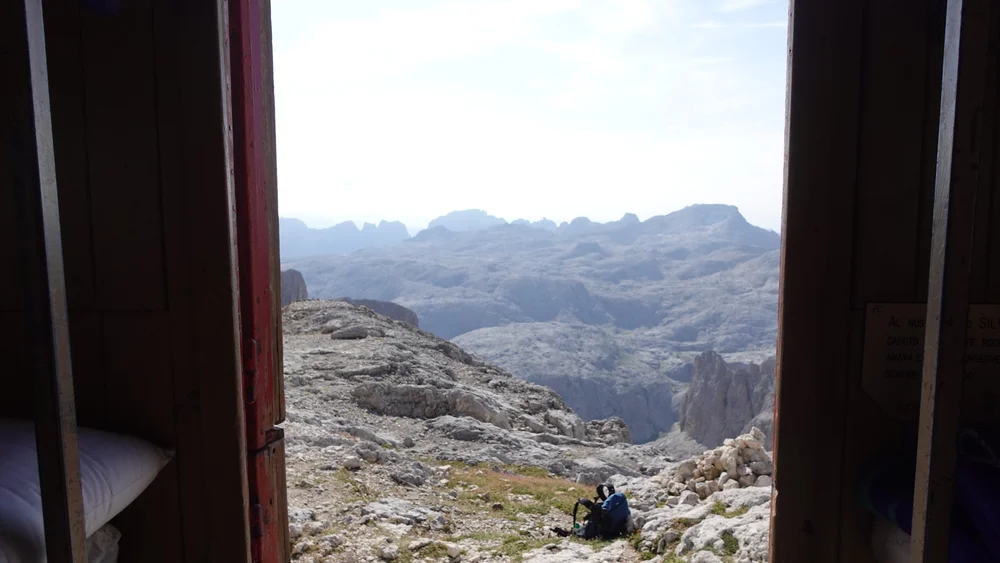
Below is the view from one of them, at elevation over 3000 meters.
The problem: finding bivouacs
Over the years, I realized there was no complete resource collecting Dolomites bivouacs in one place.
Information was scattered across Italian Alpine Club pages, outdated forums, maps, and local websites. Some bivouacs had multiple names. Others had almost no usable information at all.
So I started building my own database. After years of searching and mountaineering in the Dolomites, I eventually compiled a complete collection that currently contains 138 bivouacs in the Dolomites, including coordinates, photos, and access information.
Whether you are looking for a single unforgettable overnight stay or a multi-day alpine traverse, the map opens up an entirely different side of the Dolomites.
If you want to start planning your own bivouac-to-bivouac trek, you can explore the map and plan your adventure.
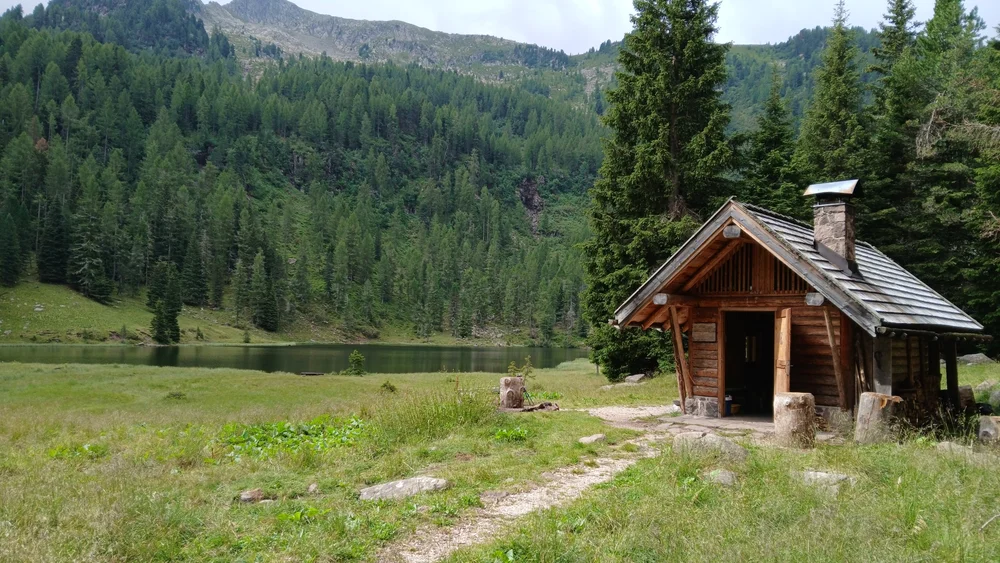
Single overnight stay vs multi-day trek
For a single overnight stay in a bivouac the planning should be easy, make sure you have enough food and water, and check the weather conditions for two days.
If you have no experience of that type, you might want to know what to expect in a bivouac, we describe this in detail elsewhere on the site.
Inspect hiking maps in the area and make sure you have ferrata equipment if needed. Note that some bivouacs are in places where such equipment is needed, we have a map with ferratas in the Dolomites so have a look.
Bear in mind that Dolomites bivouacs are quite scattered, so careful planning is needed if you want to make a multi-day bivouac to bivouac adventure. Marmarole area is one example where you can easily organize a trek of 3-5 days. The same holds for Lagorai which has a huge concentration of bivouacs suitable for multi-day treks.
Occasionally you will have to descend to valleys for supplies or to take a rest if weather turns bad for a longer period, so check also about various options for accommodation in the Dolomites.
Conclusion
Bivouacs in the Dolomites are an alternative for huts, but it is important to know what to expect and how to behave in a bivouac.
They are free to use and always open. Sometimes you may have the entire shelter for yourself, while at other times you should be prepared to sleep on the floor if it becomes crowded.
What makes bivouacs special is not comfort, but location and atmosphere. Few experiences in the Alps compare to spending a night in complete silence high above the valleys, watching the last light disappear from the Dolomite peaks.
For many hikers, a single overnight stay in a bivouac becomes the beginning of a different way of exploring the mountains.
If you plan carefully and respect these places, bivouac-to-bivouac trekking can become one of the most rewarding adventures in the Dolomites. Explore the complete map of Dolomites bivouacs here.
Thank you for reading. Let me know if you have questions or comments in the comments section below.
Leave a Reply