I was watching two videos presenting beautiful bivouacs in the Lagorai mountains and realized that the author intentionally did not disclose their names or locations.
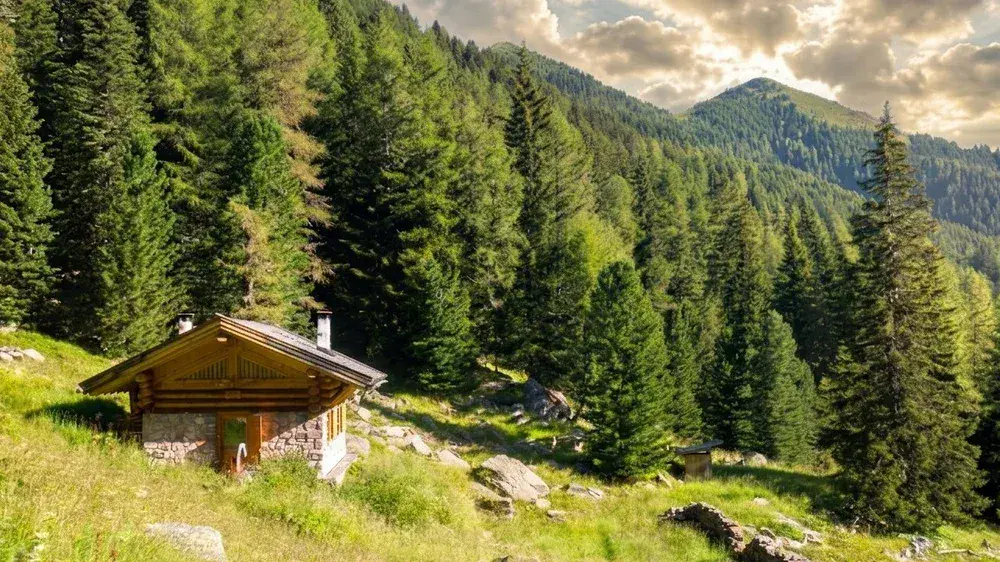
Secret bivouacs videos
You can watch both videos below and immediately notice the intriguing silence regarding the locations, with several comments also asking viewers to keep the bivouacs secret.
Here is the first video, this is one of the best equipped bivouacs in the area. As you will realize, the name is never mentioned:
Curious about the name and location? Well, this is Bivacco Malga Valletta Alta in Lagorai, owned by the Comune di Fornace. It should not be mixed with Bivacco Valletta Alta in Adamello-Brenta area.
Here is the second video, the same author, and he describes it as Secret Bivouac:
Initially, I asked about location and name, but never received a reply. Then I realized that the author writes this in the featured comment: Chiedo gentilmente di non scrivere nei commenti il nome del bivacco altrimenti si perde il senso del tenerlo segreto! Grazie.
English translation: Please don’t post the name of the bivouac in the comments, otherwise the point of keeping it a secret will be lost! Thank you.
There were many other comments expressing the same sentiment and encouraging people to keep the location secret.
This time it is about Bivacco Campivelo (also known in some sources as Bivacco Carlo Roat) located south of Borgo Valsugana, Lagorai mountain group in the Trentino region, Italy. It is owned and maintained by the SAT Borgo Valsugana (Società degli Alpinisti Tridentini).
I have not visited these two bivouacs yet, but plan to do so in a few weeks time. I simply did not realize they were such welcoming and well-maintained places.
Both bivouacs had actually already been included in our map of Bivouacs in the Dolomites and in the map of Bivouacs in Italian Alps. Here is the screenshot from the maps so you can see where they are:

Why keeping the names secret?
I think there are two separate questions to discuss here:
- Can people realistically keep these places “secret” anymore?
- Should they still try?
Regarding the first question, in 2026, “hidden” alpine spots are often only hidden from casual viewers. Between reverse image search, map overlays, satellite imagery, GPX communities, hut databases, and comments sections, determined people will find them. Especially in the Dolomites, where the landscape is extremely recognizable.
So my message to the author of the videos is: Once a bivouac is featured prominently in a public video, keeping it truly secret becomes difficult.
But the second question is more nuanced.
Some creators avoid naming bivouacs not because they believe secrecy is foolproof, but because they want to reduce viral exposure. This is probably the case here. There is a difference between:
- a motivated mountaineer doing research and finding a place after effort,
- versus a video with “Top 5 Secret Free Bivouacs” sending thousands of unprepared visitors there in one summer.
Many alpine bivouacs are tiny and unmanned. They depend entirely on visitors behaving responsibly and are vulnerable to litter, fire risk, and overuse.
Some have already suffered from Instagram/TikTok effects. Locals and climbers have seen quiet shelters become crowded photo destinations. So the “please don’t reveal the name” comments are often less about exclusivity and more about slowing mass attention.
That said, there is also valid criticism of gatekeeping. These shelters were generally built for public mountain use, not for a small in-group.
Sometimes the culture of secrecy becomes performative: creators still show easily identifiable footage, experienced viewers can identify the location immediately, while newcomers are left feeling excluded.
For my site Mountains for Everybody, I think the right approach is this:
- publish the names,
- explain the history and purpose of the bivouacs,
- emphasize mountain ethics,
- include Leave No Trace principles,
- clearly state that bivouacs are emergency/refuge infrastructure first, not luxury stays or social-media props,
- encourage respectful, low-impact use,
- avoid sensational framing like “hidden gems” or “secret spots.”
With such an approach, this site serves as an educator and steward rather than an exposure account.
The point is: these locations are already discoverable to anyone willing to research them. The goal here is not mass promotion, but responsible access and mountain culture.
Below I want to address some of the issues mentioned above.
About purpose of these and other bivouacs of that type
Last summer, I visited many bivouacs in the mentioned Lagorai area. Only a few of them are CAI owned simple mountaineering shelters. Most of them are built and maintained by local groups and associations.
Now, when you enter some of them you realize the meaning of the word “maintained”. They are surprisingly clean, in many of them you have wood burning stove and everything for cooking.
In many of them, you will also find food and supplies left behind for future visitors.
Concrete rules of engagement
The spirit of this site is mountains for everybody as the name suggests. However, personally, I think that finding a public structure like such bivouacs is a privilege, not a consumer right.
Respect is required to use them. The firewood inside was likely chopped by volunteers, the gas canisters carried up on the backs of locals, and the structure repaired out of pocket by the nearby village.
This is why the locals may get protective. They are not trying to hide the mountains from tourists, they are trying to protect an unpaid labor of love from being overwhelmed.
To keep the bivouacs as they are or even better, explicit etiquette is required for such locally-maintained wooden shelters:
The wood stove rule
If you use the firewood provided by the local community, you must chop and replace what you burned if tools are available, or carry up a few logs next time.
On your way up, you might see some place like the one in my photo from Bivacco Paolo e Nicola tour:
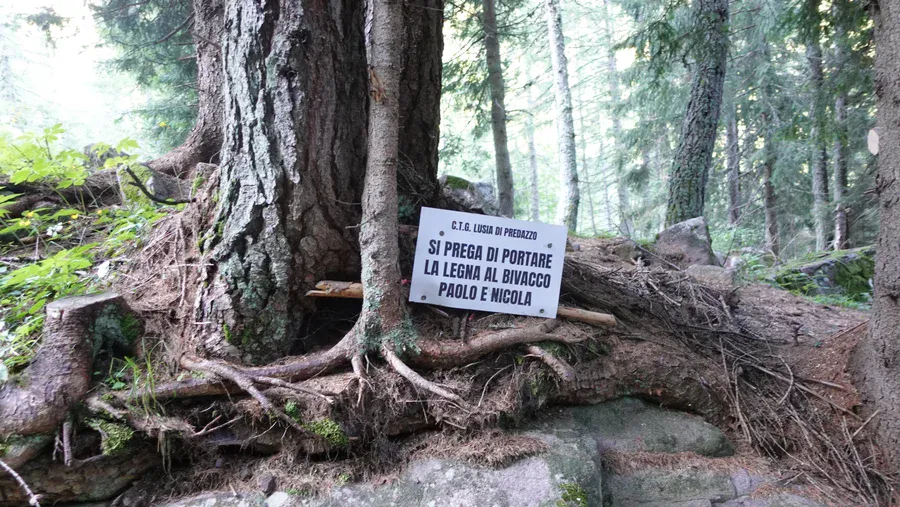
Close to such a sign, you will likely find the wood ready, it was there on that particular tour, but here is the photo from my tour to Bivacco Latemar (Sieff):

The restock ethos
Leave something small behind if you can, a fresh pack of matches, a sealed candle, or a packet of coffee. See what you can have there by others who were there before you:
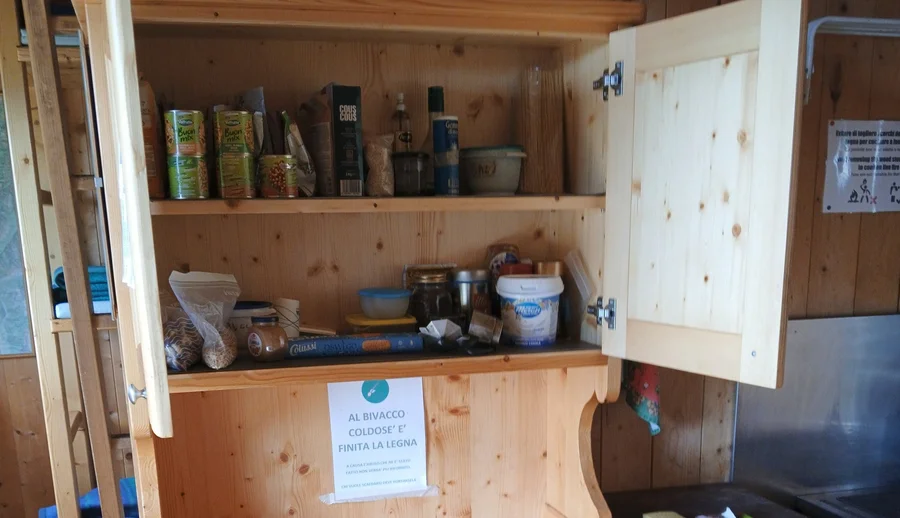
Although some bivouacs contain shared supplies left behind by previous visitors, people should avoid leaving perishable food and always store items responsibly.
This is because improper food storage can attract rodents. I have personally seen shelters infested by mice, so if you do leave non-perishable goods, ensure they are stored in tin cans or glass jars if available.
Do not leave trash behind you
There are no trash cans around, and toilets are extremely rare. These shelters rely entirely on the “Leave No Trace” ethos. If possible, leave the place better than it was.
When a spot goes mainstream, the rate of vandalism, litter, and human waste quickly destroys the area. That said, I am usually pleasantly surprised by how respectful hikers are in this region.
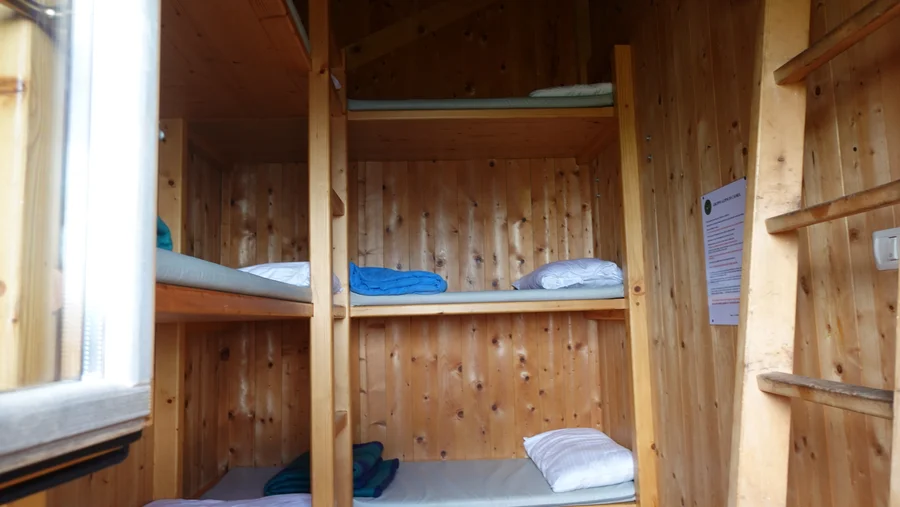
See this photo from inside of Bivacco Coldose, the beds are left neatly tied and prepared for the next visitor:
The emergency only space?
Well, not really. I have a separate longer text regarding this particular topic. But it is good to remind people that if a storm rolls in and locals or rescue teams need the space, everyone squeezes together. It is a refuge, not a private cabin.
These shelters are also part of mountain safety infrastructure. In the Lagorai and Dolomites, storms can develop quickly, temperatures may drop dramatically even in summer, and routes are often remote. Respecting bivouacs means preserving them for the next person who may genuinely need shelter.
Most bivouacs have very limited sleeping capacity. Arriving with large groups, loud music, or expecting exclusive use goes against the spirit of these shelters.
Summary
I hope that hikers who find these bivouacs via Mountains for Everybody will show up with the right mindset, perhaps even stopping in the valley village below to buy supplies, which directly supports the local economy maintaining those trails.
I do not believe that publicly maintained mountain shelters should become “secret places” accessible only to those already inside a certain circle.
At the same time, I fully understand why local communities become protective when they see careless tourism damaging places they maintain voluntarily and at their own expense.
The solution, in my opinion, is not secrecy but education. People who discover these bivouacs should understand that they are entering spaces built on trust, volunteer work, and mountain culture.
If visitors arrive with respect, contribute when possible, and leave the shelter better than they found it, these remarkable places can remain open and welcoming for everybody.
Thank you for reading. Let me know what you think in the comment section below.
Leave a Reply