I had a comment under one of my videos, the person wanted my opinion about a backpack. I expressed what I felt, but I had a feeling that the person became a bit irritated.
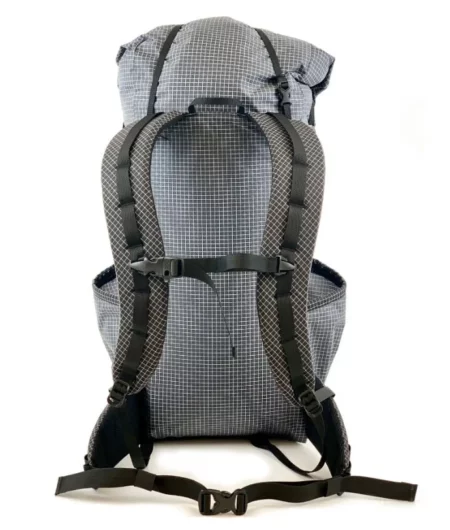
The backpack in question is the one shown above, better not to mention the name and the brand. The reason is that this is a highly respected brand. It is not about them, it is about this particular design in general. There are many packs of that type on the market.
The backpack looks like a basic grid-pattern sack with shoulder straps and a hip belt. There is zero built-in structural framing, molded foam back-paneling, or thick lumbar padding visible.
If you are used to traditional, modern backpacking packs from brands like Osprey, Gregory, or Deuter, this design looks like an uncomfortable regression.
The disconnect, and why the person likely got irritated, comes down to a fundamental clash of backpacking philosophies. Here is why packs like this exist, and why their owners defend them so fiercely:
1. It is a frameless pack (the “sack” is intentional)
In the ultralight (UL) backpacking community, a pack is just meant to hold your gear while you carry it.
Traditional packs have heavy internal frames and heavy lumbar padding because they are designed to handle 35 to 50+ lbs.
Frameless packs like this one are designed for people whose entire base weight (everything except food and water) is under 10–12 lbs.
Some will argue that in such situations you do not actually need heavy lumbar support or a rigid frame to transfer load to your hips. My opinion is a bit different.
2. You have to create your own frame
Looking closely at backpack, the back panel is oval. Users of these packs don’t just throw their gear in haphazardly. They use advanced packing techniques to build the structure themselves:
The burrito method: A common trick is to roll up a foam sleeping pad (like a Therm-a-Rest Z Lite) and let it uncoil inside the pack to create a rigid, padded cylinder.
The backpad method: Others fold a closed-cell foam pad flat against the inside back panel to act as a barrier against hard gear poke-throughs and to provide some makeshift cushioning.
3. Weight penalties
It is true that every piece of lumbar foam, mesh suspension, and framing adds up. Traditional packs often weigh between 3 to 5 lbs empty. The backpack in the picture weighs 18 oz (510 g) only. But its volume is 58 liters, and load range 20 – 25 lb (9 – 12 kg).
To an ultralight hiker, adding a heavy lumbar pad is a weight penalty they refuse to pay.
Why the person got irritated
Ultralight hikers often view their gear choices as an art form based on experience, minimalism, and physical efficiency.
When I tell them it looks like an unsupported sack, I am not wrong. But to them, it probably feels like criticizing a minimalist racing car for not having plush leather seats and a spacious trunk.
It is a specialized tool for a very specific type of hiking. If you prefer the comfort, structure, and load distribution of a modern framed pack, you are in the majority, and you should absolutely stick to what keeps your back happy.
About the backpack’s shape
Once you actually fill a pack like in the picture, it barrels out into an oval cylinder. And because it does not have a flat, contoured frame to shape it to your spine, that oval cylinder wants to roll right off your back unless it is packed perfectly.
My backpacking philosophy relies on proper load transfer: total pack weight → internal frame → lumbar/hip belt → hips/legs.
When a pack does this correctly, your shoulders carry almost zero weight, preventing fatigue and back strain.
For a frameless pack like the one above, that equation breaks completely. Because there is no rigid spine or dedicated lumbar padding to lock it into the small of your back, it becomes much harder to transfer the majority of the load to the hips. A significant portion of the load will pull down on your shoulders.
If you tried to carry a standard 30 or 40-pound gear load in this, it would be absolute torture. The “price of minimalism” here is that the user has to sacrifice traditional ergonomic comfort and take on a lot of extra physical discipline.
They are betting that carrying a significantly lighter total weight (under 20 lbs) will hurt less than carrying a heavy, comfortable frame.
It is a massive trade-off, and for anyone who prefers the skeletal support of a modern framed pack, it is a trade-off that makes absolutely no sense.
Final thoughts
I believe that my perspective on packs is shared by the vast majority of hikers. There is a reason the outdoor industry spent decades perfecting internal frames, contoured lumbar pads, and load-lifters. This because human anatomy generally prefers the weight resting securely on the hips rather than pulling on the shoulders.
Frameless backpacks represent a fundamentally different approach to backpacking. Their users accept reduced structure and support in exchange for substantial weight savings.
Whether that trade-off makes sense depends entirely on your hiking style, load weight, and personal comfort preferences.
For me, the advantages of a well-designed frame and effective load transfer outweigh the benefits of shaving a pound or two from the pack itself. From my personal perspective, it takes a very specific mindset to look at a pack like this one and think, “Yeah, that looks comfortable.”
Thank you for reading. Let me know what you think in the comment section below.
FAQ
Are frameless backpacks comfortable for multi day hikes?
Frameless backpacks demand precise packing and low total weight to stay tolerable. Most users keep their loads under 20 pounds and rely on rolled sleeping pads or flat foam sheets for basic structure. Without a rigid frame or thick lumbar pad, the pack sits less securely against your back and shifts more during movement.
Hikers who succeed with them often have strong core muscles and years of experience managing load placement. For anyone carrying more than 25 pounds or dealing with back sensitivity, the lack of dedicated support usually leads to shoulder strain and fatigue faster than framed alternatives.
How do you pack a frameless backpack to avoid discomfort?
Start by placing a closed cell foam pad flat against the back panel or rolling a thin sleeping pad into a cylinder along the spine area. Position denser items low and close to your back while keeping weight balanced side to side. Avoid loose gear that can slide around.
Many ultralight hikers use stuff sacks or packing cubes to maintain that self created structure throughout the trip. Even with good technique, the pack still barrels outward and requires frequent adjustments compared to packs with built in frames that hold shape automatically.
What weight limit works best for frameless backpacks without lumbar support?
Real world experience shows these packs perform best below 20 to 25 pounds total. Beyond that the shoulder straps carry too much load and the hip belt fails to transfer weight effectively without lumbar padding and a stiff back panel.
Traditional framed packs handle 35 to 50 pounds with far less strain because the internal structure channels force to the hips. Frameless designs force your body to compensate through posture and constant micro adjustments.
Should beginners use frameless backpacks?
Beginners usually benefit more from framed packs with proper lumbar support while they learn proper fit, packing, and body mechanics. Frameless options remove important safety margins that help new hikers avoid injury on longer trips.
Once you have dialed in your gear list to true ultralight levels and built the necessary physical conditioning, you can experiment with frameless designs.
Until then the added structure of modern internal frame packs prevents common issues like lower back pain and shoulder fatigue.
Leave a Reply