There is currently a debate over safety, social media, and over-tourism related to bivouacs. Before we label these shelters as ’emergency only,’ we need to look closer at the diverse roles they play across the Dolomites and beyond.
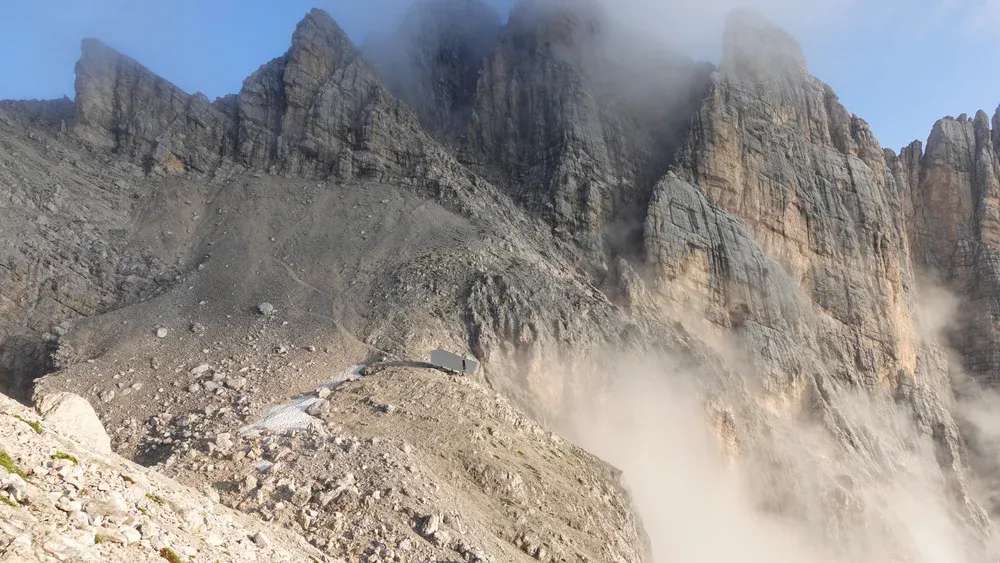
Are bivouacs really only for emergencies? Thoughts on the Instagram debate.
Lately I have been seeing articles and discussions about bivouacs in the Dolomites becoming too popular, too “Instagrammable”, and therefore a growing safety problem.
In particular, one article focuses on a growing issue in the Dolomites linked to the rising popularity of a recently renovated bivouac, described as “too Instagrammable.” The focus here is on Bivacco Fiamme Gialle, but this is just an example.
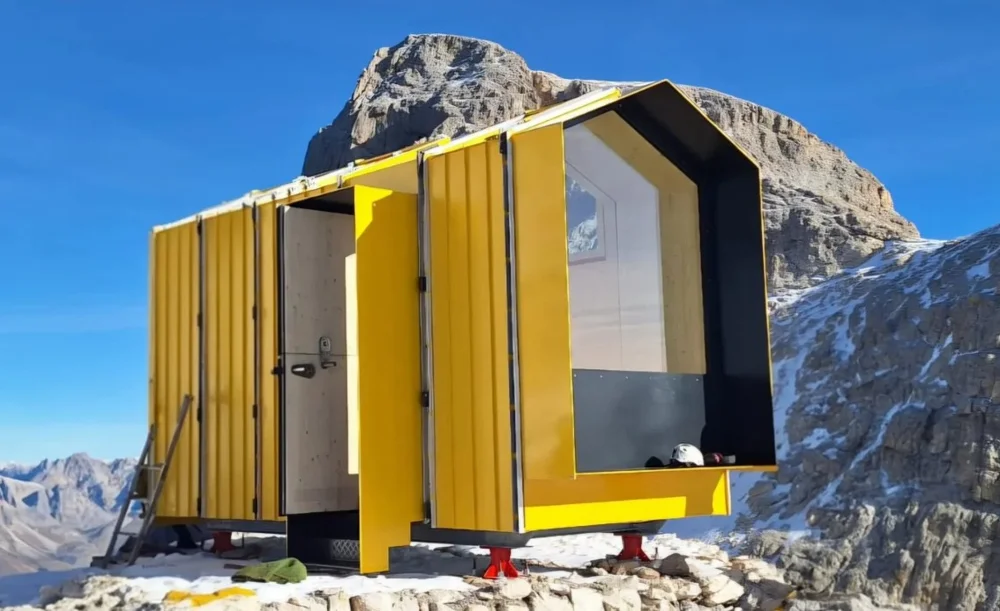
The shelter is modern, visually striking, and offers features that feel surprisingly comfortable for such a high-altitude structure, such as large panoramic windows and the possibility to recharge devices. This is why it has quickly become a destination in itself rather than simply a support point for mountaineers.
According to the author, this new wave of attention has led to a noticeable increase in people attempting the hike primarily to experience the bivouac and take photos, often without fully understanding what the route involves.
One access to the bivouac requires tackling a demanding via ferrata, and the terrain is serious enough that it demands experience, correct equipment, and good physical condition. But it is true that there is a walk up route as well from Rifugio Rosetta.
Anyway, the article suggests that many visitors are being drawn in by social media images that make the destination look approachable and “easy”, without communicating the real level of effort and risk.
This trend has had direct consequences. Mountain rescue teams have reportedly carried out a number of interventions in just a few months, far more than in previous years.
The reasons behind these rescues are described as typical: hikers arriving late, being caught by sudden weather changes, underestimating the time needed to descend, or attempting the ferrata without proper preparation.
Some situations have required helicopter extraction, and rescuers warn that these operations are not only dangerous for the people who get stuck, but also for the rescue teams themselves.
A major point raised in the article is that the bivouac was never meant to function like a tourist attraction or a free mountain “hotel”. Its purpose is to offer shelter and safety in case of need, not to encourage casual visits.
The article emphasizes that the growing perception of the bivouac as a trendy destination is turning into a real safety concern, because it motivates inexperienced people to enter terrain that can quickly become dangerous, especially when weather conditions change.
To be clear: I understand the concern. In some places, this is absolutely happening. But at the same time, reading these stories always leaves me with a strange feeling. Because the message that often comes through is something like:
“Bivouacs are for emergencies only. People should not go there just for fun.”
And honestly, I don’t agree with that. Not because I don’t respect the mountains (I do). But because not all bivouacs are the same, and not all of them exist only for emergency situations.
The first time I slept in a bivouac, it didn’t feel like an emergency shelter
When I think about bivouacs, I don’t think about dramatic rescues or reckless hikers chasing a sunset photo. I think about silence.
I think about arriving tired at the end of the day, dropping my backpack, and hearing nothing except wind, water, and the occasional sound of wood cracking in the stove.
And I think about waking up early, opening the door, and seeing the mountains completely empty.
That feeling is hard to explain to someone who has never experienced it. It is not tourism and it is not luxury, and it is not even really comfort. It is just being there. And for me, that is one of the most authentic ways to experience the Alps.
These places allow people to experience nature intimately without paying for an expensive hotel or a crowded rifugio. For many, this is the spirit of the mountains.
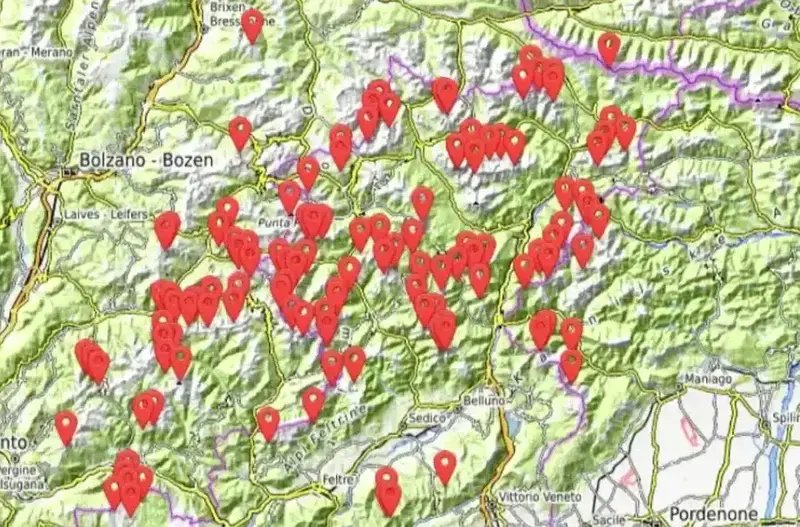
This topic is of particular importance for Dolomites where you have a high concentration of bivouacs. So far I have found 138 bivouacs in this area alone and included them in my interactive map.
The problem is not the bivouac. The problem is where it is.
The issue with some of the bivouacs mentioned in the news is not that people want to sleep in them.
The issue is that certain bivouacs are located in serious alpine terrain: high altitude, exposed routes, ferrata access, long descents, fast-changing weather.
Sometimes people see a photo online and think: “Oh wow, that looks amazing. Let’s go this weekend.”
But a photo does not show the hard part. It does not show the steep trail, possible ferrata cables, the snow patch that is still there in July, or how quickly clouds can cover everything.
In those cases, I completely understand why rescue teams are worried. If a bivouac becomes a social media destination, people who have no experience with that type of terrain might end up in trouble.
But here is what I think is missing from the conversation: not every bivouac is like that.
In Lagorai, bivouacs feel like part of the landscape, not a “forbidden place”
One of the reasons I love hiking in Lagorai is that it feels wild but still accessible. It is not the dramatic Dolomites landscape everyone knows from postcards, but it has something else: lakes, forests, wide valleys, quiet ridges, and a sense of solitude that is becoming rare.
Last summer, I visited 9 bivouacs there, and I think the only people I met occasionally were Italians. It appears that foreigners rarely come here.
And here, bivouacs are not unusual exceptions. They are part of the trekking culture. They are placed along routes where hikers can spend the night, rest, and continue the next day.
Some of them may be simple and basic, infested by mice, but they make multi-day hiking possible without turning everything into commercial tourism. However, some are the best equipped shelters that I have ever seen, Bivacco Col Dose is such an example.
My favorite is Bivacco Bait Lago di Cece, next to Lago di Cece. I still remember how peaceful it felt to arrive there. The lake, the reflections, the silence. It is not an extreme route. It is a beautiful hike, and the bivouac is just there, like it belongs.
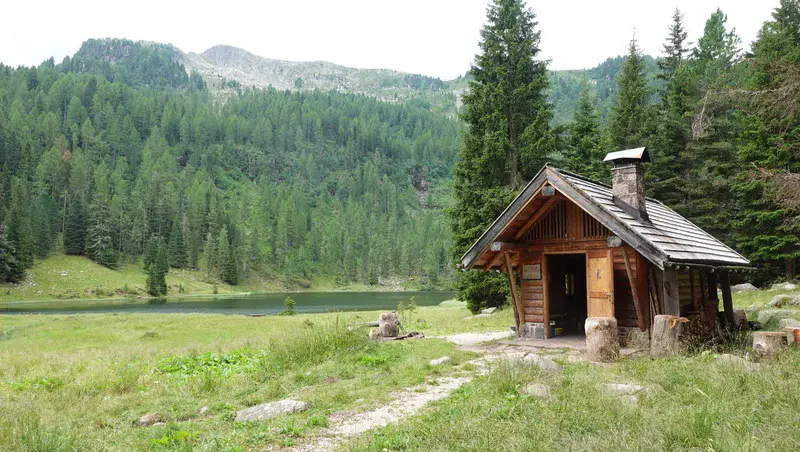
This kind of bivouac does not feel like an “emergency shelter”. It feels like a gift, a place where you can stay overnight, slow down, and experience the mountains in a way that most people never do.
If you have ever walked there, you know what I mean: long days, constant ups and downs, and landscapes that feel untouched.
These are not random shelters hidden in dangerous places. They are part of a route that many hikers complete over several days. Some have stoves, wooden sleeping platforms, and basic equipment. Nothing fancy, but enough to make you feel safe and welcome.
When you stay in these bivouacs, you do not feel like you are doing something irresponsible, you feel like you are doing something timeless.

Restricting Lagorai bivouacs to “emergencies only” would essentially kill the Trans-Lagorai trek, which is one of the most beautiful multi-day hikes in Italy.
The “emergency shelter only” argument is not always true: bivouacs as part of alpine trekking culture
Another aspect that I think often gets overlooked in this discussion is that many bivouacs are not isolated emergency shelters hidden away for climbers only. Some are actually part of officially recognized long-distance hiking routes, where sleeping in bivouacs is a normal and expected part of the experience.
The mentioned Trans-Lagorai trail is one of them. Yet another good example is Alta Via 5 and its segment in the Marmarole area. This route crosses one of the wildest and least developed parts of the Dolomites, and along certain stages there are no staffed rifugi available.
In practice, bivouacs such as Bivacco Musatti and Bivacco Toso are not simply emergency shelters for alpinists, they are essential infrastructure for hikers completing the route. This is an important distinction.
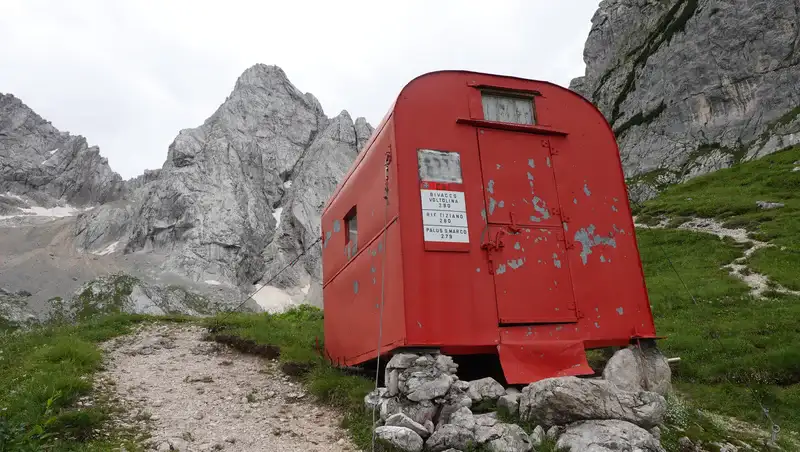
When people say bivouacs are only for emergencies, that may be true for some high-alpine shelters, but it is definitely not universally true across the Alps. On routes like Alta Via 5, sleeping in bivouacs is part of the intended trekking experience.
You do not need to be an alpinist climbing technical routes to use them. They exist precisely because these areas are remote and because multi-day hiking there would otherwise be impossible without building larger infrastructure.
At the same time, there are also interesting mixed situations where bivouacs serve both worlds at once.
One example is Bivacco Marco Dal Bianco, beneath Marmolada. The bivouac was originally conceived mainly for alpinists, but it also lies along Alta Via 2, meaning that hikers regularly use it as well. So here overcrowding is a real issue during summer.
A friend once told me about spending the night there with ten other people, despite the bivouac having only eight beds. During the evening, a group of alpinists arrived hoping to use the shelter before an early start the next morning and climb of Marmolada south wall.
But because the bivouac was already overflowing with hikers, they had no space left and eventually had to descend all the way back to Contrin.
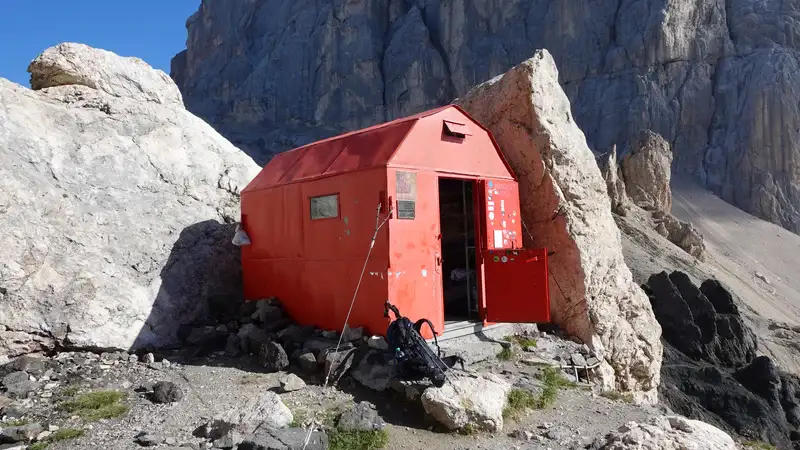
Stories like this show that the conversation is more nuanced than simply saying people should or should not sleep in bivouacs.
The reality is that bivouacs often serve different communities at the same time: long-distance hikers, backpackers, mountaineers, climbers, and sometimes people forced to stop because of weather or exhaustion.
The challenge is not eliminating overnight stays, but understanding the purpose and context of each bivouac individually. Some are genuinely emergency-oriented. Others are clearly integrated into trekking culture. And some, like Marco Dal Bianco, sit somewhere in between, where balancing the needs of hikers and alpinists becomes increasingly difficult as mountain tourism grows.
So what is wrong with spending a night there?
This is the question I keep coming back to. What is wrong with hiking to a bivouac and sleeping there? Cooking a simple dinner, watching the sky change colors, listening to the wind, waking up at sunrise, and feeling far away from everything.
To me, this is one of the best reasons to hike. It is not “over-tourism”, and it is not “ruining the mountains”.
If anything, bivouacs allow a type of low-impact tourism that is far better than building roads, hotels, or crowded facilities. Of course, there is one condition: you have to do it with respect.
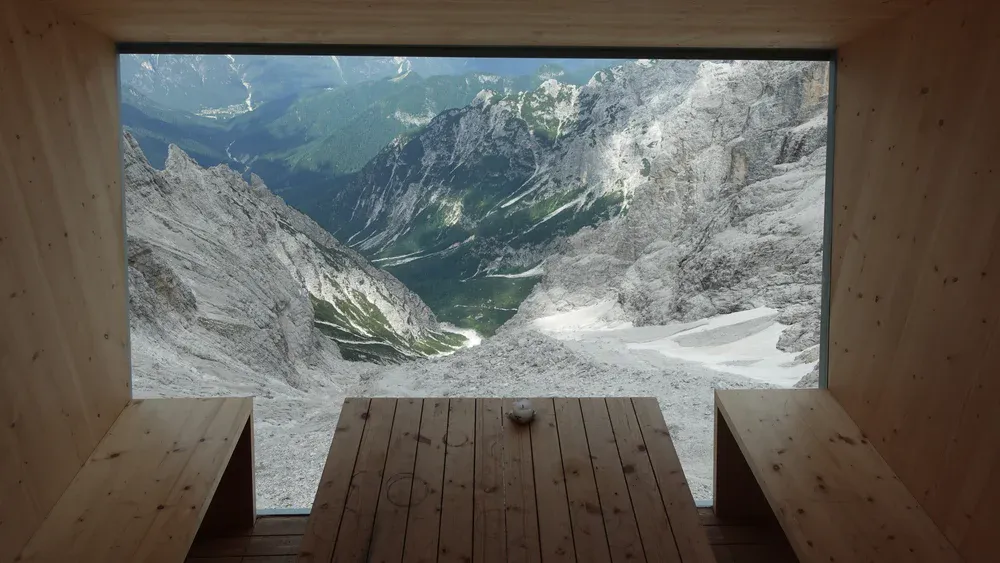
The photo below may tell you why it feels so great to be in such a place. It is about views, not about trophy photos. I have no selfies from such places. This is from my night in Bivacco Fanton.
Bivouacs are not hotels
Even the most hiker-friendly bivouac is not a hotel. It is not a place where you arrive expecting comfort. It is a shared shelter, usually free, often maintained by volunteers or local groups, and sometimes stocked with wood or basic supplies.
That means there is an unwritten rule that every hiker should understand: leave it better than you found it. I have written about this topic in a separate text here in the site.
And unfortunately, this is where problems can start because if bivouacs become too popular, you also start seeing garbage left behind, people damaging equipment, loud groups treating it like a party hut, fires made carelessly, overcrowding.
That is when the atmosphere changes completely, the magic disappears, and then people start asking for closures or restrictions.
I think social media is not the enemy but it can be dangerous
I don’t believe social media is automatically bad for hiking. I mean, I share hiking routes on this website. I take photos and I post them too in my Facebook group Dolomites Visitors Hub.
The problem is not sharing beautiful places, the problem is sharing them without context. Because a photo can make a difficult place look easy. A reel can turn a serious hike into a “cute weekend plan”.
And if people go into the mountains thinking they are in a park, sooner or later they will meet the reality of weather, fatigue, and altitude.
The mountains don’t care how many likes your photo got.
Maybe we need to talk less about Instagram and more about responsibility
When I read about rescue operations increasing, I don’t think the solution is to say stop going to bivouacs. That is unrealistic, and it is also unfair.
A better message would be choose bivouacs that match your experience, check the weather, start early, know your limits, bring proper equipment, be ready to turn back, respect the shelter and other hikers.
Because the truth is simple, bivouacs don’t create danger, mountains do. Bivouacs are just there, silent and waiting.
Final thoughts: the mountains are for everybody (but they require humility)
I built this website around a simple idea: Mountains for Everybody, and I still believe that.
But “for everybody” doesn’t mean without preparation. It means everybody can access the mountains in their own way, at their own level, with the right mindset.
Some bivouacs are high-alpine emergency shelters, and going there requires serious skills. Others, like many in Lagorai, are part of trekking culture and allow hikers to experience nature in an incredible way.
Spending a night in a bivouac is not wrong. It is one of the best things you can do in the Alps.
Just don’t chase the photo, chase the experience, and always remember: in the mountains, respect is the most important equipment you can carry.
Thank you for reading. Let me know what you think in the comment section below.
Leave a Reply