If you plant to visit Dolomites, you have the following options for accommodation: small family run hotels, hostels, apartments for rent, huts, bivouacs, and camping spots.
Hotels
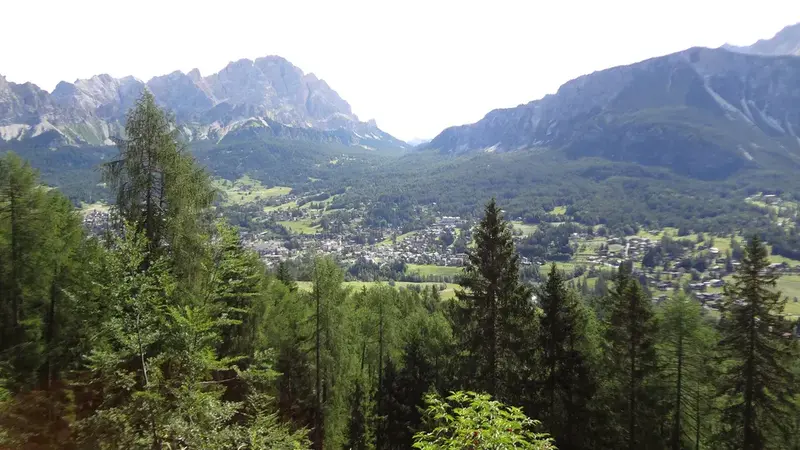
This is the most straightforward option and also the most comfortable one. The Dolomites have an enormous number of small hotels, often family-run, usually with half-board options (breakfast + dinner). A number of affordable places in this category are actually B&B and Garni style, breakfast included, dinner not included.
Many of them are designed specifically for hikers and cyclists, meaning they have early breakfasts, storage rooms for equipment, drying rooms, and sometimes even small wellness areas.
The downside is obvious: prices can be high in peak season, especially in the most famous valleys (Val Gardena, Alta Badia, Cortina area, Tre Cime). In July and August it is common to find that everything decent is booked out weeks or months in advance.
If you want good value, look at simple 2–3 star hotels in smaller villages. Below are some reputable and usually reasonably priced options that are well located for hiking:
- Hotel Lago di Braies (Braies / Pragser Wildsee)
- Hotel Dolomiten (Dobbiaco / Toblach)
- Hotel Tschurtschenthaler (Dobbiaco / Toblach)
- Hotel Serena (Cortina d’Ampezzo)
- Hotel Meublé Villa Neve (Cortina d’Ampezzo)
- Hotel Villa Argentina (Pocol, near Cortina)
- Hotel Al Larin (Colfosco)
- Garni Raetia (Corvara)
- Hotel Miramonti (San Vigilio di Marebbe)
- Hotel La Perla (Canazei)
- Hotel Cesa Tyrol (Canazei)
- Hotel Garni Enrosadira (Moena)
- Hotel El Laresh (Pozza di Fassa)
- Hotel Grones (Ortisei)
- Hotel Garni Snaltnerhof (Ortisei)
- Hotel Savoy (Selva di Val Gardena)
- Hotel Garni Walter (Santa Cristina Val Gardena)
- Hotel Rosalpina (Soraga)
- Hotel Dolomiti (Vigo di Fassa).
In general, hotels make the most sense if you are traveling by car and plan to do day hikes from one base. If you want to move every day, you will spend a lot of time checking in and out, and driving between valleys is often slower than it looks on the map.
The map below will help you find a hotel for you, it is centered on Cortina d’Ampezzo, but you can change the location, and add your dates.
Hostels
Hostels are a cheaper option, but there are not many of them in the Dolomites. Most are located in gateway towns and transport hubs rather than in the middle of the mountains. Still, they are useful if you travel by public transport or want to keep costs low.
For hostels, typically there is no age limit. But hostels tend to be concentrated in gateway towns rather than deep in remote mountain areas.
Below are some reliable hostels and budget-friendly mountain lodges that work well as bases for hiking:
- Ostello di Dobbiaco / Jugendherberge Toblach (Dobbiaco / Toblach)
- Ostello di San Candido / Jugendherberge Innichen (San Candido / Innichen)
- Ostello di Cortina (Cortina d’Ampezzo)
- HI Ostello di Belluno (Belluno)
- Casa per Ferie Villa San Marco (Auronzo di Cadore)
- Villa Santa Margherita (Auronzo di Cadore)
- Dolomiti Hub (Cortina area)
- Ostello di Rovereto (Rovereto, good stop if you arrive from the south).
One more thing to keep in mind: many “cheap” places in the Dolomites are not really cheap once you include tourist tax, parking fees, and the fact that restaurants in popular villages are expensive. If you are on a budget, it may actually be better to stay slightly outside the hotspots and commute to trailheads.
Apartments for rent
I have rented small studios many times and my experience is very good. When you get in, you will realize that you have everything, just bring food and you will feel at home.
This is often the best option for longer stays. You get a kitchen, which makes a huge difference in the Dolomites where eating out every day quickly becomes expensive. Apartments are also good if you travel as a couple or a small group, because the cost per person can be much lower than hotels.
One important tip: if you do last-minute booking, you might be pleasantly surprised with the prices. This may sound risky, but I have done it many times, and not only in the Dolomites. Typically, I find such accommodation through Casamundo, Interhome, and Booking.
The only downside is that some apartments have strict arrival rules (limited check-in hours, key pick-up at agencies, etc.), so if you are coming late after a long hike, always confirm the logistics in advance.
Huts
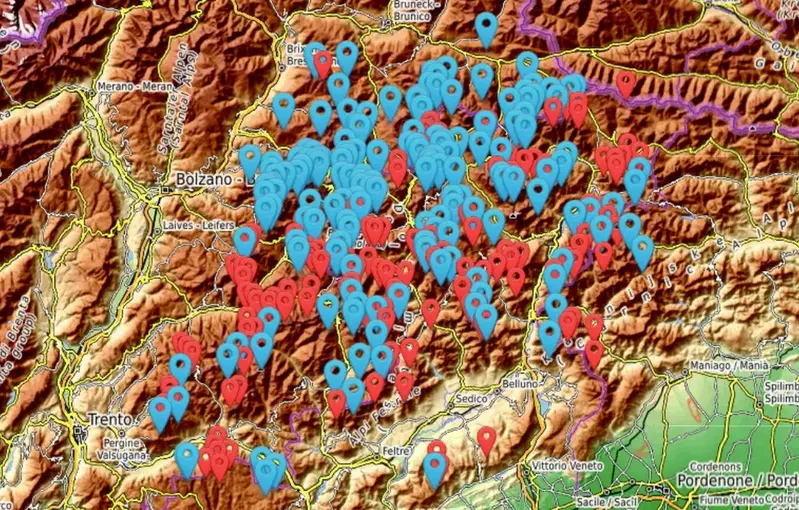
There are hundreds of regular huts in the Dolomites, the density is higher than in any other part of the Alps, you can see the map below how this looks. Blue markers show huts.
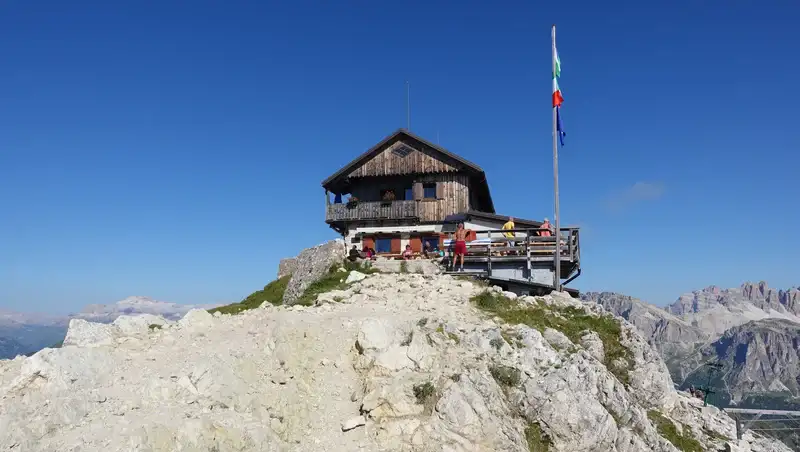
However, you should know that there are no less than 10 Alta Via routes in the Dolomites, and many huts are on these routes. Rifugio Nuvolau in the photo above is such an example. So finding accommodation in these hust is very difficult and must be done well in advance.
Those that are not on the AV routes are in popular places and usually always full.
Another thing to understand is that huts are not hotels (yet they are very expensive). Dormitories are the standard option, showers may be limited or require coins, and you will need cash in some places. Most huts offer half-board (dinner + breakfast), and in many of them you are expected to take it if you sleep there.
Despite the inconveniences, huts are the best way to experience the Dolomites properly. They allow you to link valleys, do multi-day hikes, and access areas where day hikers never go.
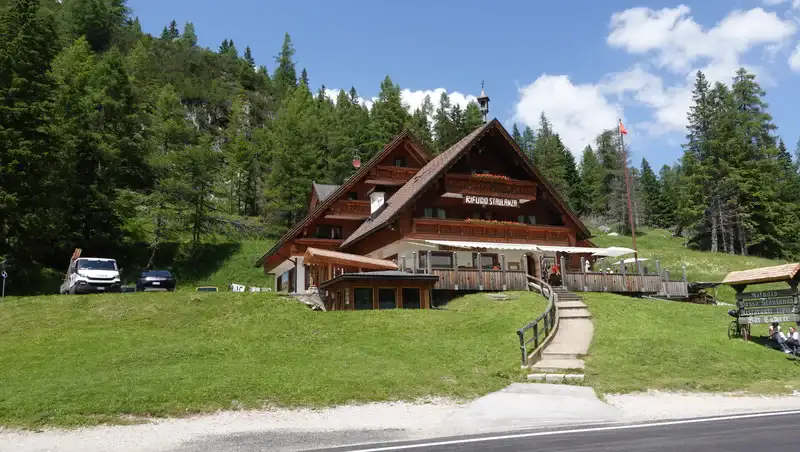
But you should know there are huts that are on the main roads, typical examples are Rifugio Passo Staulanza (the photo below) and Rifugio Passo Valparola.
Bivouacs
There are many bivouacs throughout the Dolomites, and in this site you can find several texts about them, what to expect and how to behave when you decide to spend a night in them.
These shelters are always open and free to use, some have offerte box for voluntary payments.
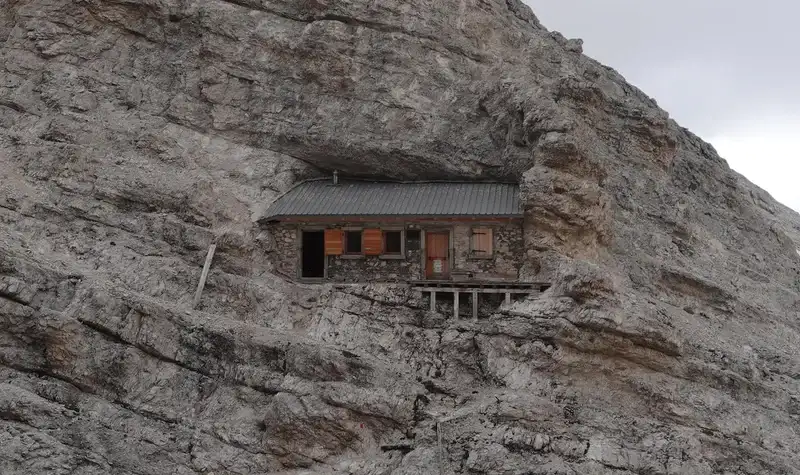
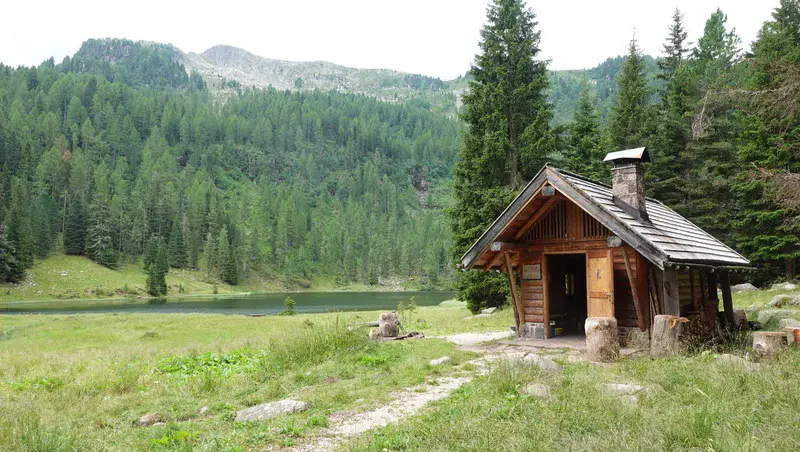
Some bivouacs are accessible only with ferrata equipment, like Bivacco Buffa di Perrero in the first photo below, but most are on standard walk-up hiking routes, see the second photo which shows Bivacco Cece.
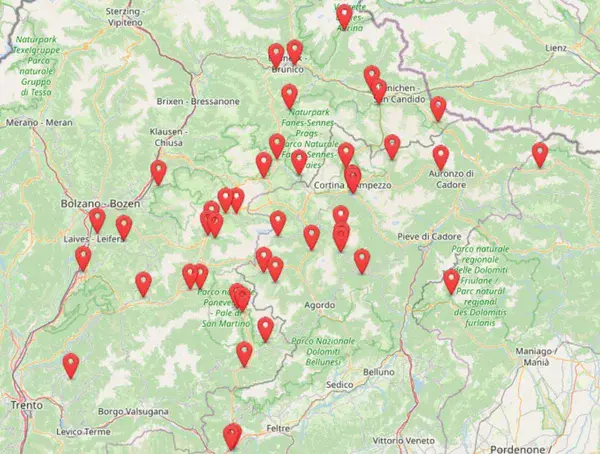
There is also an interactive map here in the site with 130+ bivouacs where you can find coordinates and read about access routes. The picture with huts above shows bivouacs as well (red markers).
Bivouacs are a great backup plan if you cannot find a hut reservation. But note that many are small, and if you arrive late you may find them full. Also, you need to be self-sufficient: bring a sleeping bag, warm clothes, and enough food.
Camping spots
There are tens of regular camp spots in the Dolomites, and here in the site you have an interactive map with all of them, the picture below shows their locations.
In many of them reservations are not possible, but those are usually large areas and you will always find a place. I have never had a problem to get in even in full season.
Camping is one of the best budget options, especially if you have a car or campervan. Campsites are usually well-equipped, often with kitchens, laundries, and small shops. Some also have bungalows which can be a good compromise if you want a bed but still want to keep costs down. You will find them in the Camping Sass Dlacia in Alta Badia, and also in the Camping Olympia above Cortina d’Ampezzo.
Note that in many of campings wifi and Internet connection is sporadic or non-existent, so make sure you check this if you have to work on computer.
A very good option from this perspective is the Camping Dolomiti where I have stayed many times in the past, the photo shows my tent from one of visits. But it was completely different in the Camping Palafavera, no access at all.

Conclusion
The Dolomites offer every type of accommodation, from comfortable hotels to completely basic bivouacs. If you want convenience, choose hotels or apartments. If you want to hike for several days and stay high in the mountains, huts are the best option but require planning.
Bivouacs are the wild card: free and always open, but unpredictable. Camping is often the cheapest and most flexible solution, especially if you travel by car.
In peak season, the main problem is not the price but availability. Whatever option you choose, book early if you want the popular areas, and always have a backup plan.
Thank you for reading. You might want also to check my text about mandatory reservations in the Dolomites. Let me know if you have questions in the comment box below.
Leave a Reply