High on the south-east shoulder of Cimon della Pala, the Bivacco Fiamme Gialle has long been one of the most iconic high-altitude shelters in the Pale di San Martino.
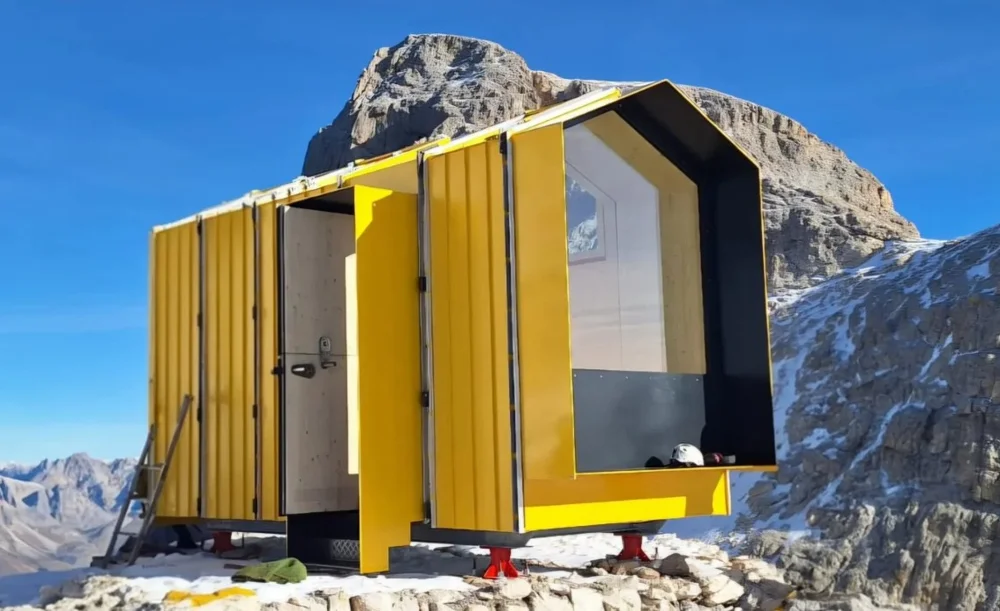
At 3005 meters, it is not just a shelter, it is a waypoint on one of the most exposed and committing itineraries in the Dolomites, typically reached via the Via Ferrata Bolver-Lugli or via the long traverse from the Rosetta plateau.
This is also the second highest mountaineering bivouac in the Dolomites, and a shelter on the way up to Cima della Vezzana, the highest peak of Pale di San Martino. The only higher is the Giuliani Bivouac on Langkofel (Sassolungo) at 3100 m of elevation.
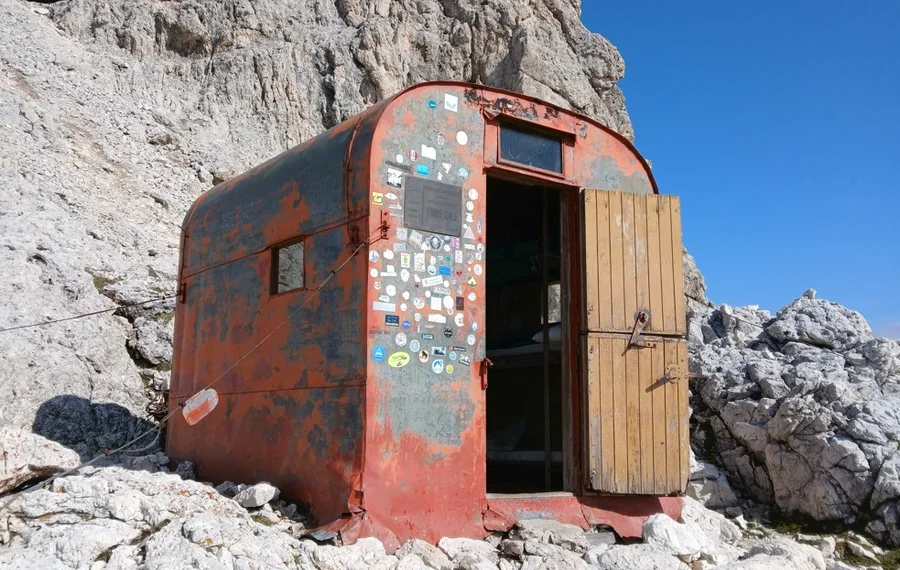
The Bivacco Fiamme Gialle was there in the central Dolomites since its construction in 1968. If you climbed here before 2025, you saw the old structure shown in the photo below. I was there in August and it was still there. Now, it’s gone.
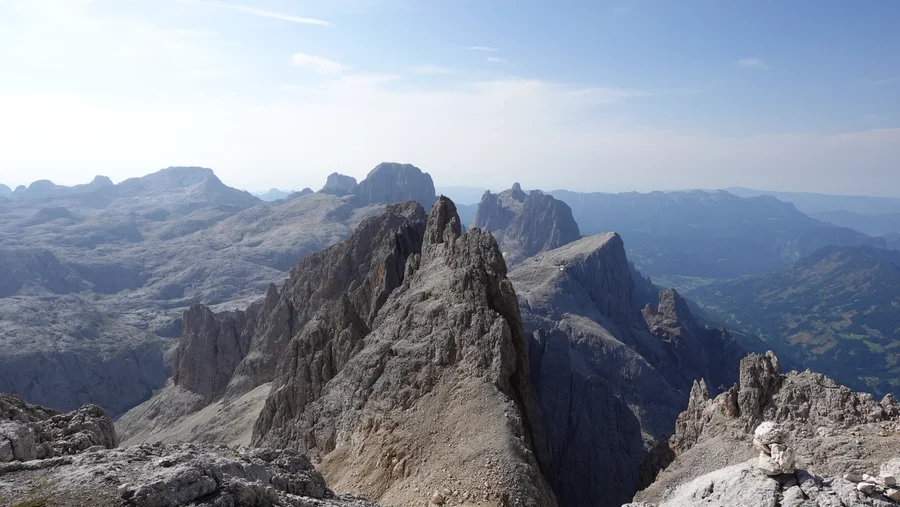
My photo below shows what you see when you are at the bivouac. The view is second to none in the Dolomites. Now you know why to go there.
Replacement in 2025
So, in October 2025, the original bivouac was fully replaced, not renovated.
The previous structure had reached the end of its lifespan. Constant exposure to wind, snow loading, and extreme temperature swings at over 3000 meters had taken their toll. This is not a location where maintenance is easy or frequent.
I read in an article that it was transported by helicopter from the Dolomite peaks to Passo Rolle and then by truck to the MUSE in Trento. There, it was hoisted by crane onto the panoramic terrace to become part of the permanent exhibitions dedicated to the relationship between nature, science, and society.
The new bivouac forms part of a broader renewal effort of high-altitude shelters in the Dolomites.
What changed
The new structure follows the modern Dolomites bivouac design:
- Reinforced outer shell.
- High-visibility color.
- Improved insulation.
- Inside, the layout is more efficient, with better sleeping platforms and a more usable interior space.
- Includes windows and/or skylight.
- Photovoltaic panels on the roof power an internal battery.
- Internal LED lighting, an external emergency light, and USB ports for charging mobile devices and GPS units.
Capacity remains limited. It now accommodates up to 12 people (compared to the original 9), featuring a flexible interior with folding tables and mobile seating that can convert into extra sleeping space.
The bivouac still sits in a fully exposed, high-alpine environment, directly above the Passo del Travignolo, between Cimon della Pala and Vezzana.
How to get there
Access and routes are described in detail in my text about Cima della Vezzana. Here just to stress that the most convenient access is from Passo Rolle.
You walk in the direction of Rifugio Rosetta and then decide either to climb the grueling Via Ferrata Bolver-Lugli or to make a much longer route over the Rosetta plateau (Rifugio Rosetta).
All the tour is presented in my video, please have a look:
Additional reading and resources
1. Map with bivouacs
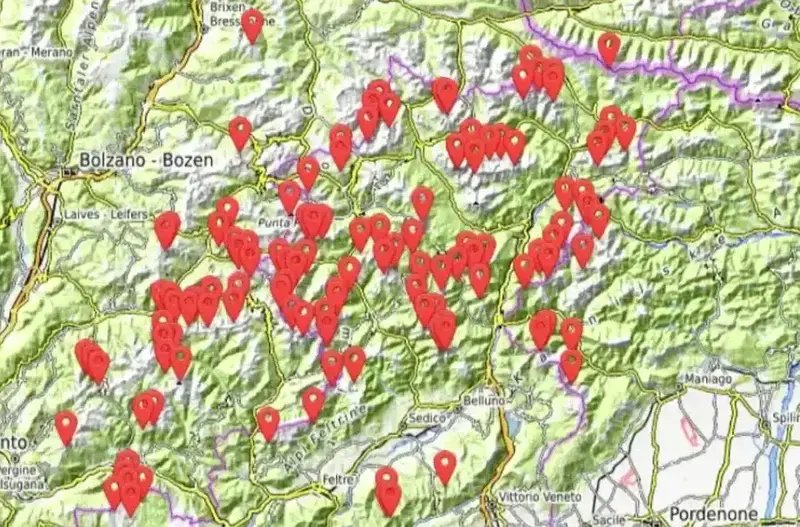
For planning your tours, it is best to combine this map with my separate map that, as of the moment of writing this text, includes more than 138 bivouacs in the Dolomites.
There, you will find a map with bivouacs, and a map where all the bivouacs are presented alongside regular huts. This is an incredibly important asset for planning a multi-day tour.
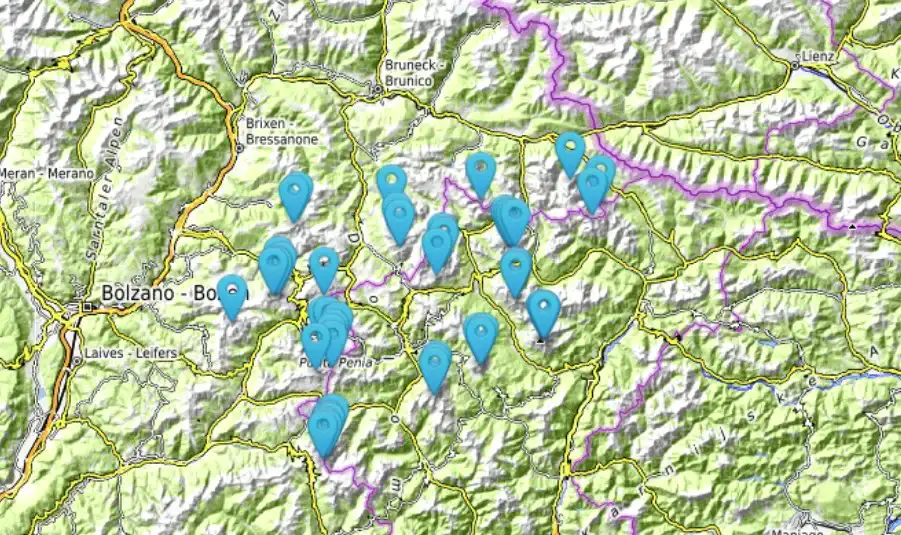
2. Map with All Named 3000ers in the Dolomites
There are 56 of them in total, and many ferratas on the map above lead to these peaks.
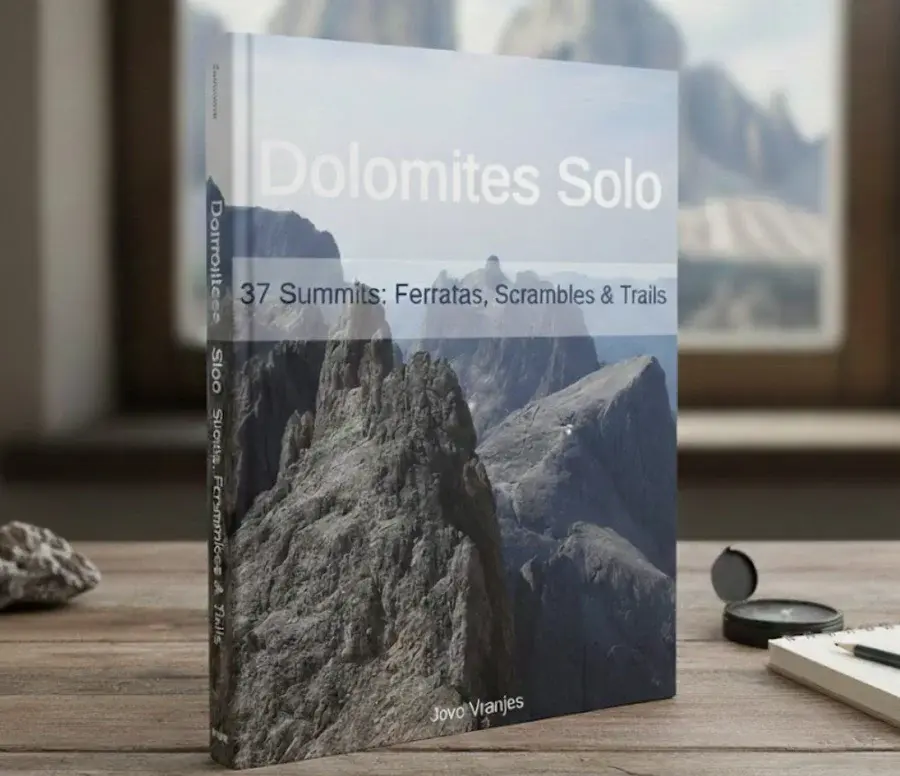
3. Dolomites Solo Book
You might want to check my book Dolomites Solo, featuring my first-hand mountaineering reports about tours in the Dolomites:
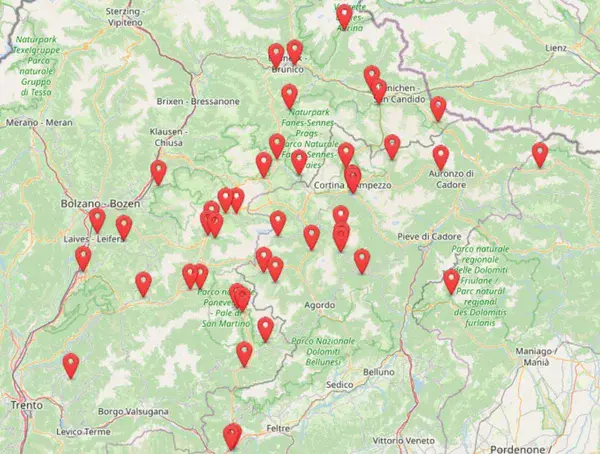
4. Free Map with All Camping Spots
This map is free to use and can be very useful if you are exploring the Dolomites with a van or motorhome. It highlights the most affordable accommodation close to the main roads.
Thank you for reading. Please use the comment box below in the case of comments and questions.
Leave a Reply