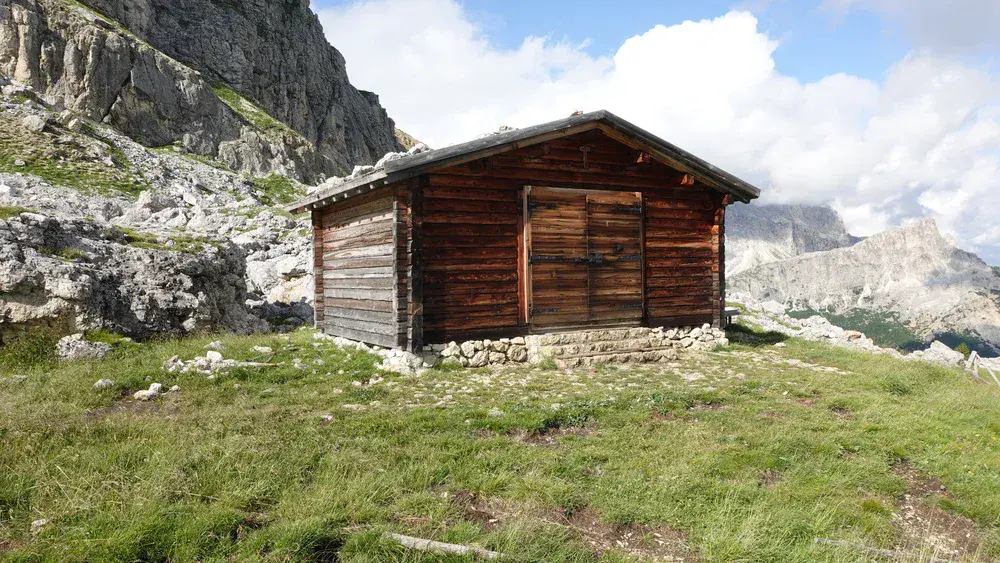
The Bivacco Sief at Col di Lana is a pleasant wooden cabin equipped with tables and benches, but there are no beds inside. Keep reading.
If you plan to visit the Bivacco Sief at Col di Lana, the most convenient approach is from Passo Valparola. There are no exposed passages on the route and no need for any special equipment.
Quick facts
- Bivacco Sief elevation: 2260 m (7415 ft).
- Coordinates: 46.5144469, 11.9587578.
- Route difficulty: walk-up.
- Elevation difference from the parking: 80 m (262 ft).
- Parking coordinates: 46.5291789, 11.9897344.
- Time needed from the parking to the bivouac: up to 80 minutes.
- Beds: no.
- Nearest place for supplies: San Cassiano.
- Peaks to climb in the area: Col di Lana (2452 m, 8044 ft), Pico Setsas (2429 m, 7969 ft).
- Useful maps: Tabacco number 07, Alta Badia Arabba Marmolada. 1:25000.
Access roads and map
I have created the interactive and zoomable map below which shows the following:
- Marker 1: Parking at the main road on Passo Valparola.
- Marker 2: Bivacco Sief.
- Marker 3: Col di Lana.
If you zoom in, you can see many details regarding the route. Zoom out to see the access roads to the area.
Note that directly below Marker 3 there is another shelter, Bivacco Brigata Alpina Cadore. You can visit it on the same tour.
About the name
This Bivacco Sief should not be confused with Bivacco Attilio Sieff (also known as Bivacco Latemar), which is in a different part of the Dolomites.
This Sief shelter is close to Col di Lana and Passo Valparola, and it is most likely named after the nearby Sief peak.
Route description
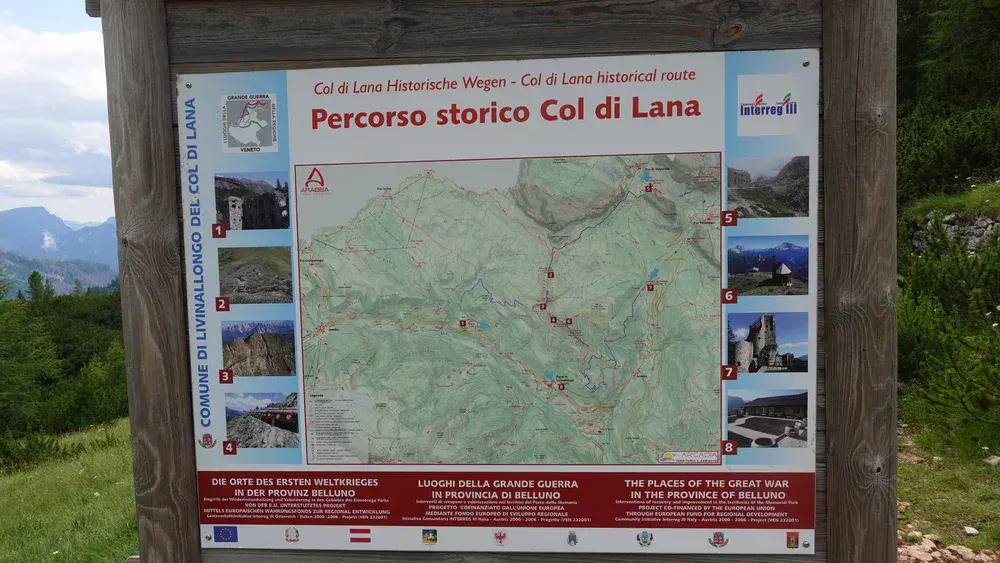
You start from Passo Valparola, one of the highest passes in the Dolomites. There is plenty of free space to leave your car there. Walk to Rifugio Passo Valparola on the road, where you will see the information board shown below.
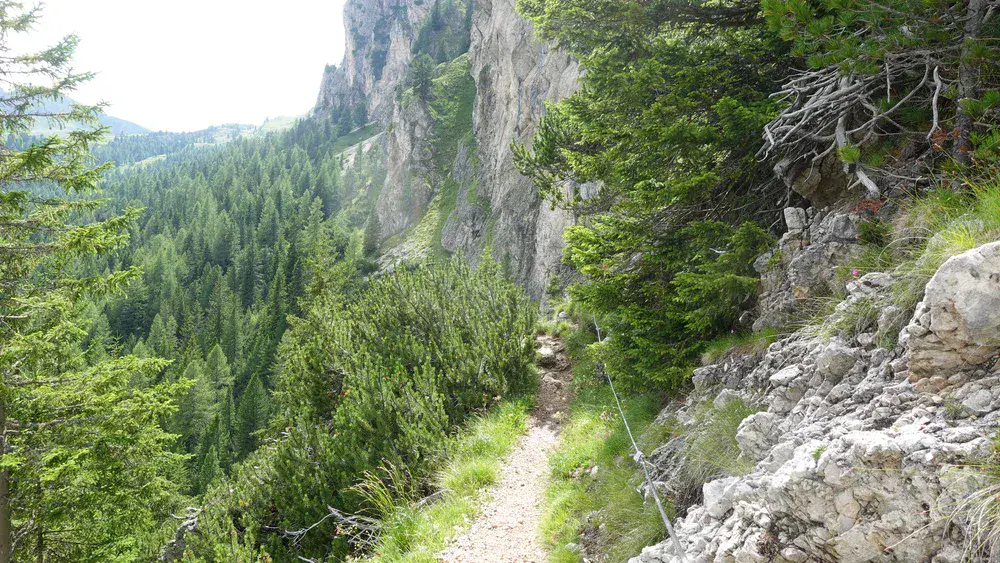
Because you start at high elevation, the route first descends, following the trail that runs high above the lake on its west side and then under the cliffs shown in the photo below. The lowest point here is around 110 meters below Passo Valparola.
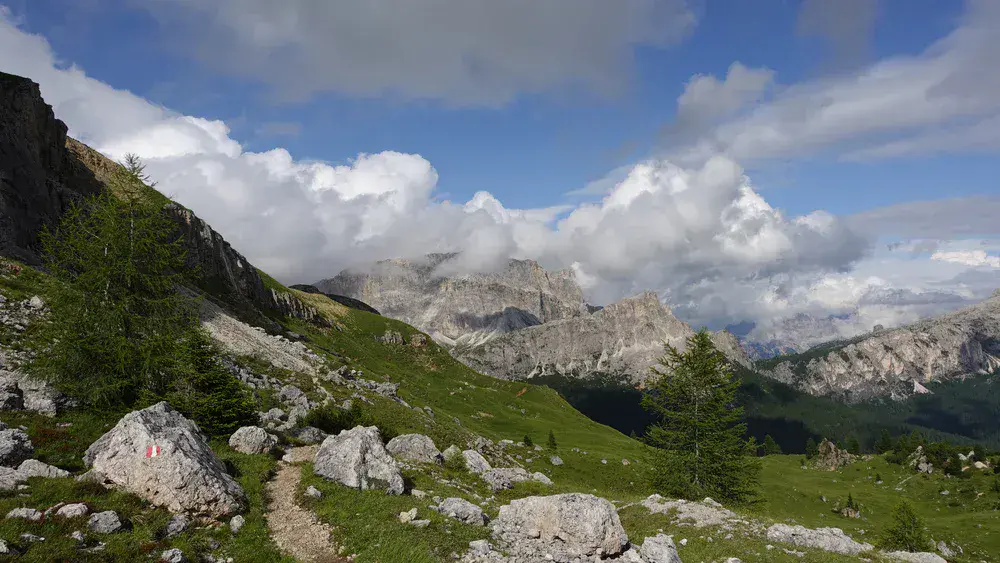
After a few ups and downs, you rise above the trees and see the Passo Valparola area as shown below. This is my view back.
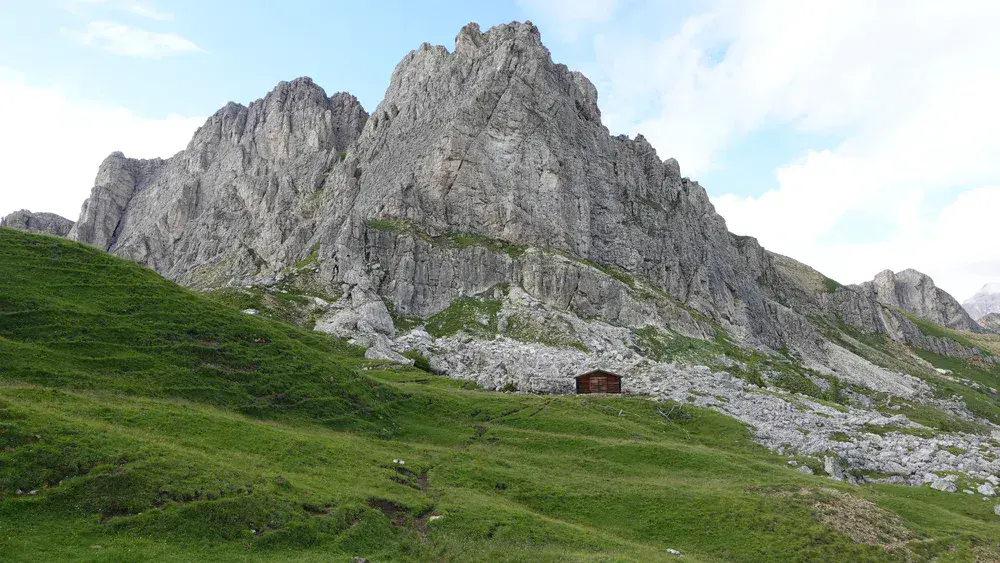
The bivouac appears in front of you as in the photo below. It stands on a pleasant grassy plateau with wide views around. The whole area is full of WW1 trenches.

The bivouac has a double-wide door, as shown in the photo. I opened it to let in more light, but there is also a window, as you will see in another photo below.

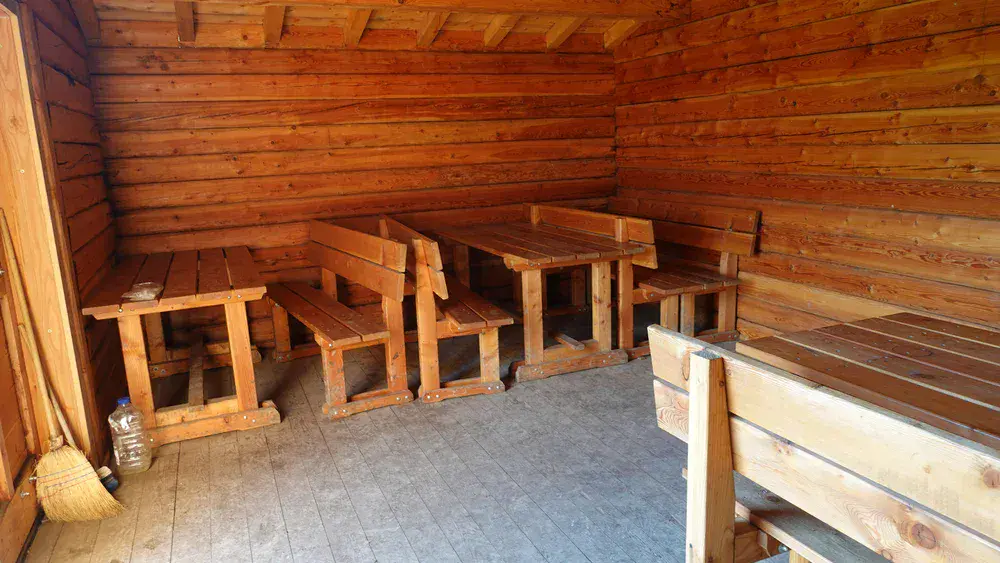
Everything inside is wooden, including the floor, as shown here:

There are three tables with benches, but there are no beds. It would be easy to install a few bunk beds here. If you plan to sleep, your only options are the floor or the benches; by pushing two benches together, you can create a usable sleeping platform.
If you want a bit of scrambling, you can climb Pico Setsas above. Otherwise, follow the ridge toward the Col di Lana summit.
Below is the view of the trenches that lead up to the Sief peak:

And here is the view back toward the bivouac; the landscape looks similar to Passo Giau:

From the Sief summit, the route continues toward Col di Lana over Dente del Sief. This is route 021 on the map above:

My tour
This tour was a quick decision after the rain stopped and I realized I could still do it while at Passo Valparola, planning to sleep in the car there. I started at 4:20 pm and reached the bivouac at 5:25 pm.
It was getting late, but I still wanted to reach Bivacco Brigata Alpina Cadore below Col di Lana, so after a short rest I continued.
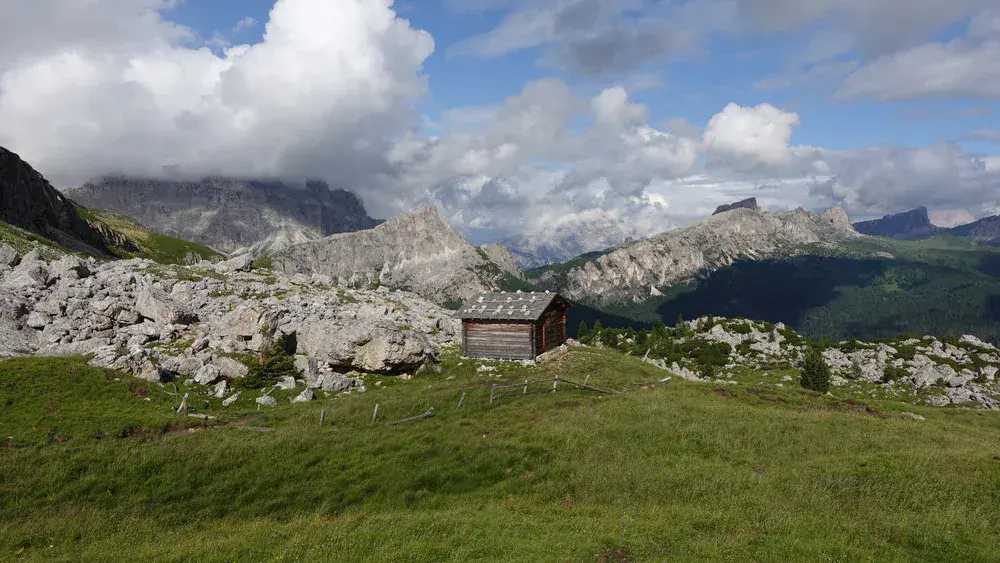
From the bivouac the route climbs steadily, so it took some time to reach the Sief summit. There I met one Italian mountain runner, the only person I saw that day. He had come from the south side.
I asked him about the second bivouac, and he described the route along the ridge. However, I realized it was too late to continue. After a short rest on the summit, I walked back and visited Bivacco Sief again.
I then returned the same way and reached the parking area after dark. Deciding not to continue was the right choice. I hope to reach the second bivouac on another occasion.
All the tour is presented in my video; please have a look:
Alternative approach
You can also approach from the south. The route is presented on this interactive Alltrails map. Bear in mind that the parking there is at a much lower elevation, so this is a demanding walk of several hours uphill.
Gear, water & food
For this tour you do not need any special equipment; standard hiking boots or shoes are sufficient. I used Nortiv 8 boots, trekking poles, and my Mammut Lithium 40 backpack.
As usual, I carried a rain poncho, rain pants, and a rain jacket. If you do not have a jacket and are unsure what to choose, consider the Mammut Crater Pro HS.
There is no water on the route, so carry what you need. You can refill at Passo Falzarego behind the lift station. For food, the closest shop is in the Alta Badia valley, in the village down the road from Passo Valparola.
Conclusion
Bivacco Sief is an easy objective in the Col di Lana area, suitable for a short afternoon tour or as part of a longer ridge traverse. The approach from Passo Valparola is straightforward, non-exposed, and well marked. The cabin itself is simple but solid, offering good shelter in bad weather, though without beds.
The surrounding terrain, marked by WW1 trenches and wide views, adds historical and scenic value to the walk. You can combine the visit with Sief peak, Col di Lana, or the nearby Brigata Alpina Cadore bivouac.
Plan your timing carefully, especially if starting late, and carry sufficient water as there are no sources on the route.
Thank you for reading. Let me know if you have questions or comments; there is a comment section below.
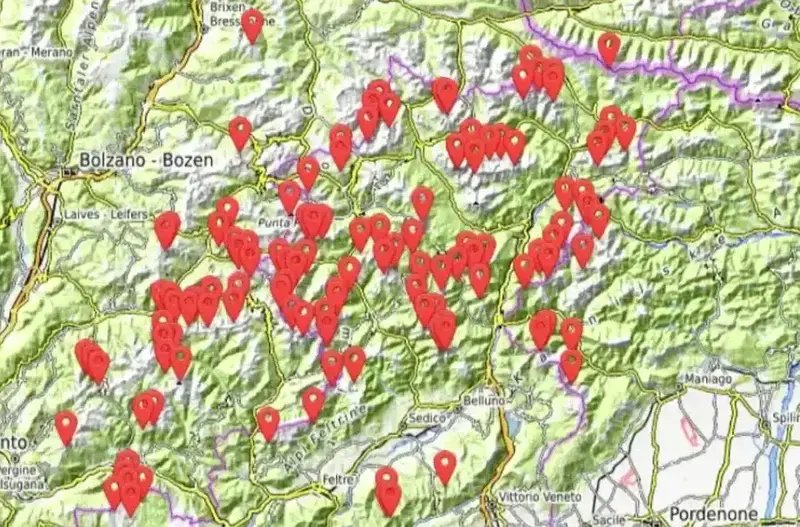
This bivouac, together with more than 130 others, is included in my interactive map available here on the site, see it below. Note that I also have a book titled Dolomites Solo, so have a look if you plan to do some mountaineering tours in the area.
You might want to read also my text about cave bivouac on Marmolada, a fascinating story about the retreating glacier and global warming.
Please join us at our Facebook group Dolomites Visitors Hub.
FAQ
Is Bivacco Sief open all year round?
Bivacco Sief is an unmanned emergency shelter and normally remains open throughout the year. However, in winter the access from Passo Valparola can be complicated by snow and closed roads.
The pass is usually closed to regular traffic in the cold season, so you may need to approach on skis or snowshoes. Always check current road conditions before planning a winter visit.
Can you sleep in Bivacco Sief without prior reservation?
There is no reservation system because this is a basic bivouac, not a staffed mountain hut. It works on a first come first served basis. Since there are no beds, sleeping comfort is limited and you must bring your own sleeping mat and sleeping bag.
Keep in mind that bivouacs are primarily intended for emergency use, so behave accordingly and leave the place clean.
Is the route to Bivacco Sief suitable for children or beginners?
The approach from Passo Valparola is technically easy and does not include exposed sections. For this reason it is suitable for beginners with reasonable fitness and for older children who are used to walking in the mountains.
Weather can change quickly at this altitude, so proper clothing and basic mountain awareness are still necessary.
What is the historical importance of the Col di Lana area?
The Col di Lana and Sief ridge were heavily contested during World War I between Italian and Austro Hungarian forces. The area is known for mining warfare and extensive trench systems that are still visible today.
Walking here is not only a mountain tour but also a visit to an open air historical site, so it is worth taking time to observe the remains and read about the events that shaped this landscape.
Leave a Reply