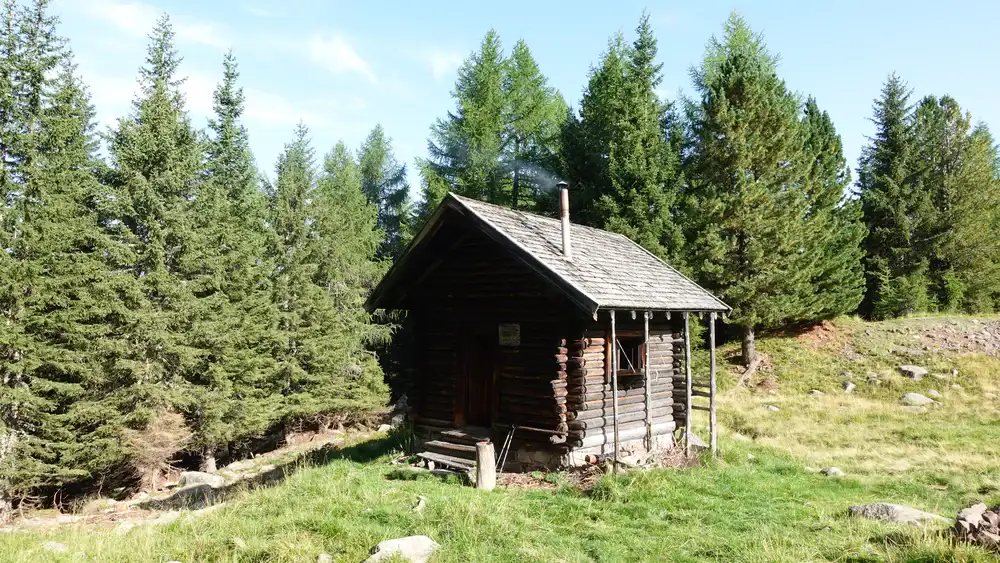
The Bivacco Baito Busse dell’Oro is a beautiful wooden cabin at the edge of the forest, rarely visited and equipped with a wood-burning stove. Keep reading.
If you plan to hike to Bivacco Baito Busse dell’Oro, plan two hours for the way up. Free car parking is available on the east side of Paneveggio Lake.
Quick facts
- Bivacco Baito Busse dell Oro elevation: 2043 m (6703 ft).
- Coordinates: 46.2878922, 11.7336533.
- Route difficulty: walk-up.
- Elevation difference from the parking: 583 m (1913 ft).
- Parking coordinates: 46.3026094, 11.7351633.
- Time needed from the parking to the bivouac: 2 hours.
- Sleeping capacity: 6.
- Nearest place for supplies: Predazzo.
- Peaks to climb in the area: Colbricon Picollo (2509 m, 8232 ft).
- Useful maps: Pale di San Martino, Kompass, 1:25000.
Access roads and map
I have created the interactive and zoomable map below, where I have added the following markers important for the tour:
- Marker 1: Car parking on the east side of Paneveggio Lake.
- Marker 2: Busse dell Oro Pass.
- Marker 3: Bivacco location.
If you zoom in, you can see many details regarding the route. Zoom out to see the access roads to the area.
Route description
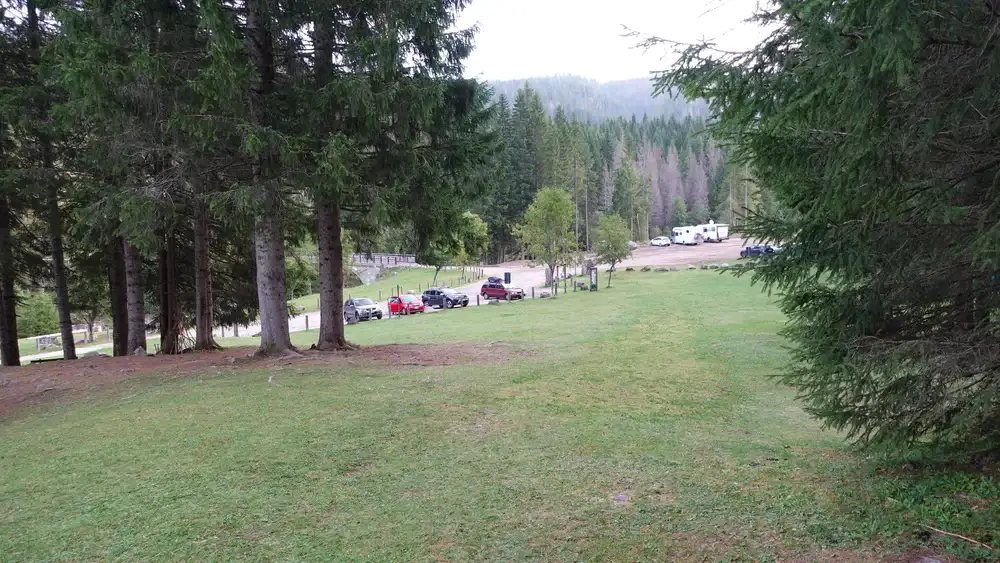
The route starts from the car parking, which is close to the main road and located directly at the east end of Lago Paneveggio. This is a popular picnic area with lots of free space.
Note that leaving the car overnight is forbidden. The same applies all the way up to Passo Valles.
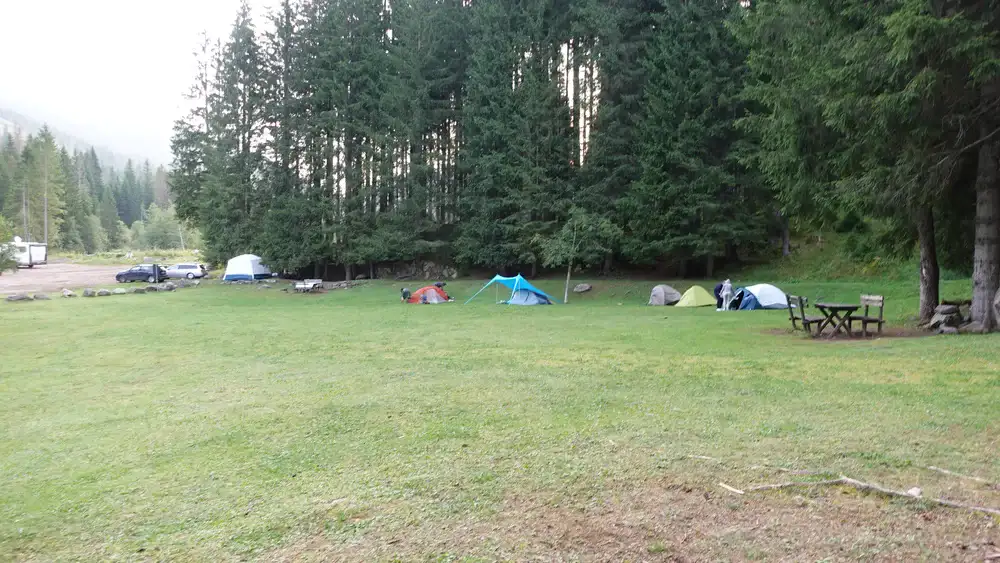
However, when I was there early in the morning, there were many cars and motorhomes, and some people were even sleeping in their tents. From what I have seen, they were all Italians; generally, there are not many foreigners here.
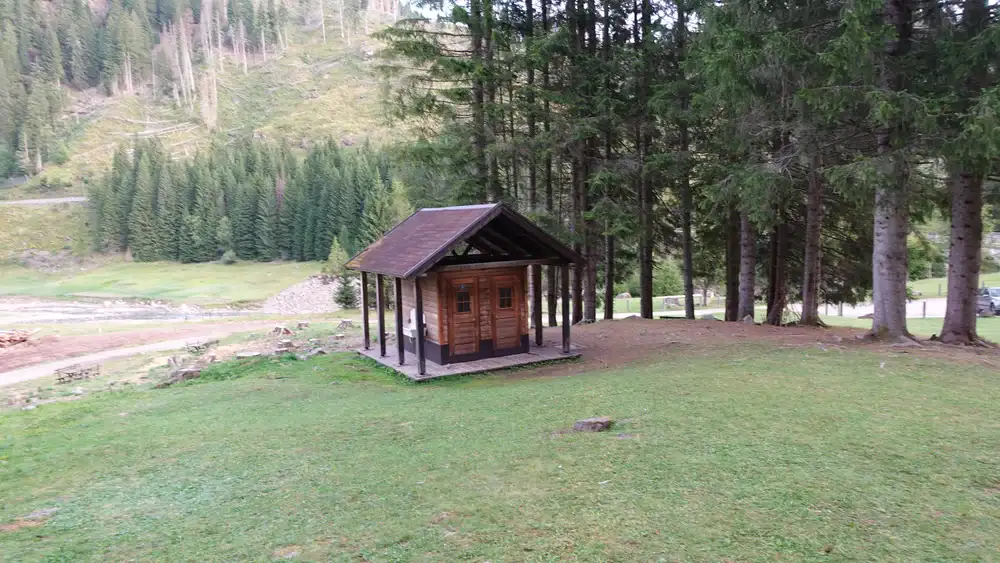
There is even a nice toilet building with running water, as shown in the photo below, but bear in mind that the water is not drinkable. You can refill at the main road in the Paneveggio village above.
You have plenty of information at the parking, as you can see in the photo below. So follow the route for Busse dell’Oro, which is a pass in the mountains above. From the signs, you will realize that you can also use this as a starting point to hike to Bivacco Aldo Moro.

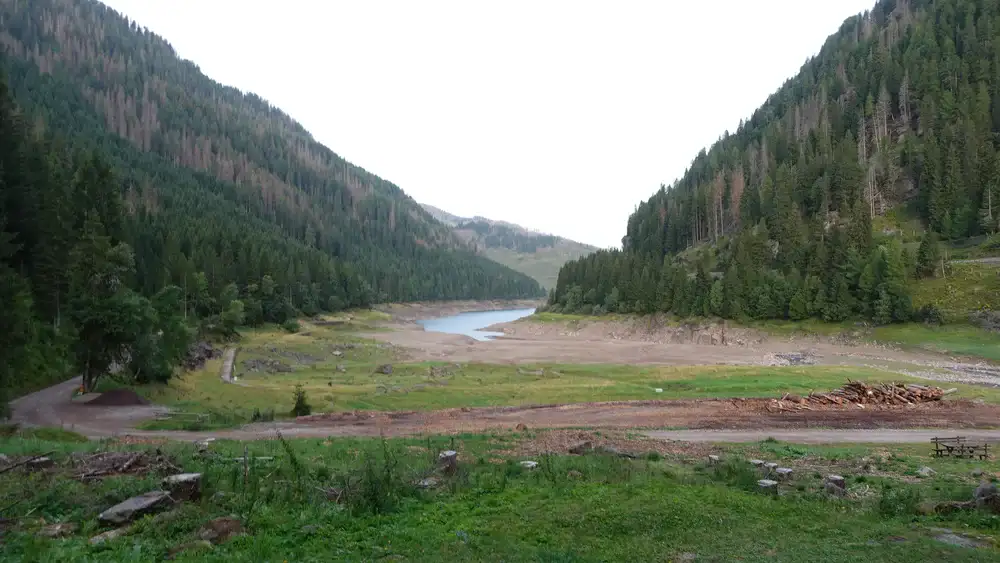
This is the east side of Lago Paneveggio. This may make it easier for you to locate the place on maps.
Immediately after you leave the parking, you enter a beautiful forest, and this remains so all the way to the bivouac. You might want to know that this is the so-called “singing forest.”
The phrase is used to describe the fact that Stradivari used wood from here for his violins. The same holds for two major piano makers. There is a violin museum on the main road above.

After around one hour and 40 minutes, you will be at Passo Busse dell’Oro; the sign shown below will indicate this. However, the bivouac is nowhere mentioned, so bear this in mind.
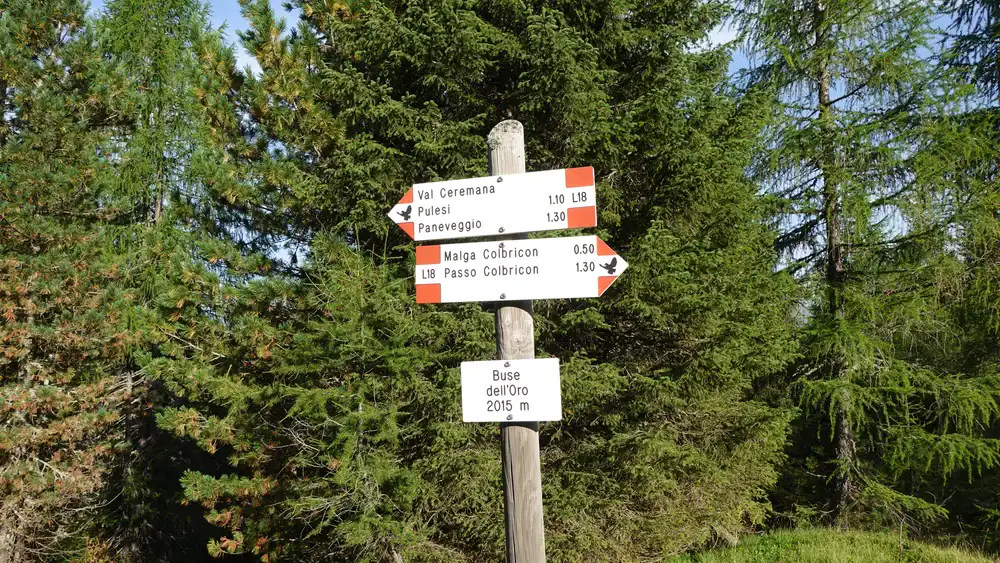
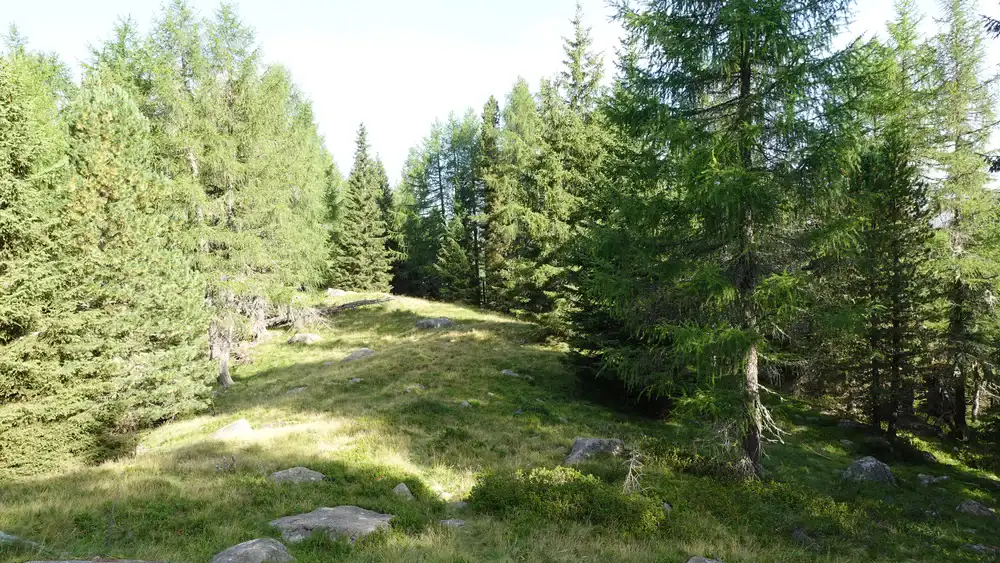
At this sign, you will have to find a tiny path that crosses a water stream and goes up through the forest in the southern direction. The photo below shows how this area looks, beautiful just like the rest of the route.
After another 15–20 minutes of walking, the bivouac will appear in front of you, as in the photo:
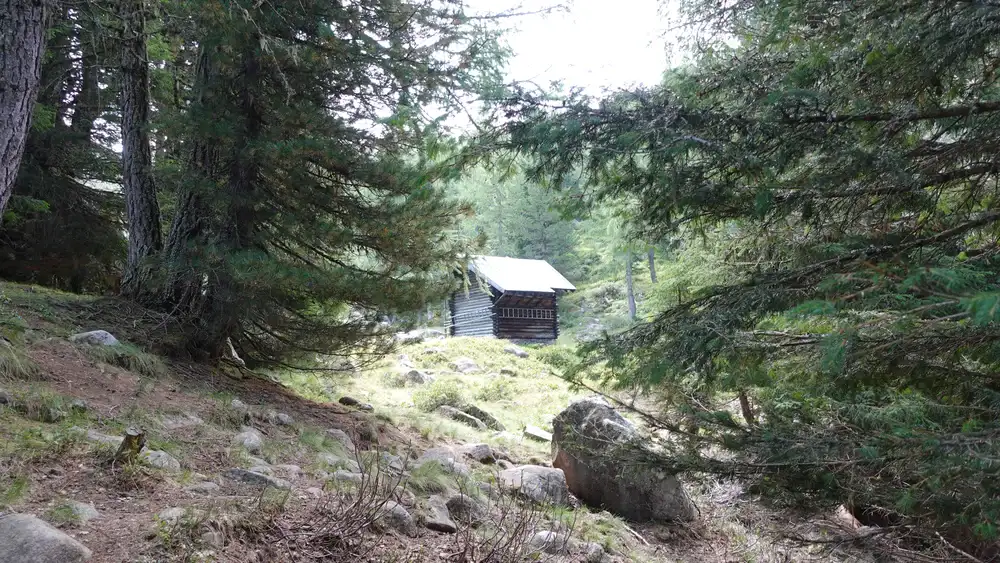
This is a very quiet place. You can hear only birds and the wind.

As you can see from the photos, this is a log cabin. Inside, there is a wood-burning stove, and wood was available.
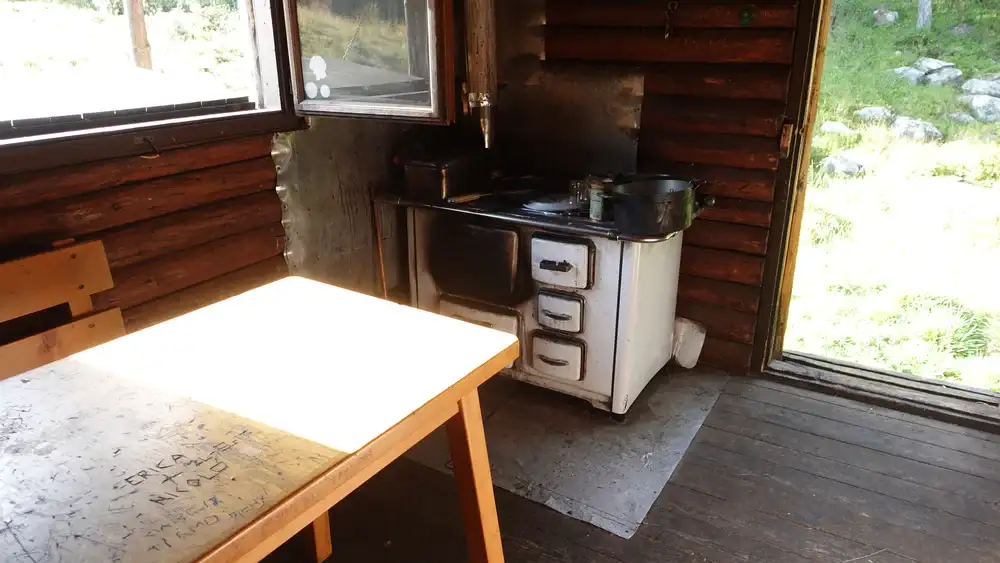
For sleeping, there is a bunk structure with three platforms and mattresses. However, they are full of holes; no doubt the place is infested with mice.
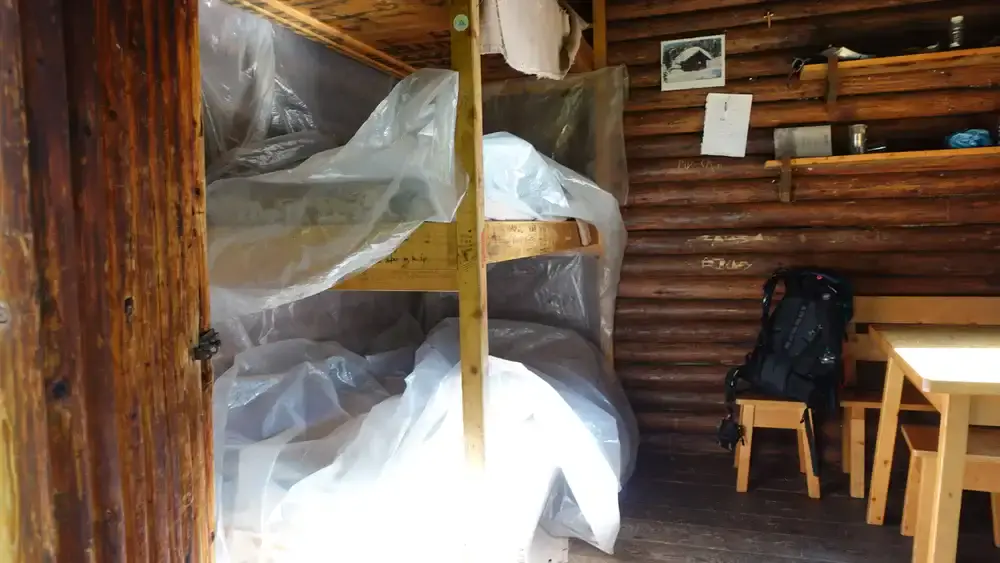
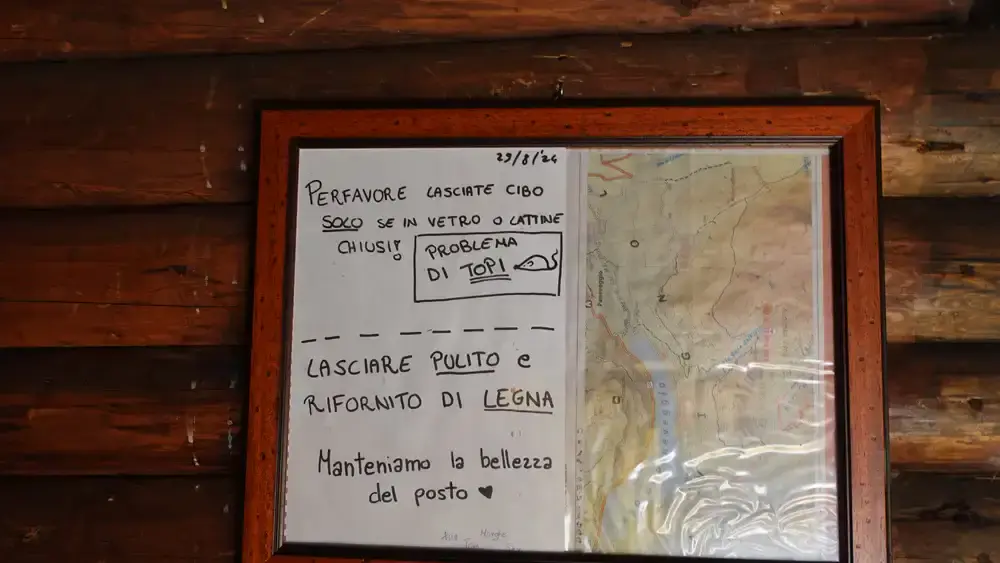
If you plan to sleep here, it is best to remove the mattress and use your own sleeping pad. Here is a warning about mice posted on the wall. “Problema di topi” means problems with mice.
In my separate text, you can find more details about potential health hazards in such places. So make sure that you behave accordingly. I am not a medical doctor; I have a PhD in theoretical physics, so my advice is based only on what I was able to find online.
My tour
I started from the parking at 6:45 am. The area was quiet, and there were quite a few tents around with people still sleeping inside.
Foreigners can sometimes behave inappropriately in the Dolomites, but these were not foreign tourists; all of them were Italians. This was clear from the car plates. And yes, this is why I love Italy and Italians.
The weather was simply perfect, and this was a quiet and beautiful walk up through the breathtaking forest. All the way to the Pass mentioned above, the route is marked and obvious.

Finding the route after the pass may be a bit tricky, but a tiny path is visible. I arrived at the bivouac two hours after the start.
I made a fire in the stove, had coffee and breakfast, and simply enjoyed the day. I do not remember how long I stayed there. Eventually, it was time to go back, so I descended the same way. There were no people anywhere around. What a day.
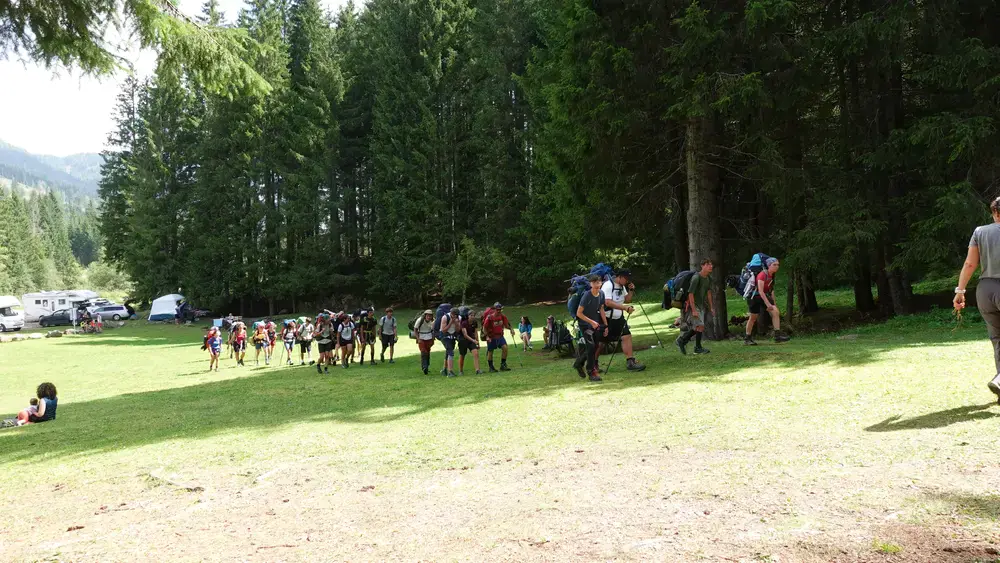
However, the parking looked very different on my way back — totally full, with families picnicking around, and big groups moving up the trail. So do not expect to find a place to park if you arrive late.
All the tour is presented in my video; please have a look:
Gear, water & food
For this tour, you do not need anything special; any hiking boots or shoes will be fine. I used Nortiv 8 boots and had a pair of trekking poles, and my Mammut Lithium 40 backpack.
As usual, in my backpack I had a rain poncho, rain pants, and a rain jacket. If you do not have a jacket and are not sure what to choose, consider the Mammut Crater Pro HS.
I mentioned the water stream at the pass; you can refill provided that you have a reliable water filter/purifier. Paneveggio is a small village, but there is a restaurant in the center where you can have a meal.
Do you want to walk this route?
If you have some mountaineering experience, you can do this tour as I did. Orientation is not a problem, and the routes are marked.
However, if you want to play it safe, get in touch with some experts and guides who can help you.
Final thoughts
In summary, Bivacco Baito Busse dell’Oro remains a remote and seldom-visited spot in the Lagorai. The two-hour ascent through dense forest ends at a simple log cabin with a functional stove, basic bunks, and persistent mice.
The unmarked path after Busse dell’Oro Pass requires attention, but the route is otherwise straightforward. Early starts help avoid crowds at the parking area and ensure solitude at the bivouac.
The place suits hikers who carry their own sleeping pad, accept minimal facilities, and prefer quiet over convenience.
Supplies come from Predazzo or Paneveggio, and water needs treatment if taken from the stream. For those comfortable with self-reliance and basic orientation, the bivouac offers a direct, unspoiled night in the Dolomites.
Thank you for reading. Let me know if you have questions or comments; there is a comment section below.
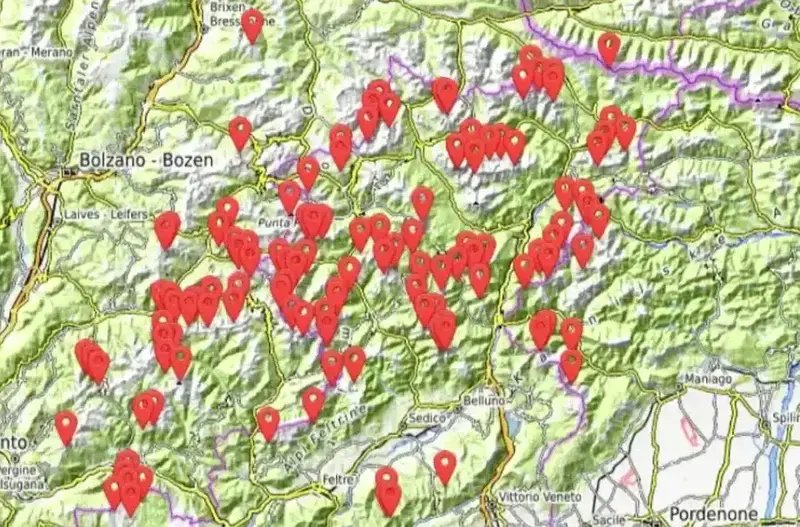
This bivouac, together with more than 120 others, is included in my interactive map available here on the site, see it below. Note that I also have a book titled Dolomites Solo, so have a look if you plan to do some mountaineering tours in the area.
Please join us at our Facebook group Dolomites Visitors Hub.
FAQ – Bivacco Baito Busse dell’Oro
Is Bivacco Baito Busse dell’Oro open all year round?
Yes, the bivouac is open year round because it is an unmanaged mountain shelter. There is no guardian and no booking system.
In winter access can become demanding due to snow conditions in the Lagorai range. You need proper winter equipment and experience with navigation. Always check avalanche conditions before planning a cold season visit.
Is the route to Bivacco Baito Busse dell’Oro suitable for beginners?
Technically the route is simple and does not involve climbing or exposed sections. However, the last part after Busse dell’Oro Pass is unmarked and requires basic orientation skills.
In poor visibility this section can become confusing. Beginners should use an offline map, GPS track, or go with someone who knows the area.
Can you camp near Bivacco Baito Busse dell’Oro?
Wild camping rules in the Dolomites and in Trentino are restrictive. In general, camping near roads and parking areas is forbidden.
High altitude bivouacking for one night is sometimes tolerated if you arrive late and leave early, but this depends on local regulations and enforcement. Always respect the environment and avoid open fires outside designated shelters.
Is there drinking water at Bivacco Baito Busse dell’Oro?
There is no permanent water source inside the cabin. A small stream near Busse dell’Oro Pass can be used, but the water must be treated with a reliable filter or purifier. During dry periods the flow may be reduced. It is safer to carry enough water from the start, especially in summer.
Leave a Reply