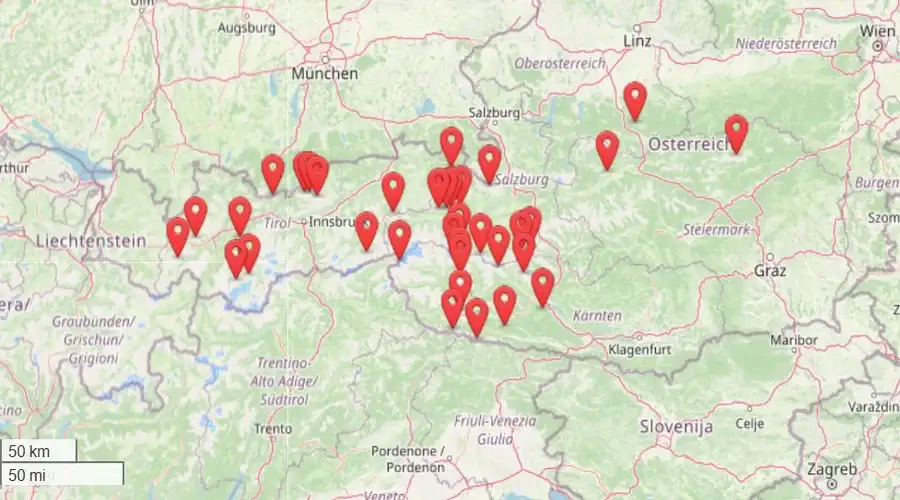
Here you have my interactive map with 35 bivouac shelters in the Austrian Alps, all with coordinates and external links for more detailed information.
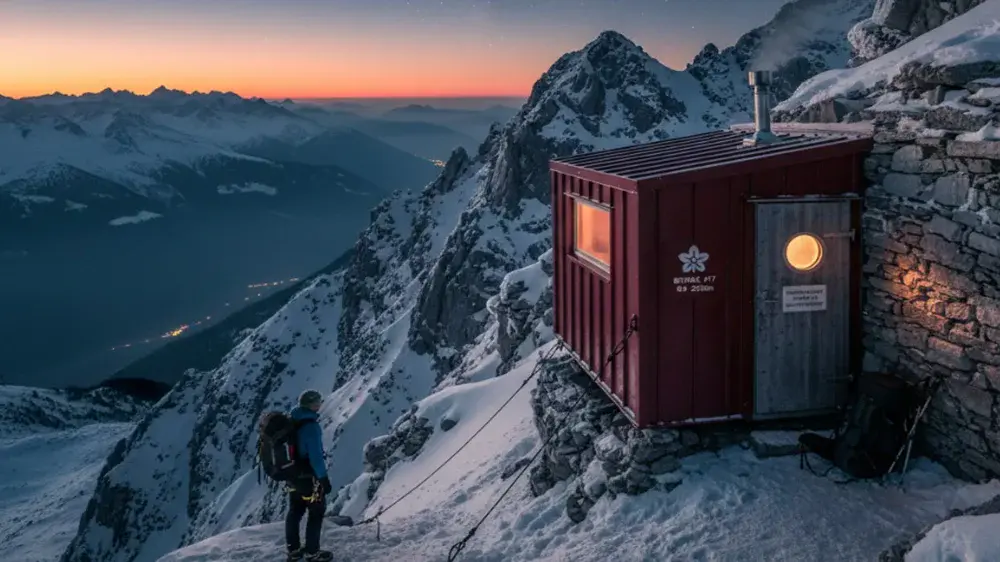
There are hundreds of regular huts in Austria, but bivouac shelters are quite rare, especially when compared with the Italian Alps, where the number of bivouacs exceeds 440. For more details, see my separate post.
Here is the picture of my map showing the locations of bivouacs in the Austrian mountains. I hope this covers all of them; at least, I was unable to find any additional shelters.
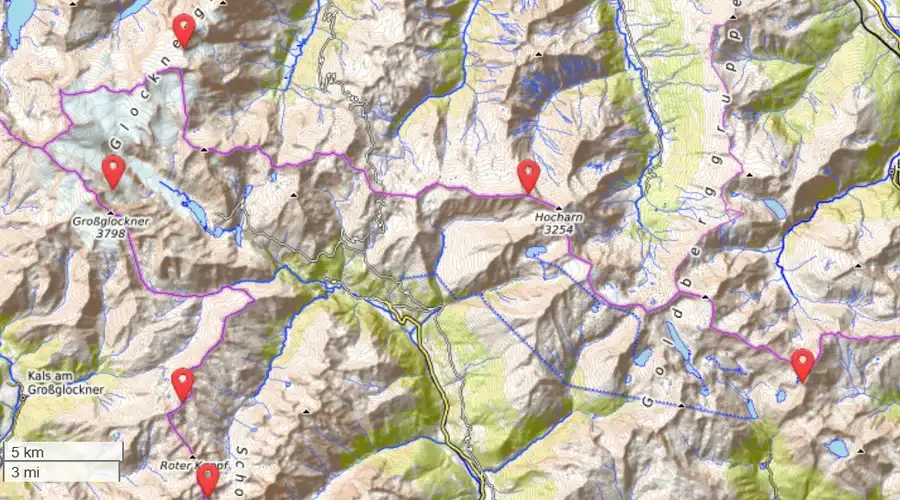
The version below is a topo map, it may be useful to have it and get a better idea about the terrain where bivouacs are located:
Unlock the Full Premium Interactive Map
The overview and instructions above are free for everyone. For the complete experience, get instant lifetime access to the full interactive zoomable map featuring 35 carefully curated bivouacs across the Austrian Alps.
- All 35 bivouacs and emergency shelters with precise markers
- Clickable pins linking to external resources (Google Maps, Alpine Clubs)
- Fully zoomable, searchable, and mobile-friendly
- Regular updates if new shelters are discovered
- One-time payment – no subscriptions
Instant access after payment • Support independent Austrian Alps hiking content
What is a Bivouac?
The term bivouac (or Biwak in German) can be a bit of a linguistic chameleon in the mountaineering world. To clear up the confusion, it generally refers to two things:
• The Structure: In the context of the map, a bivouac is a permanent, unmanaged emergency shelter. Unlike a Hütte (mountain hut), there is no host, no menu, and typically no heating.
They are usually small, high-altitude containers or stone and wood structures designed to provide essential protection from the elements. Sometimes, they are really basic emergency shelters like Eiskarbiwak.
• The Act: “Bivouacking” also refers to the act of sleeping outdoors overnight without a tent, using only a sleeping bag, a bivy sack, or the natural environment for cover.
The Legal Landscape in Austria
This distinction is crucial because of Austria’s strict regulations. Generally speaking, wild camping and planned bivouacking are forbidden across most of the Austrian Alps, with heavy fines for those caught pitching a tent or “settling in” for the night in the forest or alpine zones.
However, there are two important nuances:
- Emergency Bivouacking: An unplanned, forced night outside due to injury, exhaustion, or a sudden change in weather is permitted (and necessary for safety).
- The Bivouac Shelter: This is where your map becomes essential. Because sleeping in a tent is prohibited, these 35 permanent bivouac structures serve as the only legal way to spend a night in certain high-altitude regions without retreating all the way down to a managed hut or the valley.
While these shelters are legal to use, they are intended for emergencies and alpine necessity. They operate on a “leave no trace” ethos. Since there is no staff to clean up, the mountaineering community relies on every visitor to keep the space functional for the next person in need.
Leave a Reply