There are hundreds of bivouacs and similar free shelters in different styles across the Italian Alps. But they appear under many names, scattered across vast terrain, often poorly mapped, sometimes not mapped at all.
Over the years, I set out to change that. What began as a personal obsession grew into a meticulously built interactive map which I created.
Currently, this map pinpoints 462 bivouacs across the Italian Alps from Mediterranean Sea to Slovenian border. For each of them coordinates are given and one link to external sources with more information and photos.
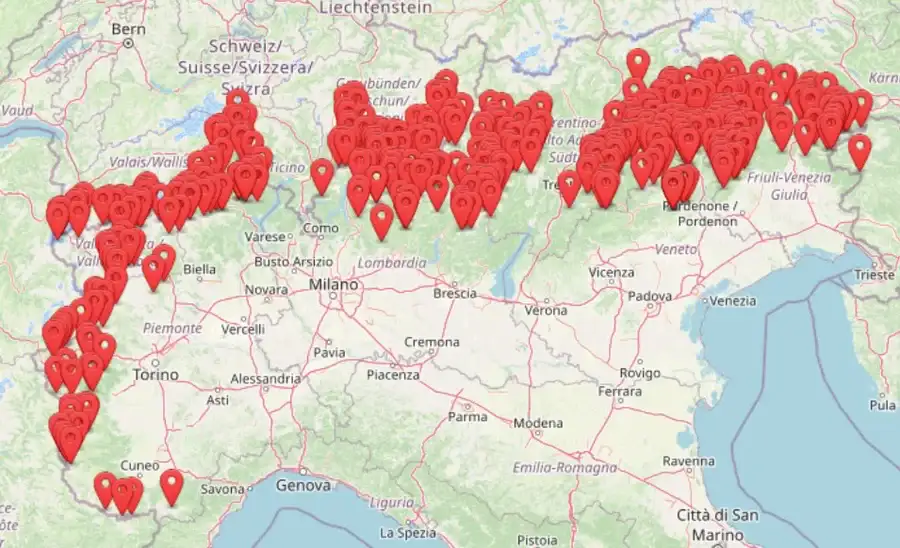
Creating this map was a labor of love that took years of dedicated effort; manually entering every coordinate, description, and detail to ensure accuracy and usability. It is more than just a list; it is a comprehensive resource built from firsthand knowledge and passion for the mountains.
This is an on-going work in progress, the map will be updated and more bivouacs will be added whenever I locate them. So bookmark this post and stay tuned.
To support the ongoing creation of high-quality tools like this and cover the time invested, access to the full interactive map is available for a one-time fee. Your support helps sustain projects that benefit the outdoor community.
Unlock the Full Premium Interactive Map of 462 Bivouacs in the Italian Alps
The overview, shelter explanations, and free preview above are available to everyone. For the complete experience, get instant lifetime access to the fully interactive map with all locations pinpointed across the Italian Alps, from the Mediterranean to the Slovenian border.
- All 462 verified bivouacs, casere, baite, and other shelters with precise GPS markers.
- Clickable pins with coordinates and links to external sources for photos, descriptions, and more info.
- Fully zoomable, searchable, layers for different shelter types, and mobile-friendly.
- Ongoing updates, new bivouacs added as they are discovered and verified.
- One-time payment, lifetime access, no subscriptions.
- Bonus: Topo version of the map, shown below.
Instant access after payment • Supports independent Italian Alps hiking content and ongoing research
Topo version of the map reveals far more details regarding the terrain on the route important for hikers. Both maps are offered under the same package and link.
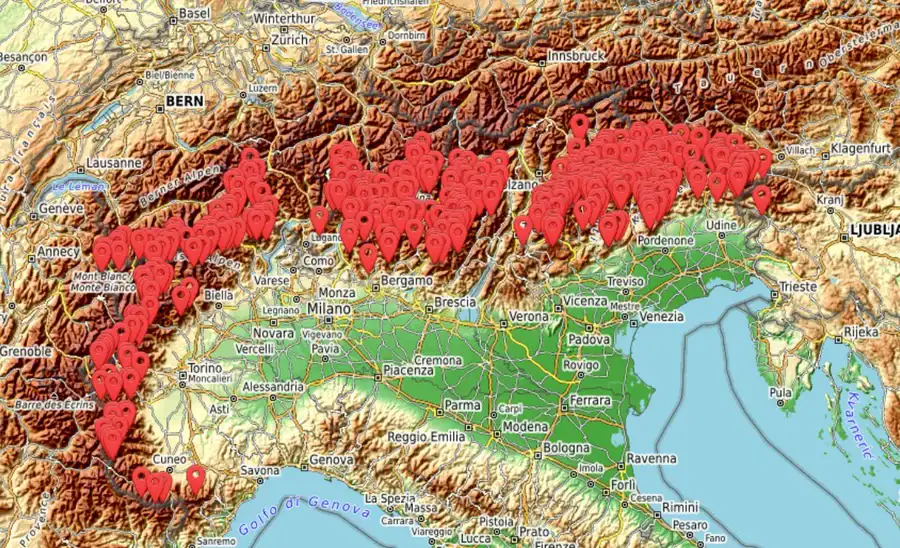
Here below you have an example with a few bivouacs of different types, to see what to expect from the maps. I give the topo version with bivouacs linked either to my own texts ot to some other sources. When you zoom in, you can see the actual routes and many other details:
Regarding terminology, there is a variety of names used for shelters in the Italian Alps. So explanation of these names and terms in the map is given below.
Baita, Baito, Bait, Baitel
General meaning: In Italian, these names refer to a small rustic house or cabin, often made of wood or stone, typically found in rural or mountainous areas. It originates from dialects in northern Italy, particularly Lombard or Alpine regions, and can imply a simple dwelling or holiday home.
Applied to alpine shelters: In the context of the Italian Alps, a baita is a traditional mountain hut used by shepherds or hikers. It serves as a basic shelter or bivouac point, sometimes equipped for overnight stays during treks.
These are often privately owned but may be open for emergency use, non-commercial rest spots in areas like the Dolomites or Aosta Valley.
Baito is a dialectal variant of “baita,” commonly used in northern Italian regions like Lombardy or Trentino.
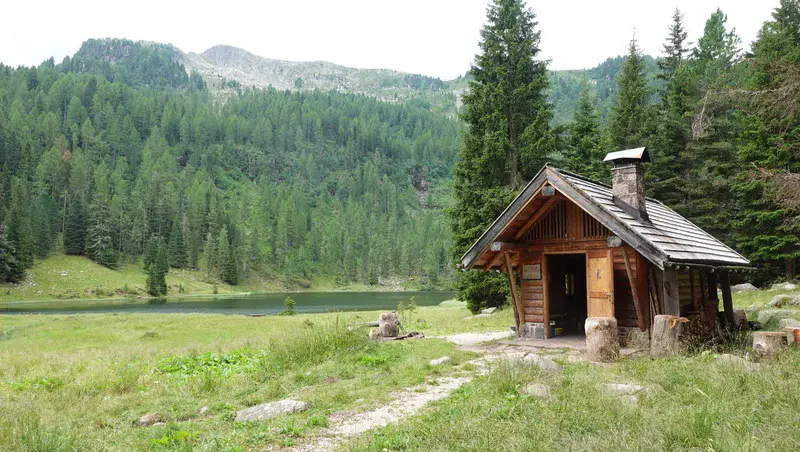
Bait is a shortened or dialectal form of “baita” or “baito,” primarily in regional dialects of northern Italy. The photo below shows one example.
Baitel is another dialectal variation, especially in Lombard-speaking areas, meaning a little hut or small barn. It is diminutive in form, suggesting something compact and utilitarian.
Capanna
General meaning: In standard Italian, “capanna” means a hut, shack, or cabin, often implying a simple, temporary structure like a beach hut or garden shed. It can also refer to a nativity scene crib in cultural contexts.
Applied to alpine shelters: In the Italian Alps, capanna typically denotes a mountain hut or refuge, sometimes managed by alpine clubs.
As a bivouac, it is a basic shelter for hikers, providing roof and walls but minimal amenities. Not many bivouacs have the word capanna in the name, but they appear on some maps.
Ricovero
General meaning: Ricovero generally means shelter, refuge, or hospitalization in Italian, often used for places providing protection or care, like animal shelters or medical facilities.
Applied to alpine shelters: In the Alps, it specifically refers to a basic emergency shelter or bivouac, often a small structure for mountaineers caught in bad weather.
These are unmanned and sparse, designed for short-term use. On a map, they mark critical safety points in exposed areas.
Casera
General meaning: Casera comes from dialects in Veneto and Friuli, meaning a cheese dairy or a place for making and storing cheese. It is tied to pastoral traditions.
Applied to alpine shelters: As a bivouac, it can serve as a seasonal shelter for hikers when not in use for farming. But there are many of them that are used as free bivouacs only.
Malga
General meaning: Malga refers to an alpine pasture or a high-mountain farm in Italian, particularly in Trentino-Alto Adige dialects, often including buildings for livestock.
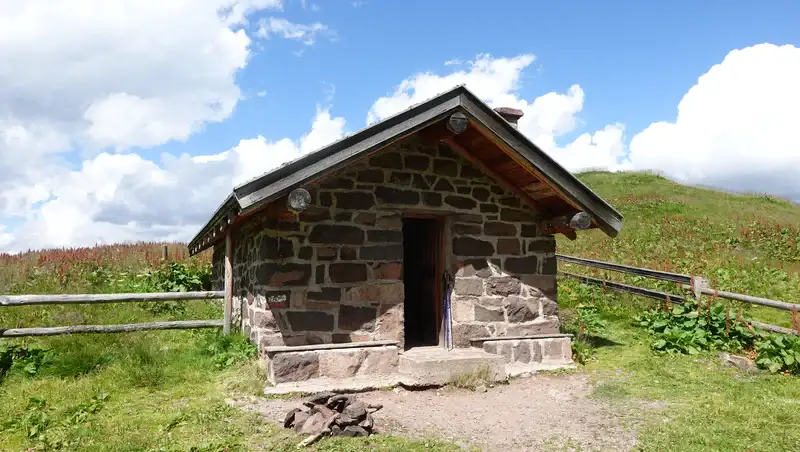
Applied to alpine shelters: In the Alps, a malga is a summer pasture hut used by shepherds, which can double as a bivouac or rest stop for trekkers. Many are now tourist-friendly with basic lodging as the one shown above, but in some sources this particular shelter is under the name casera.
Bivacco
General meaning: Bivacco directly translates to bivouac, meaning an improvised or temporary camp, often without tents, in military or outdoor contexts.
Applied to alpine shelters: In the Alps, a bivacco is an unmanned, basic mountain shelter maintained by alpine clubs, equipped with bunks and minimal supplies for emergency use. They are free and crucial for high-altitude routes.
This word is practically always used for metal Alpine containers, all built in the same style, orange, yellow, gray, and in some other colors, with 8-9 beds and equipped with mattrasses, blankets, and pillows. One example is shown in te picture below.
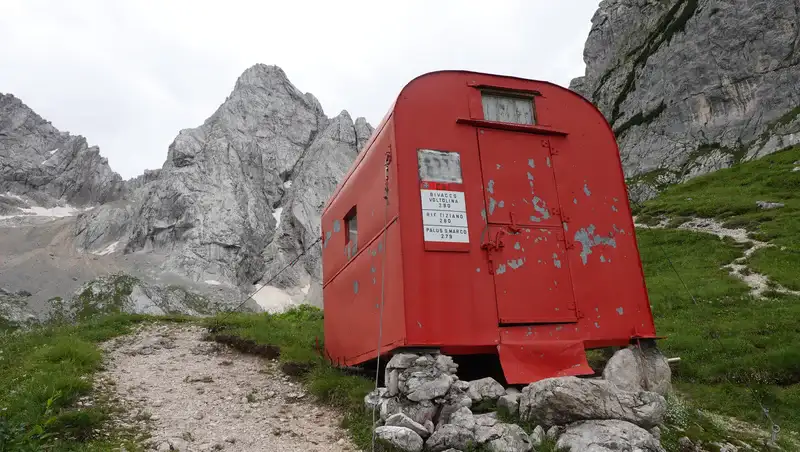
But the word bivacco is used also for all other types of shelters, for wood structures and for stone structures as well.
The majority of shelters in the map have the word bivacco in the name, but it should be said that this depends on sources. Some use words like baita and casera for the shelters that are called bivacco in other sources.
Rifugio
General meaning: “Rifugio” means refuge or shelter in Italian, often implying a safe haven, like a wildlife refuge or bomb shelter.
Applied to alpine shelters: In the Italian Alps, rifugio typically refers to a managed mountain refuge or hut, often with staff, meals, and beds, run by organizations like CAI (Club Alpino Italiano). While more comfortable than basic bivouacs, they serve similar purposes for overnight stays.
But this word is sometimes used also for a bivouac and there are quite a few of them here in the map.
What to expect in a bivouac?
I have a separate text which this topic is discussed in detail, so please follow the link to read more. Here to point out the following.
If this is about standard metal containers, they are all organized in the same way. So as mentioned, you have 8-9 beds with mattrasses and blankets, many also have pillows.
In other types, it is important to check before your trip. This map will help because all bivouacs here are linked to external sources with more information. Make sure you have all what you need with you.
Many bivouacs-related questions from real people are addressed in my another text, so please have a look there as well.
How about bivouacs in other Alps countries?
Here is what I am able to show now:
- In Slovenia, the official number of bivouacs is 17. I know for sure that there are also hunters cabins with a part permanently open for hikers.
- In Austria, from what I was able to locate directly, there are 35 bivouacs. Most likely this is all.
- In Switzerland, after searching around I get the number of bivouacs 52, but it is far from certain that this is correct. Most likely the number is much smaller.
- Regarding Germany, I see that only 4-5 bivouacs are mentioned in some sources around.
- As for France, this is completely unclear, and I am reluctant to give any number. If you are able to provide some reliable information, I shall include it here.
You might want to know that I have a book Dolomites Solo with my first-hand mountaineering reports, have a look:
Thank you for reading. Please let me know if you have questions or comments, there is a comment box below. Also, if you know a bivouac that is missing here, do let me know.
Frequently Asked Questions
What should I bring when staying overnight in an Italian Alpine bivouac?
Italian Alpine bivouacs are unmanned and basic, primarily intended for emergency or short-term use by hikers and mountaineers. While standard metal bivacco containers often include 8-9 bunks with mattresses and blankets (and sometimes pillows), facilities vary widely, especially in converted baite, casere, or stone structures.
Always pack your own sleeping bag for hygiene and warmth, a sleeping pad for extra comfort, sufficient food and water (as sources may be unreliable), a headlamp, first-aid kit, and waste bags.
Cooking stoves are recommended if needed, but open fires are strictly prohibited in most areas to prevent wildfires.
What are the general rules and etiquette for using bivouacs in the Italian Alps?
Bivouacs are free and open to all on a first-come, first-served basis, no reservations are possible, and they can fill up quickly on popular routes or weekends. Priority should always go to those in real need, such as during bad weather.
Practice Leave No Trace principles: clean up thoroughly, take all trash with you (even organic waste decomposes slowly at altitude), and leave the shelter in better condition than you found it.
No open fires are allowed, and avoid overcrowding, aim for quiet and respectful behavior toward other users.
Are bivouacs available year-round, and what about winter use?
Yes, bivouacs are accessible and open year-round, as they serve as vital emergency shelters. However, winter conditions in the Italian Alps can be extreme, with heavy snow, avalanches, and inaccessible trails.
Many higher-altitude metal bivacchi are designed for winter survival, but always check weather forecasts, avalanche reports, and route conditions via sources like CAI (Club Alpino Italiano) or local authorities. Carry appropriate gear like crampons, ice axe, and avalanche safety equipment if venturing out in snow.
How do bivouacs in Italy compare to those in neighboring Alpine countries?
Italy has by far the highest number of bivouacs (hundreds, with many free and unmanned), making them a key resource for multi-day treks.
In contrast, Slovenia has around 17 official ones (plus some open hunters’ cabins), Austria approximately 35, Switzerland roughly 50 (though numbers vary by source), and France has fewer dedicated structures, often relying more on managed refuges.
Rules also differ, e.g., Switzerland tolerates high-altitude bivouacking with restrictions, while Italy emphasizes emergency use but widely tolerates short stays in remote areas.
Leave a Reply