When you see Bivacco Giovanni Spagnoli from the route, with its white walls it looks like a high-elevation house. However, it was built as a mountaineering bivouac and named after the Italian senator of the same name, and it is managed by CAI Vigo di Cadore.
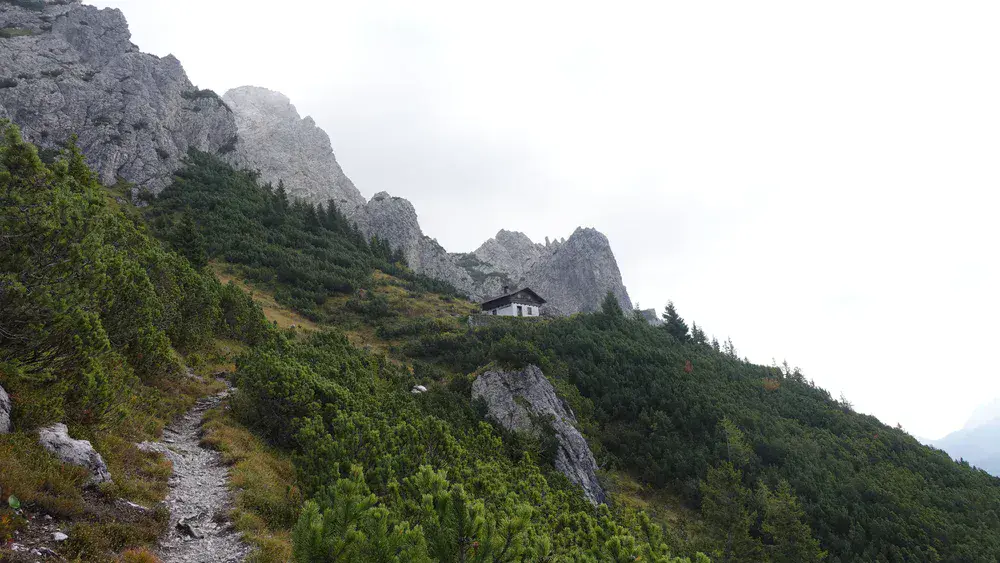
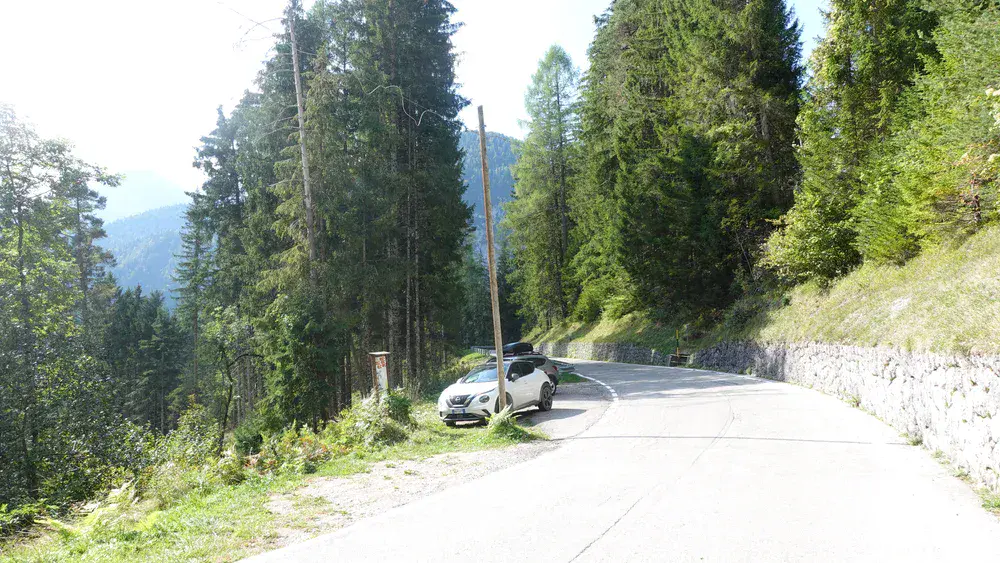
The most convenient way to reach Bivacco Giovanni Spagnolli is from the SP619 road, which connects Vigo di Cadore to Sauris di Sopra. There is a small parking area along the road, marked on the interactive map below.
An alternative approach is directly from Laggio (Vigo) di Cadore, also marked on the map. The bivouac offers 11 beds with mattresses, a wood-burning stove, and running rainwater from a tap.
Quick facts
- Bivacco Giovanni Spagnolli elevation: 2047 m (6716 ft).
- Coordinates: 46.5046633, 12.5274850.
- Route type: Walk-up.
- Elevation gain from the parking area: 887 m (2910 ft).
- Parking coordinates: 46.4874394, 12.5106550.
- Time needed to reach the bivouac from the road: 2.5 hours.
- Beds: 11 (with mattresses).
- Heating: Wood-burning stove.
- Water: Tap rainwater.
- Lighting: Photovoltaic panel with battery.
- Nearest place to buy supplies: Vigo di Cadore.
- Useful map: Dolomiti di Auronzo e del Comelico, Tabacco 017, 1:25000.
Access roads and map
The interactive map below highlights the following key locations:
- Marker 1: Parking area at the trailhead along the road.
- Marker 2: Alternative trailhead from Laggio (Vigo) di Cadore.
- Marker 3: Location of Bivacco Spagnolli.
Zoom in to see detailed route features, or zoom out to view the main access roads leading to the area.
Route description
It is best to start from the road (Marker 1), where there is free parking deep in the forest. If you start from the village, finding parking can be difficult and may not be free. Park at Marker 1 and follow Trail 330.
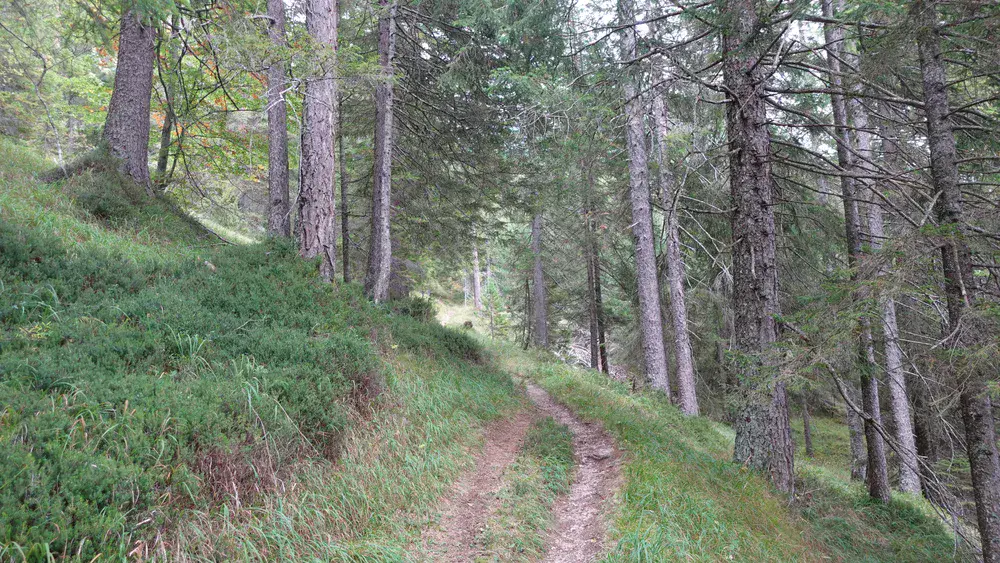
Initially, the route follows a forest road that is closed to public traffic. Eventually, you leave the forest road behind, which marks the beginning of the most enjoyable section of the hike.
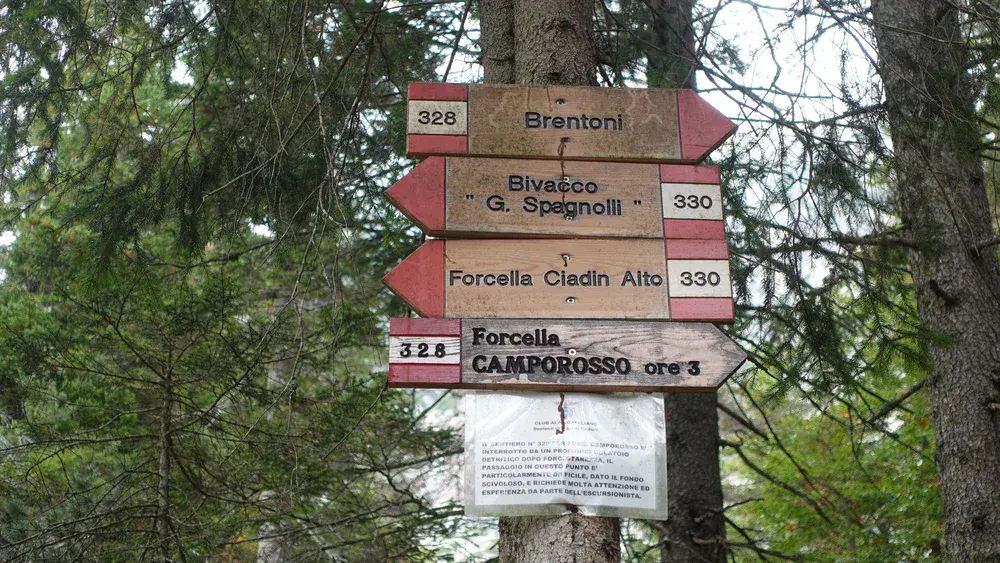
At a certain point, Trail 330 merges with Trail 228 coming up from Laggio di Cadore. Further along, the path splits, as shown on the sign below, you can trace its direction on the map.
Simply continue zigzagging upwards. There are no downhill sections along the way, so you gain elevation continuously with every step. The route has no exposed or risky passages, making it pleasant and relatively straightforward, though a bit of sweating is guaranteed.
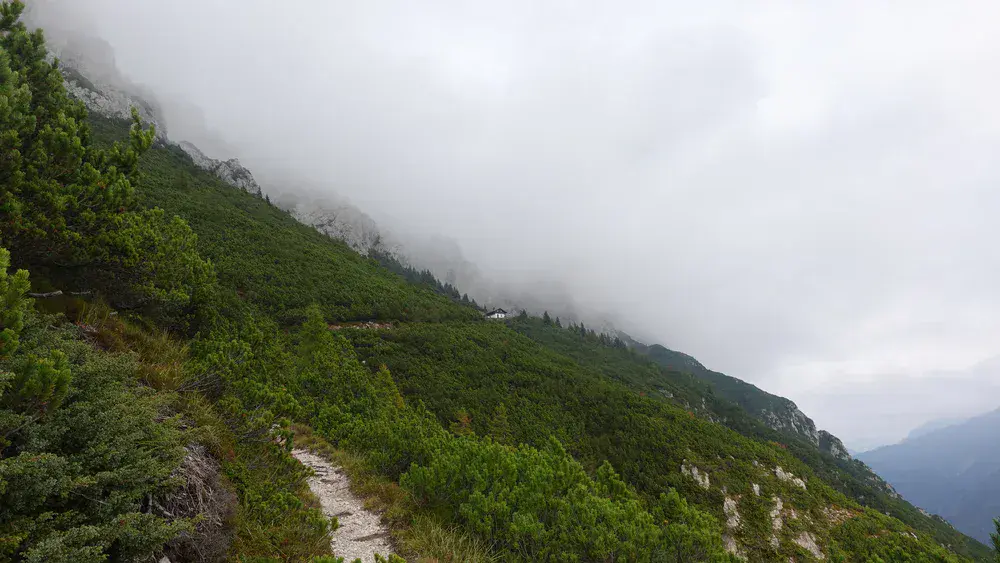
Once you rise above the treeline, expansive views open up to the west and southwest, and the bivouac soon comes into sight:
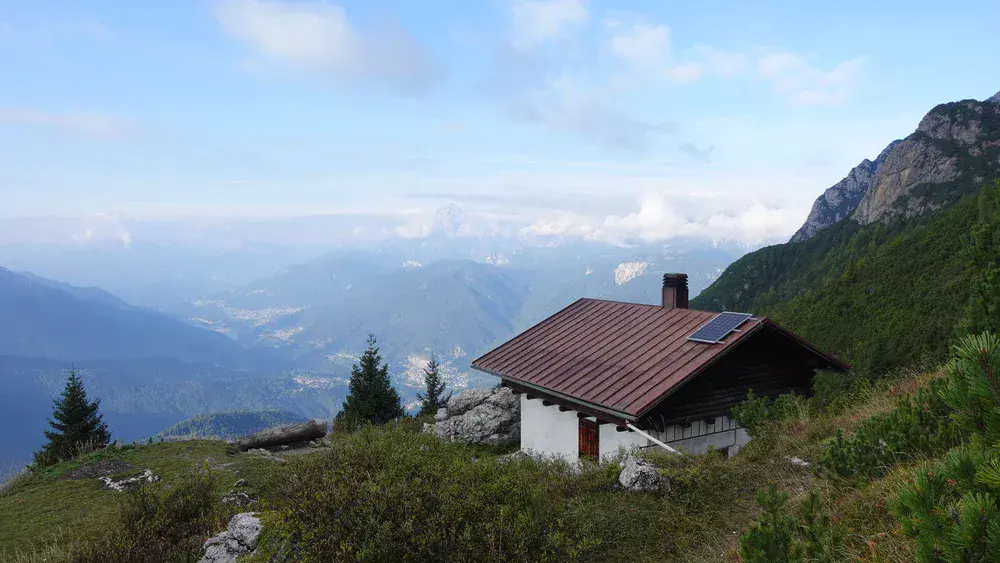
In clear weather, you will enjoy breathtaking vistas over the valleys below. The shelter occupies a magnificent location with unobstructed views:
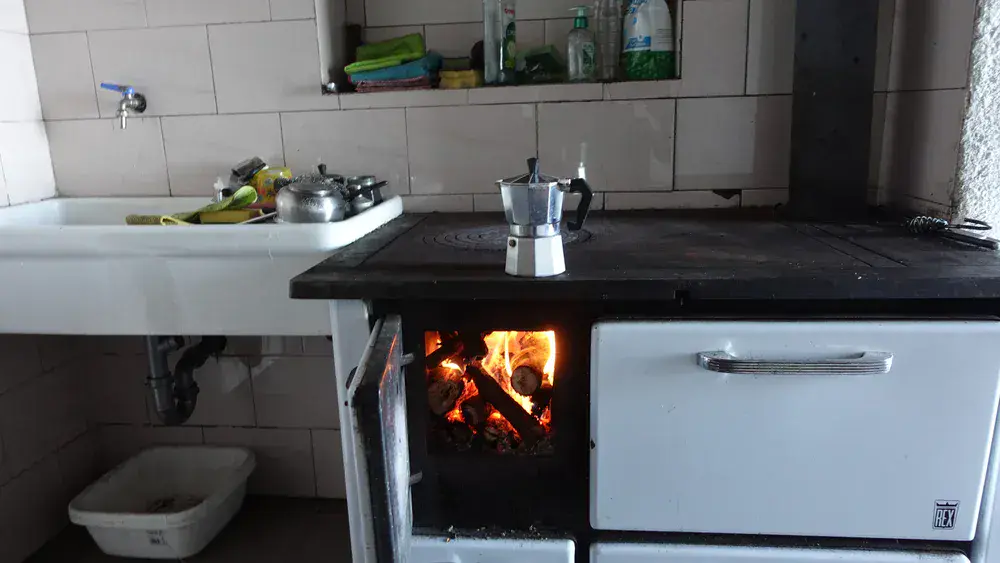
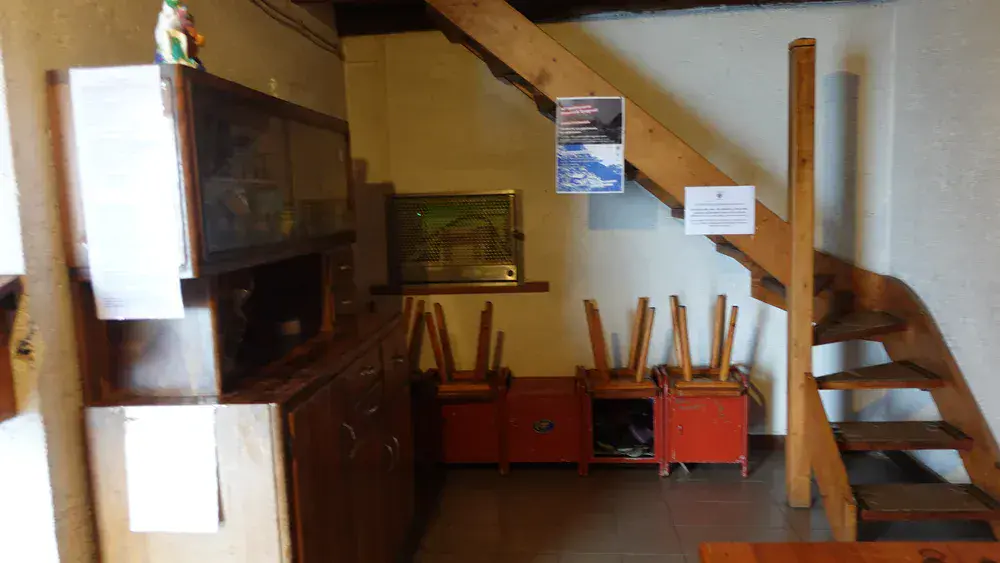
Inside, there is a sink with running water fed from an external rainwater container, alongside an efficient wood-burning stove. Firewood is usually available inside; if not, tools are provided so you can gather deadwood from surrounding bushes.
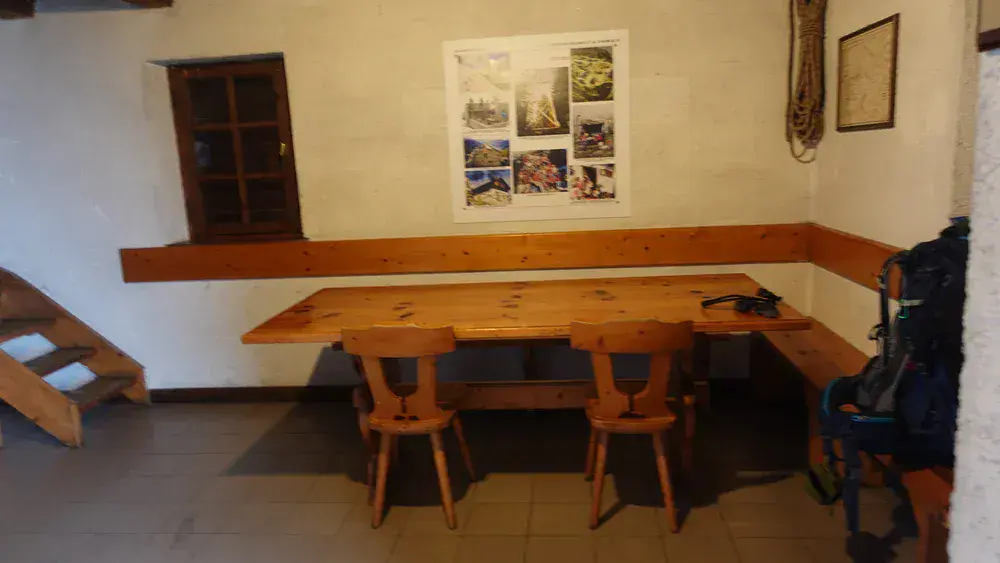
A large dining table with benches sits on the main floor, and slippers are provided for convenience when moving around or heading up to the sleeping area.
The upper level is dedicated entirely to sleeping quarters, featuring 11 beds equipped with comfortable mattresses:
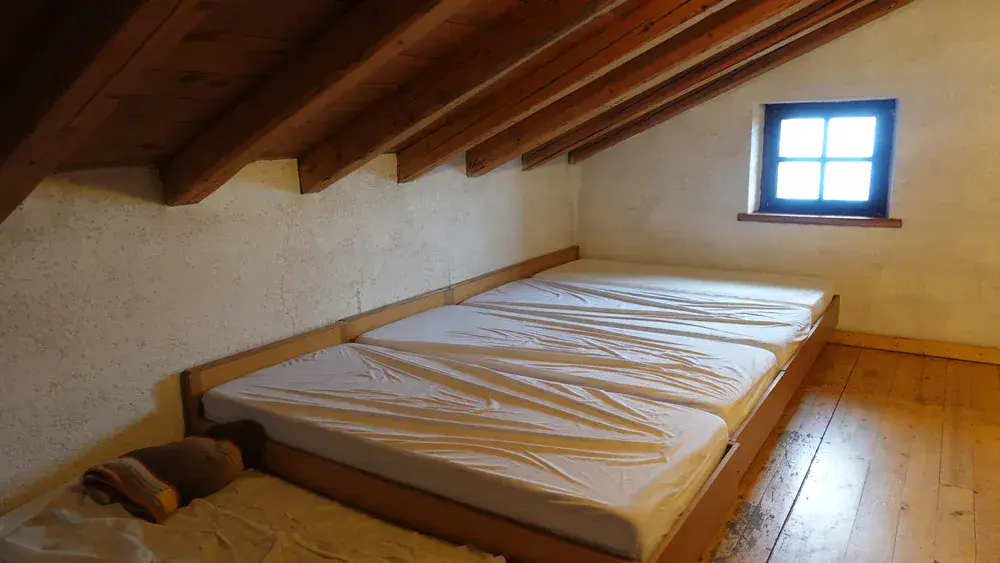
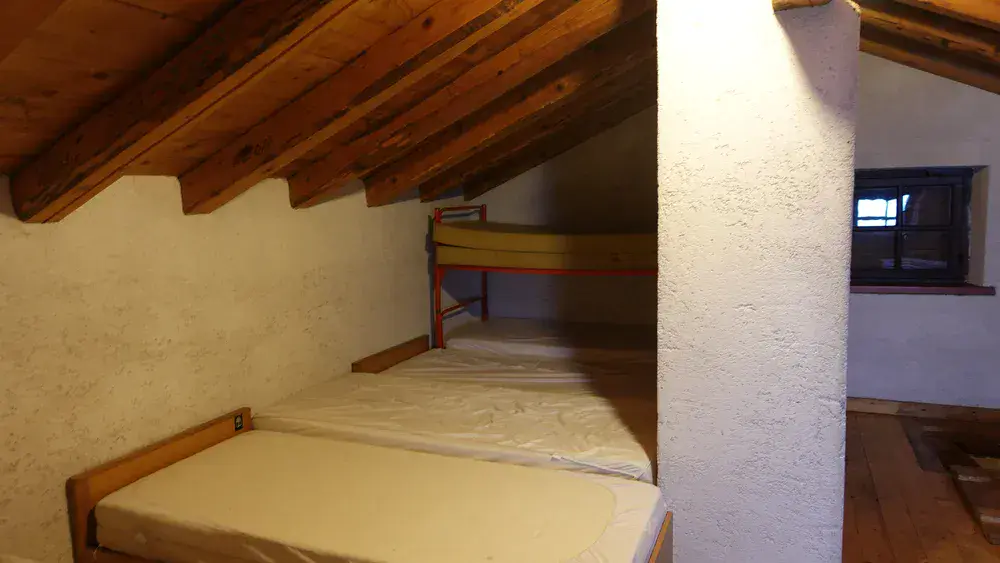
There are three windows upstairs; open the external wooden shutters to enjoy the valley scenery and let in natural light during the evening.
There is solar-powered lighting on both levels. Note that the light operates on a timer; 30 minutes for the lower level and 10 minutes for the upper floor, so you will need to press the switch periodically. Keeping a headlamp or torch nearby is highly recommended.
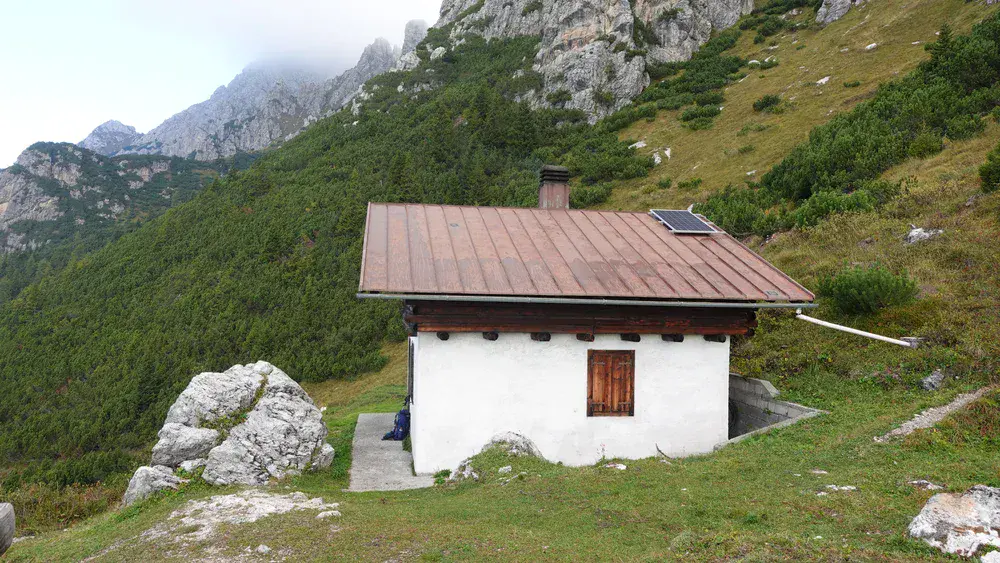
If you stay overnight, please consider leaving a contribution in the donation box (“offerte”) located next to the door:
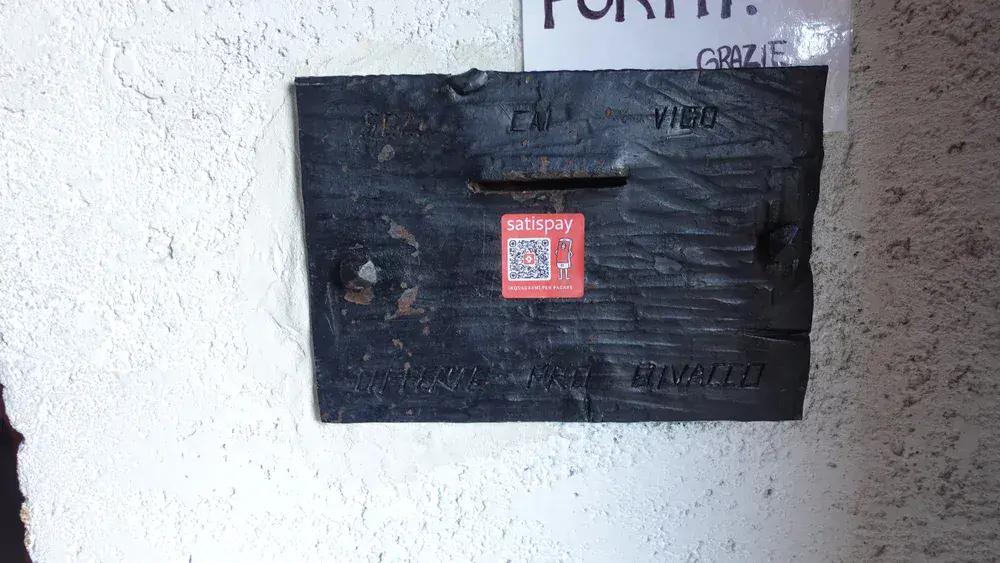
The shelter is clean and well-maintained, free of trash, please help keep it that way. Lighting a fire inevitably leaves some ash or debris, but a broom and dustpan are available in the corner so you can sweep up before departing.
From Bivacco Spagnolli, you can continue higher over Forcella Ciadin pass to reach Bivacco Angelo Ursella Mario Zandonella and also Bivacco Monte Col and Bivacco Cornon. All these bivouacs can be located using the interactive map above. So this shelter is an ideal stop on a multi-day trek through the area.
Historical background of Bivacco Spagnolli
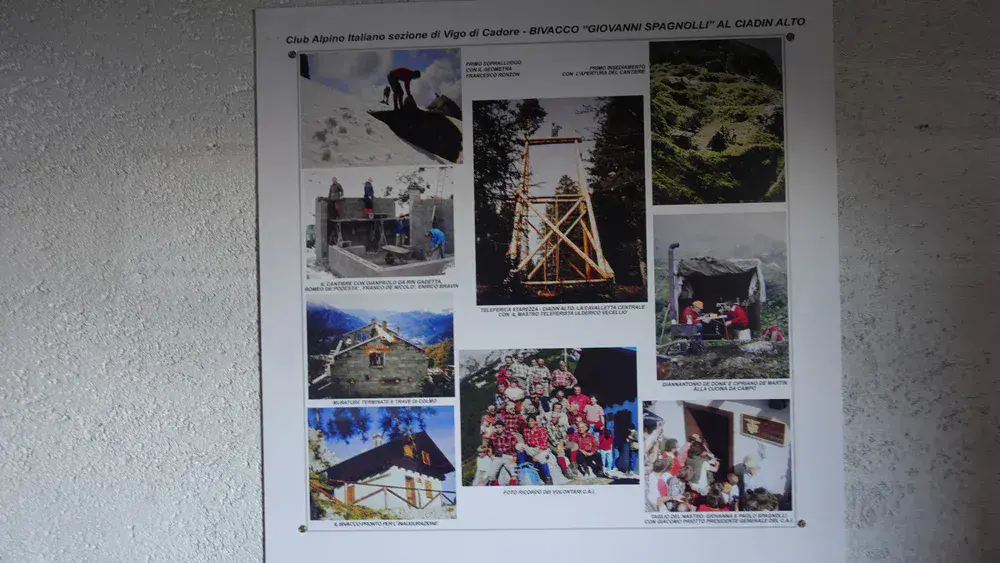
Construction of the G. Spagnolli Bivouac began in 1978 on the initiative of the CAI Vigo di Cadore section, with the goal of creating a shelter beneath the Ciadin Alto East and West passes while preserving the area’s pristine mountain environment.
In 1980, a temporary shelter equipped with three beds, a stove, and a cooker was erected to house the volunteers working on the project.
Between 1981 and 1983, a 1,700-meter cableway was installed to transport materials to this remote location, greatly easing the burden on the dedicated volunteers involved.
The final phase of construction took place between November 2 and 5, 1984. Designed to reflect traditional local shelter architecture, the bivouac features a 6 × 6-meter concrete base, stands roughly five meters high, and includes a wooden floor with a timber-and-sheet-metal roof.
Dedicated to Giovanni Spagnolli, former president of the Italian Alpine Club, the bivouac was officially inaugurated on September 22, 1985, during a celebration attended by nearly 500 people, a fitting tribute to the perseverance and hard work of everyone involved.
The image below shows some historical construction details:
My tour
I started my hike relatively late, around 3:20 PM, intentionally planning to reach the bivouac well before nightfall. The area was entirely new to me, and I was slightly hesitant about leaving my car at the roadside, but the designated parking sign gave me peace of mind.
I packed my backpack with a sleeping bag and an inflatable pillow before setting off. Although the sky was overcast, I brought appropriate rain gear and was unconcerned about the weather.
While the total elevation gain is considerable, the ascent proved surprisingly manageable. Long sections of the soft forest path and well-designed switchbacks make the climb feel much gentler than expected.
Upon arrival, I had the entire bivouac to myself. It was a wonderful feeling, I lit a fire, enjoyed coffee after dinner, and settled into bed early. The only sound during the night was the occasional creaking of the roof structure as it cooled down.
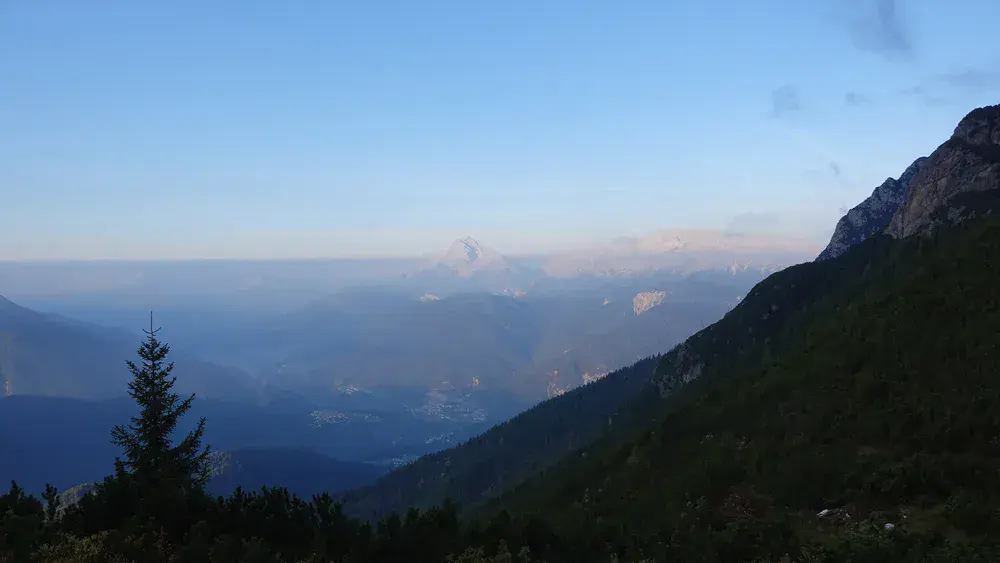
Here is an early morning view of Antelao, which I climbed the previous year:
After a peaceful morning routine of breakfast and coffee, I descended via the same route feeling thoroughly fulfilled. This bivouac is a serene sanctuary that I will always treasure.
Unlike the heavily visited areas of the Dolomites, there were no crowds here. When people complain about overcrowded trailheads in the region, it usually comes down to visiting a handful of overhyped Instagram locations. On this trail, I met only one person on the way up and two locals on the way down.
I documented the entire trek in my video below:
Alternative approach
As mentioned, you can also start from Laggio di Cadore, though finding suitable parking there may be challenging.
While I haven’t hiked this section personally, it likely features similar forest trails. Trail 228 joins the main route described above at an elevation of 1550 meters.
Gear, water & food
Since this is a standard walk-up route, no technical equipment is required. A reliable pair of hiking boots or trail shoes is perfectly fine. I brought trekking poles and a larger Deuter pack, along with my standard rain ensemble: a rain poncho, rain pants, and a rain jacket.
If you plan to stay overnight, bring a suitable sleeping bag.
While topographic maps show water streams nearby, the tap water near a wooden cabin along the route is marked as “non-potabile” (not drinkable). To avoid carrying excessive water weight, bring a portable water filter.
Conclusion
Bivacco Spagnolli is one of those places in the Dolomites that makes you appreciate the mountains in a different way. The route is relatively easy, the forest is beautiful, and the views from the bivouac are excellent.
It is also a very comfortable place to spend a night, with beds, mattresses, a wood-burning stove, and basic facilities. If you are looking for a quiet mountain experience away from the crowds, this is definitely a place to consider.
What I particularly like about this bivouac is that you can enjoy a genuine mountain atmosphere without having to deal with a technically demanding route. You can come here for a simple day hike or include it in a longer tour connecting other bivouacs in the area.
Just remember to bring your own sleeping bag, carry the essentials, and leave the place clean for the next visitors. The Dolomites have plenty of famous destinations, but sometimes the less-known places like this one leave the best memories.
Thank you for reading. Let me know if you have questions or comments; there is a comment section below.
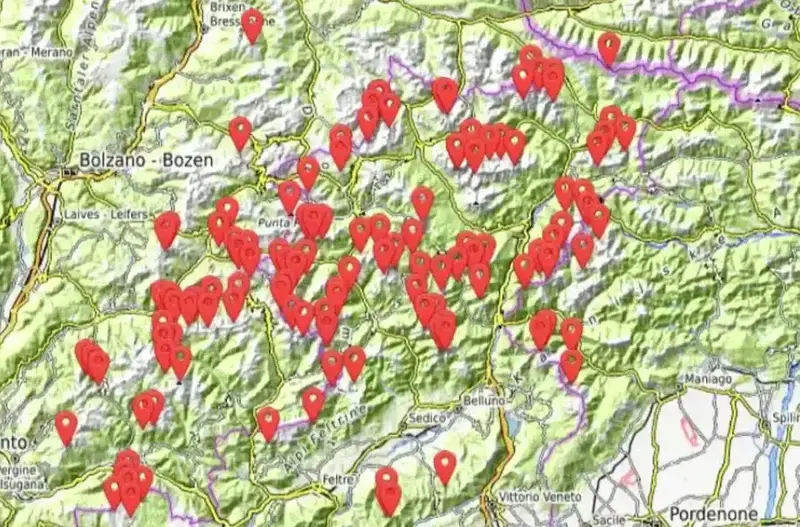
This bivouac, together with more than 140 others, is included in my interactive map available here on the site, see it below. Note that I also have a book titled Dolomites Solo, so have a look if you plan to do some mountaineering tours in the area.
Leave a Reply